



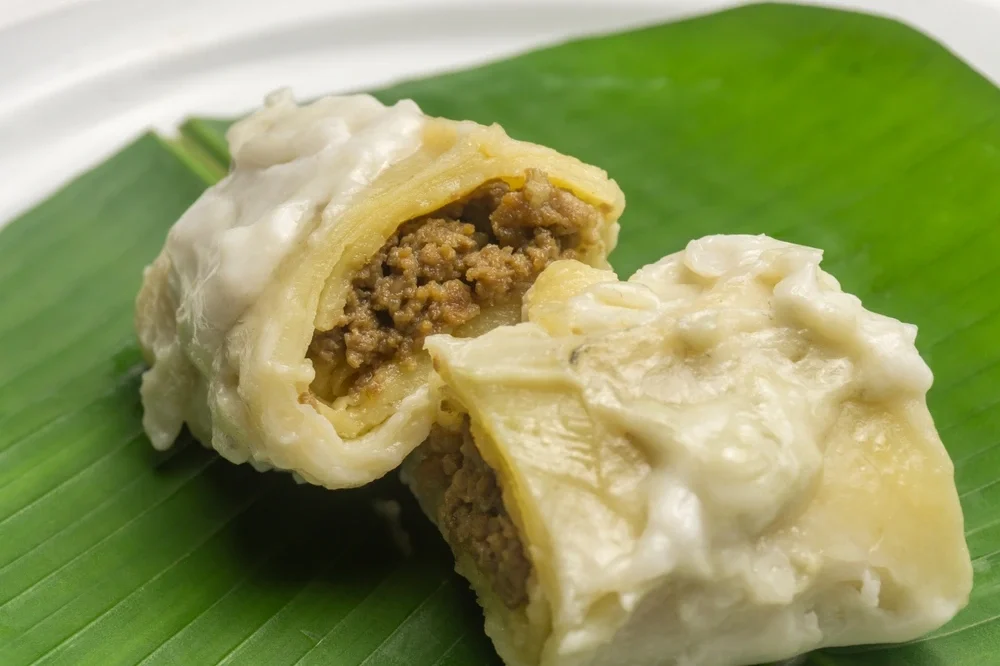
RRI.CO.ID, Jakarta - Mento cake remains one of the most enduring snacks found across Sumenep, Madura, particularly during the fasting month. Shaped like a rolled crepe, it carries a filling and flavor profile that set it apart from similar snacks, allowing it to survive across generations.
The snack originated from royal court traditions in Jepara, Central Java, before spreading to other regions including Sumenep. Along the way, the recipe adapted to local tastes and forms, a pattern commonly seen in traditional foods that travel across regions through trade and cultural interaction.
Visually, mento cake resembles a rolled crepe. While a typical rolled crepe is filled with grated coconut and palm sugar, mento cake instead contains sauteed chicken mixed with grated carrot and young papaya seasoned with traditional spices. This filling difference is what defines mento cake as a savory counterpart to its sweeter relative.
The snack is usually served with thick coconut milk and crispy fried shallots on top. The combination of savory filling, rich coconut aroma, and crunchy sauteed vegetables gives it a more complex flavor profile compared to similar snacks in the region.
Demand for mento cake rises sharply during the fasting month, when it becomes one of the most sought after items among those hunting for iftar snacks. This kind of seasonal consumption pattern also appears in traditional foods across many countries, where demand spikes only during specific religious or cultural periods.
Beyond its seasonal popularity during Ramadan, culinary conservation efforts and local tourism initiatives are increasingly highlighting mento cake as an intangible cultural asset. Documenting these royal-derived heritage recipes ensures that traditional cooking techniques and historical culinary narratives are preserved for future generations and cultural researchers alike.
Even today, mento cake continues to hold its place in local culinary tradition despite having undergone a long process of cultural blending. Its survival illustrates how traditional food can coexist with modern culinary trends without losing its original identity.
News Recomendation
Memuat berita terbaru.....