



Indonesia's Four Halal Industrial Estates Pave Way to Global Hub
- 29 Sep 2026 17:23 WIB
- Voice of Indonesia
Poin Utama
- The Ministry of Industry is developing four Halal Industrial Estates in Bintan, Cikande, Jababeka, and Sidoarjo to integrate production, human resources, raw materials, and certification services into a single unified zone.
- Indonesia is leveraging international cooperation, institutional development, small business certification, and initiatives like the H20 summit to transform the nation into a global hub for the halal sector.
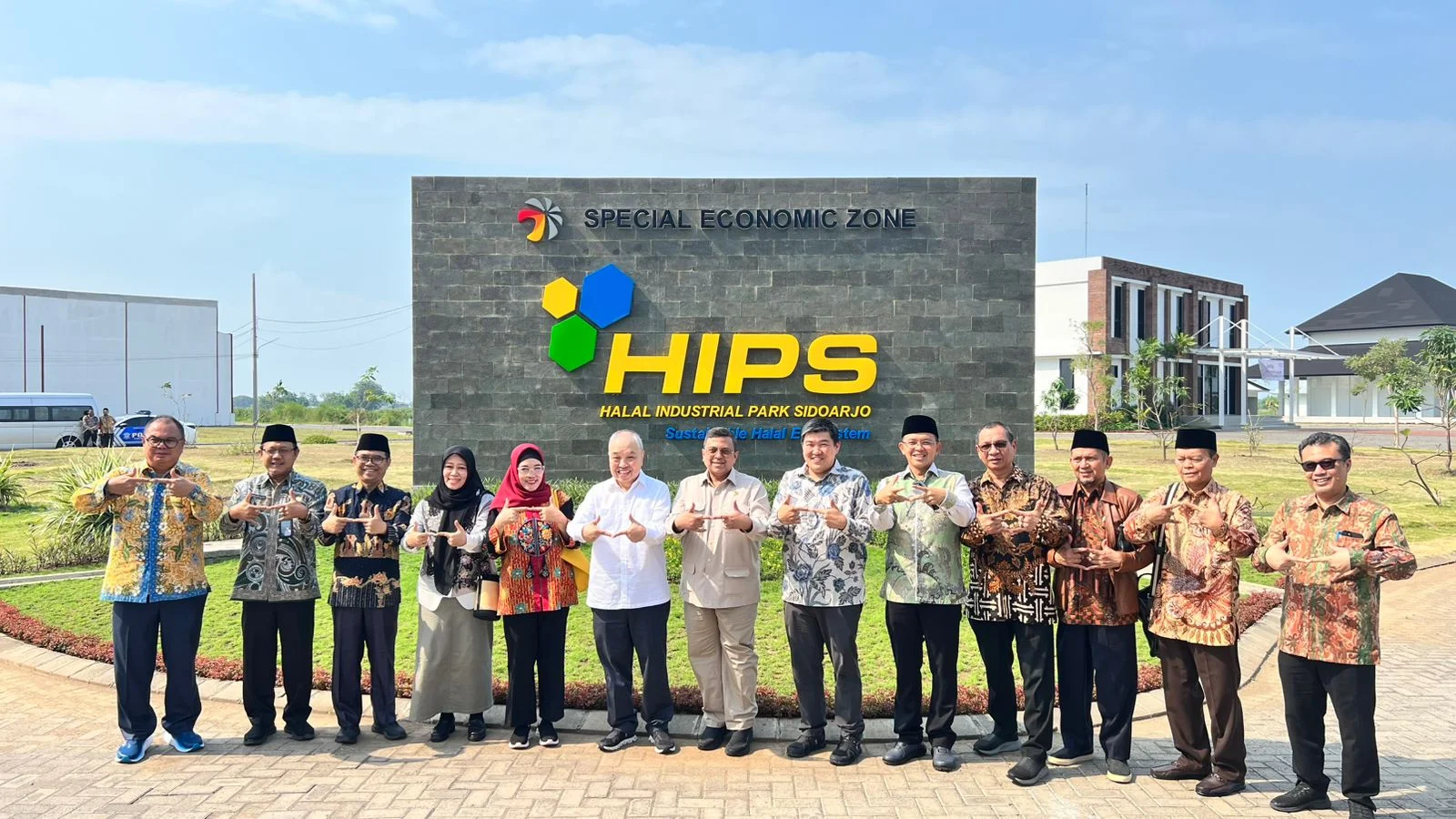
RRI.CO.ID, Jakarta – Indonesia's halal industry boasts an immense market that must be continuously supported through the development of halal industrial infrastructure, notably via the assistance of four Halal Industrial Estates in Bintan, Cikande, Jababeka, and Sidoarjo. This initiative represents the Ministry of Industry's effort to integrate industries, human resources, certification services, raw materials, and essential resources within a single zone.
Furthermore, Minister of Industry Agus Gumiwang Kartasasmita, in a statement in Jakarta on Monday, 28 September 2026, highlighted the significance of international cooperation for Indonesia, emphasizing the objective of evolving beyond merely a consumer market.
“In this regard, Indonesia views international cooperation as vital so that the halal industry does not merely develop as a consumption market, but also serves as an increasingly integrated global production, investment, innovation, and trade base,” he stated.
In Indonesia, the development of the halal industry has been positioned as part of national industrialization policies through Ministry of Industry Regulation Number 40 of 2025 on the Halal Industry Development Roadmap for 2025–2029. This roadmap serves as the foundation for various programs, ranging from regulatory formulation and guidelines, strengthening halal infrastructure and institutions, human resource development, certification assistance, to halal industry promotion and cooperation.
Estate development serves as one of the instruments to build a more integrated halal industry foundation. During the 5th Summit of Halal 20 (H20) on 18 September 2026, the Director General of Resilience, Territorial, and International Industrial Access (KPAII), Tri Supondy, stated that Halal Industrial Estates not only provide space for production activities but also bring together various supporting industrial needs within one area.
The strengthening of the halal industry is also pursued through institution building and human resource capacity building. Currently, the Ministry of Industry oversees 22 Halal Inspection Agencies (LPH), four Halal Product Process Assistance Institutions (LP3H), five Halal Product Assurance Training Implementing Institutions (LP2JPH), and three Professional Certification Bodies (LSP). These institutions are reinforced by training, technical guidance, and competency certification for industry players and government officials alike.
Equal attention is directed toward small-scale industries. By 2026, the Ministry of Industry has facilitated halal certification for 12,171 small industries. This initiative is further complemented by promotional platforms through Halal Indo 2026 and participation in various international halal exhibitions, granting Indonesian small-scale halal products the opportunity to connect with wider markets.
For large-scale industries, the Ministry of Industry drives the implementation of halal product processes as part of Good Manufacturing Practices (GMP). These efforts are further reinforced through the Indonesia Halal Industry Awards (IHYA), which recognize stakeholders who consistently support the growth, development, and empowerment of the national halal industry.
Looking ahead, Indonesia regards international cooperation as an essential component to link halal industries across nations. Standard harmonization, the connectivity of industrial estates and production needs, the exchange of investment opportunity information, and partnerships among producers, technology owners, investors, and markets constitute part of the endeavor to build a more integrated halal industry.
News Recomendation
Memuat berita terbaru.....