



Rupiah Under Pressure as Economists See BI Holding Rate at 4.75 Percent
- 17 Mar 2026 15:13 WIB
- Voice of Indonesia
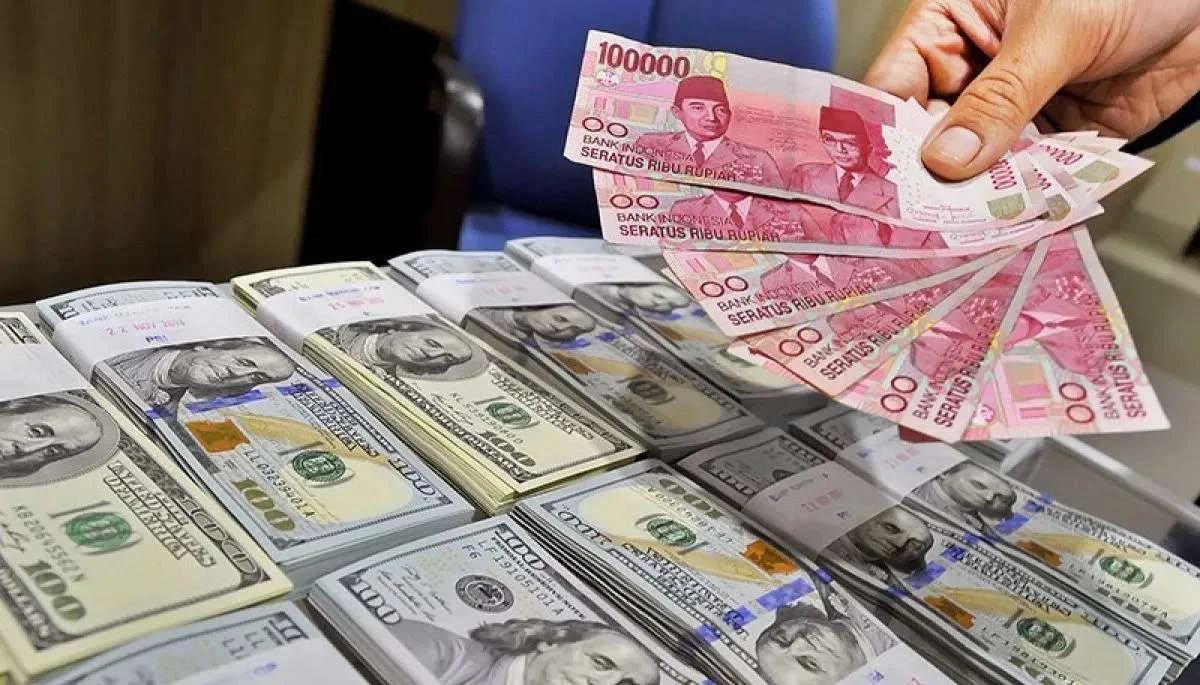
RRI.CO.ID, Jakarta - Bank Indonesia is widely expected to keep its benchmark interest rate unchanged at 4.75 percent in its March 2026 Board of Governors meeting, with the decision set to be announced Tuesday afternoon, March 17, 2026. Economists point to persistent external pressures weighing on the rupiah as the key reason for maintaining the current stance.
“External pressures remain strong, and the appeal of rupiah-denominated assets must be preserved,” BCA Chief Economist David Sumual said in Jakarta, Tuesday, as quoted by Antara.
He noted that the currency’s outlook hinges on how quickly the U.S.–Iran war ends and on Indonesia’s sovereign rating prospects.
Permata Bank’s Head of Macroeconomic and Financial Market Research, Faisal Rachman, warned that a prolonged conflict could push global oil prices higher, fueling inflation worldwide. He added that markets have already scaled back expectations for U.S. Federal Reserve rate cuts, now anticipating only one reduction in December 2026.
“If the Fed cuts once, BI is likely to follow suit with just one cut this year,” Faisal said. However, he cautioned that if geopolitical tensions intensify and oil prices stay above USD 100 per barrel, BI may be forced into a more hawkish stance.
Indef’s Head of Macroeeconomics and Finance, M. Rizal Taufikurahman, acknowledged that the rupiah still has room to strengthen, but short-term prospects remain overshadowed by external risks.
He emphasized that a more durable recovery in the currency and foreign capital inflows would depend on improved global stability and sound domestic fundamentals, including fiscal discipline, inflation control, and policy credibility.
Data from University of Indonesia's Institute for Economic and Social Research (LPEM) economist Teuku Riefky showed that as of March 12, Indonesia recorded capital outflows of USD 0.63 billion in the past 30 days, and USD 0.75 billion since the outbreak of the U.S.-Iran war.
Government bond yields have risen across maturities, with the one-year tenor climbing 83 basis points to 5.65 percent and the 10-year tenor up 36 basis points to 6.75 percent.
“The simultaneous rise in short- and long-term yields signals heightened market concerns over Indonesia’s near-term outlook, driven by capital outflows, currency pressures, and potential fiscal strains from surging oil prices,” Riefky explained.
By March 13, the rupiah had weakened close to its lowest level in recent months, down 1.6 percent year-to-date and about 1 percent since the conflict began. On an annual basis, the currency has lost 3.64 percent against the U.S. dollar.
While several emerging market currencies such as Argentina’s peso, Malaysia’s ringgit, Brazil’s real, and China’s yuan have appreciated this year, Indonesia’s rupiah has joined the ranks of the Philippine peso, Russian ruble, South African rand, Turkish lira, Indian rupee, and Thai baht in posting declines.
Even so, Riefky noted that the rupiah’s depreciation remains relatively moderate, reflecting Bank Indonesia’s active intervention to stabilize the exchange rate.
He cautioned that any rate cut by BI in March could further narrow the interest rate differential, adding pressure on the already weakened rupiah. Moreover, the U.S.-Iran war raises the risk of imported inflation through higher oil prices and currency depreciation, limiting BI’s room to ease policy without exacerbating inflationary risks. ***
News Recomendation
Memuat berita terbaru.....