



Bangkalan’s Gentongan Batik Preserves Heritage and Taboos
- 02 Okt 2026 17:14 WIB
- Voice of Indonesia
Poin Utama
- Rusmidah, 64, is a third-generation hand-drawn batik artisan who carries on her family's batik business in Macajeh Village, Tanjung Bumi Subdistrict, Bangkalan, Madura, East Java.
- Tanjung Bumi’s batik gentongan possesses a beauty rooted in a heritage passed down through generations.
- The lengthy batik-making process, accompanied by traditional beliefs and practices that are still upheld today, forms an integral part of batik gentongan.
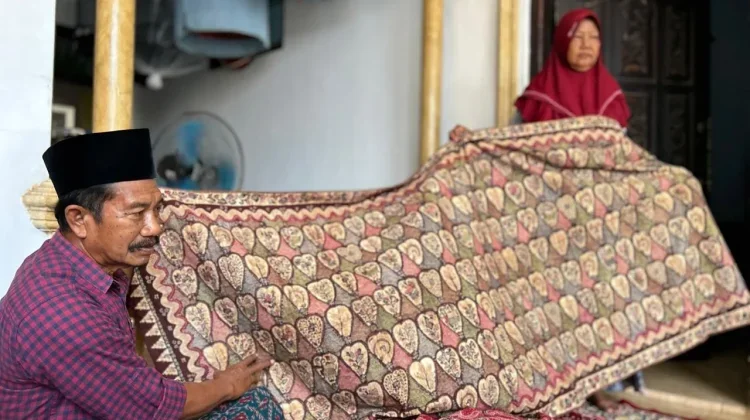
RRI.CO.ID, Bangkalan - Behind the beauty of gentongan batik from Tanjung Bumi, Bangkalan, Madura, East Java Province, lies a story long passed down through generations. It is not only about the lengthy batik-making process, but also about enduring beliefs and taboos still observed today.
Rusmidah, 64, owner of a handwritten batik business in Macajeh Village, Tanjung Bumi Subdistrict, Bangkalan, is a third-generation custodian of her family’s batik enterprise.
She explained that gentongan batik follows a different process from conventional batik. The fabric must undergo extended stages, including soaking in large earthenware jars (gentong) for dozens of days.
“Some take 20 days, 40 days, up to 60 days,” said Rusmidah at her home on Friday, September 2, 2026.
Completing a single piece of cloth from start to finish can take up to a year. It is this prolonged process that gives gentongan batik its distinct value and character.
Yet there is another layer that makes gentongan batik even more compelling. Among artisans, there are firmly held beliefs about taboos that must be respected during production.
Rusmidah noted that women who are menstruating are traditionally not allowed to enter or witness certain stages in the making of gentongan batik. According to her, this belief is still maintained today. Artisans regard the rule as part of a tradition inherited from their ancestors.
One related belief concerns the dyeing process. If not carried out correctly, the fabric’s color can be damaged, appear dull, and ultimately become unsellable.
In the past, Rusmidah said, dye materials relied heavily on natural plants, including noni fruit (mengkudu). The soaking process was done using earthen jars, which gave gentongan batik its name.
“Besides the process and these beliefs, gentongan batik requires many skilled hands. There are artisans who draw the motifs, apply the wax, carry out dyeing, and complete the final stages,” she said.
Even after completion, the fabric may still release some color during its first wash. According to Rusmidah, this is one of gentongan batik’s characteristic traits “Don’t be surprised if it still fades a little when washed the first time,” she said.
Prices for Tanjung Bumi’s handwritten batik vary depending on motif, size, and level of complexity. Certain motifs can fetch tens of millions of rupiah per piece.
For Rusmidah, the stories of taboos and beliefs are not merely tales from the past. They form an integral part of the journey of gentongan batik, which her family has preserved across three generations. (Annaila Azzahra-EN)
News Recomendation
Memuat berita terbaru.....