



Rifaiyah Batik Motifs Declining as Artisan Renewal Stalls in Batang
- 08 Sep 2026 11:27 WIB
- Voice of Indonesia
Poin Utama
- The number of actively produced Rifaiyah batik motifs in Batang has fallen from around 130 in the 1990s to about 30 today.
- Artisans are urging batik education in schools to encourage younger generations to learn traditional techniques and help preserve rare ancestral motifs.
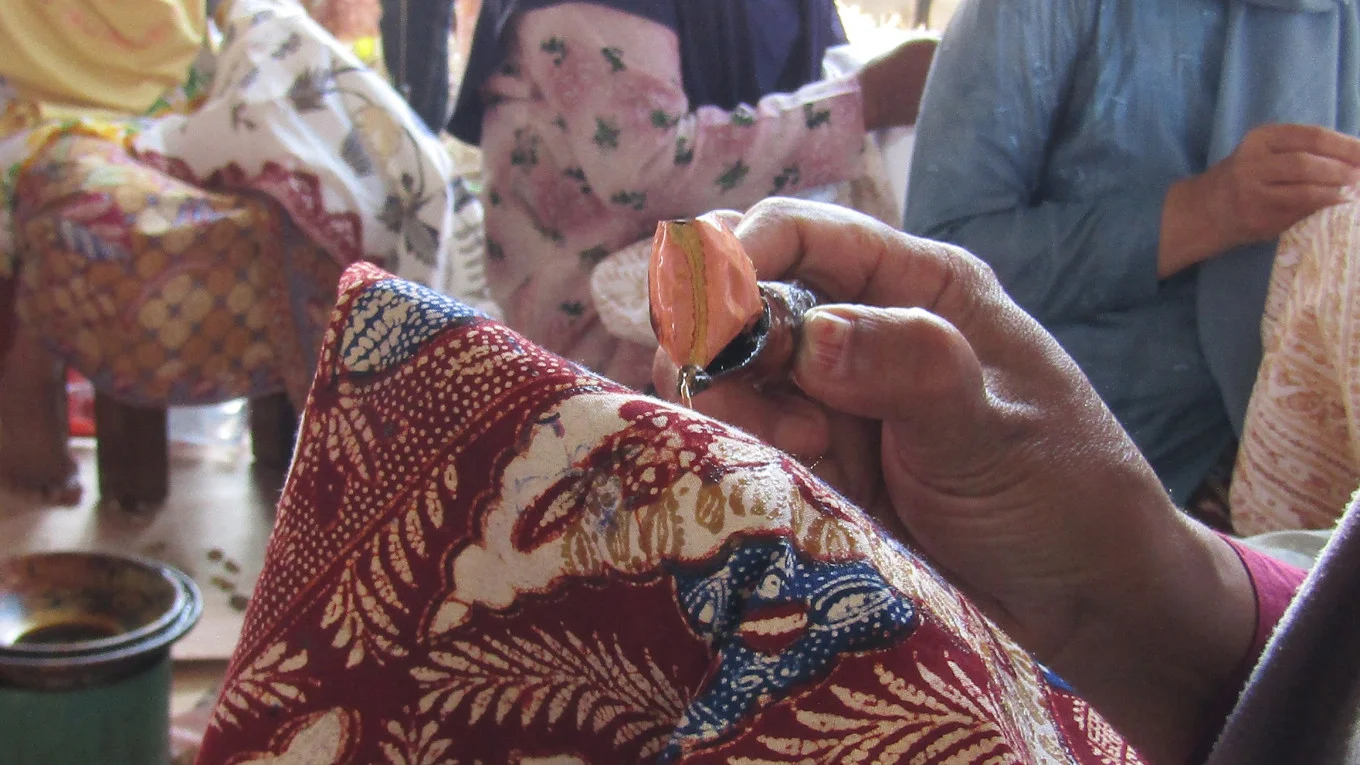
RRI.CO.ID, Batang - The rich heritage of Rifaiyah Batik in Batang Regency, Central Java, is facing a steep decline, with the number of actively produced motifs dropping from approximately 130 in the 1990s to around 30 today due to a dwindling pool of master artisans capable of drawing complex traditional patterns.
Rifaiyah Batik is unique because its artisans are only found in Batang. The batik motifs bear the teachings of cleric and national hero Ahmad Rifai (1786-1869).
Ahmad Rifai was a contemporary of Prince Diponegoro who faught against Dutch colonialism. After studying Islam in Saudi Arabia and Egypt, he set up a boarding school in his native village, Kalisalak, Batang and had many followers especially around Batang, whose descendants are now members of the Rifaiyah community.
Apart from teaching Islam, he also guided his followers to oppose Dutch colonizers. As a consequence, he was captured by colonial authorities and banished to Ambon and later moved to Manado, North Sulawesi, where he lived until the end of his life.
Master artisan Nadhiroh from Watesalit, Batang, noted on Monday, September 7, 2026, that complex historical motifs such as Jamplang have largely given way to simpler patterns like Pelowati, Jeruk Noi, Gendakan, Petir, and Romo. The decline is driven by the lengthy production process, taking up to four months for intricate pieces, and low financial yields that deter younger generations from pursuing batik craftsmanship professionally.
"In the 1990s, there were around 130 Rifaiyah batik motifs developed among artisans, but now only about 30 motifs remain in active production, older generations could sketch complex patterns like Jamplang, whereas today most artisans only produce simpler motifs like Pelowati," Nadhiroh said in Batang on Monday, September 7, 2026, as quoted by Infopublik.id.
She explained the generational challenges and production timelines involved in hand-drawn batik. A single piece of fabric with simple motifs takes about one month, while complex, fine motifs require three to four months of meticulous work. Young people today are reluctant to make batik because the income is often insufficient to cover daily living needs.
Despite these challenges, international exhibitions, such as a recent showcase in Darwin, Australia, have underscored the economic and investment value of Rifaiyah Batik among global collectors. Local artisans are calling for formal batik education across primary and secondary schools to preserve rare motifs and pass down traditional skills to youth.
"Our exhibition in Darwin, Australia, showed how deeply local residents and collectors value our work, we hope young students from elementary through high school will be introduced to membatik in school so these rare, ancestral motifs can be inherited and recognized globally," Nadhiroh added. ***
News Recomendation
Memuat berita terbaru.....