



Topogaro Cave in Central Sulawesi Reveals 42,000-Year Human History
- 11 Agt 2026 11:16 WIB
- Voice of Indonesia
Poin Utama
- Archaeological research at Topogaro Cave uncovered evidence of human habitation dating back 42,000 years.
- The site contains prehistoric artifacts, including Lapita pottery and traditional soronga burials, highlighting long-term cultural activity in Wallacea.
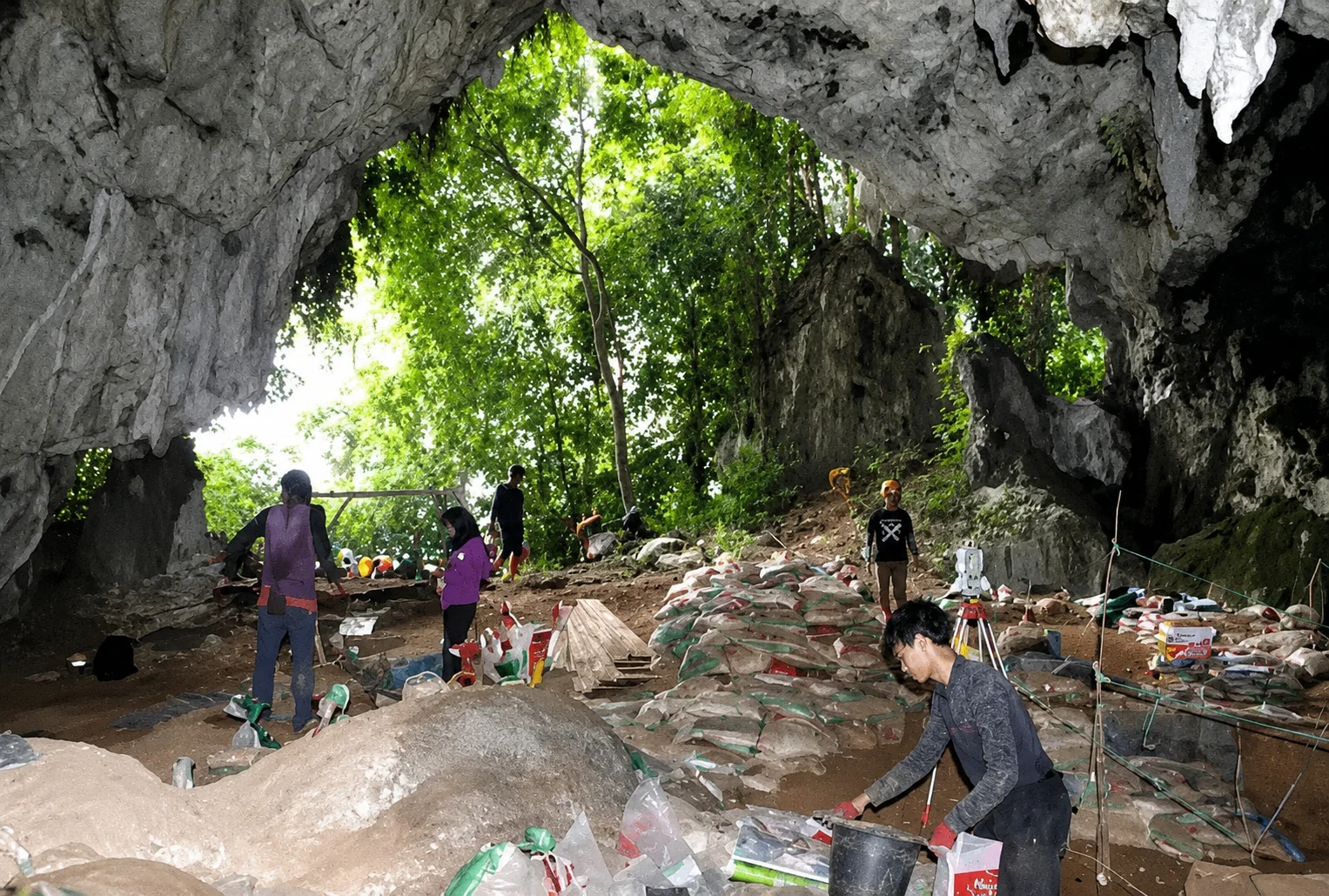
RRI.CO.ID, Morowali - Joint archaeological research by the National Research and Innovation Agency (BRIN) of Indonesia and Japan's National Museum of Ethnology has uncovered evidence of human settlement dating back 42,000 years at the Topogaro (Vavompogaro) Cave site in Morowali Regency, Central Sulawesi.
The findings establish Topogaro Cave as a vital prehistoric site in the Wallacea region, revealing evidence of human activity from the Late Pleistocene era. Researchers discovered dentate-stamped Lapita pottery dating back 2,000 to 1,800 years, indicating early cultural connections between Wallacea and the Pacific, alongside traditional wooden coffin (soronga) burials, showcasing continuous spiritual practices within the Morowali karst landscape into historic times.
The discovery comes as Morowali rapidly expands as one of Indonesia's largest nickel processing hubs, hosting 53 Mining Business Permits (IUP) covering roughly 118,139 hectares. Collaborating since 2016 with Hasanuddin University, the Central Sulawesi Cultural Preservation Center, local administrations, and youth nature groups, researchers provided the scientific foundation for the Morowali Regency Administration to formally designate Topogaro Cave and Tokandindi Cave as protected cultural heritage sites under a 2022 Regent's Decree.
Researchers and research directors emphasized that scientific evidence must guide regional development plans to balance heavy industrial growth with heritage preservation. BRIN Center for Environmental, Maritime, and Sustainable Cultural Archaeology (PR ALMBB) Researcher Syahruddin Mansyur stressed that cultural heritage must be integrated into initial industrial planning.
"Topogaro Cave serves as crucial evidence that the Morowali karst region holds deep historical value beyond its mineral resources, industrial development and cultural preservation should not be placed in opposition, but managed side by side through science-based policies," BRIN Researcher Syahruddin Mansyur said in Morowali on Tuesday, August 11, 2026, as quoted on BRIN's official website.
He warned that archaeological sites represent non-renewable resources that require proactive protection. "Cultural heritage like Topogaro Cave is non-renewable; if damaged or lost, information regarding human civilization history is lost forever, archaeological research must be part of development planning from the start, rather than a mere response after threats emerge," Syahruddin added.
PR ALMBB BRIN Head Marlon Ririmasse highlighted the broader potential for multi-stakeholder collaboration in extractive industrial zones.
"BRIN remains committed to research-driven contributions for science-based national cultural heritage management, this includes synergizing all stakeholders through research findings as a reference for sustainable shared contributions," Marlon expressed. ***
News Recomendation
Memuat berita terbaru.....