



Melukat, Modern Spiritual Tourism Trend in Bali
- 04 Agt 2026 08:34 WIB
- Voice of Indonesia
Poin Utama
- Melukat, the traditional Balinese Hindu purification ritual, has become a popular spiritual tourism trend driven by celebrity and influencer exposure.
- The ritual is rooted in Balinese Hindu teachings and sacred lontar manuscripts, emphasizing spiritual purification rather than lifestyle aesthetics.
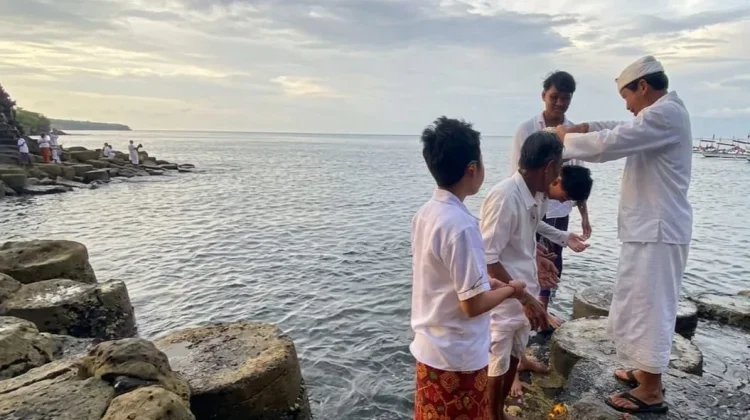
RRI.CO.ID, Singaraja - The melukat ritual, a spiritual cleansing of the mind and soul, has now become a modern spiritual tourism trend in Bali. A wave of posts from celebrities and influencers has made the ritual appear highly aesthetic, turning it into a must-do activity for many visitors to the Island of the Gods.
Melukat is a traditional Balinese Hindu purification ritual designed to cleanse the mind, body, and soul of negative energy and spiritual impurities (mala). Rooted in ancient sacred scriptures (lontar), the practice involves washing with holy water at sacred springs, rivers, or temples under the guidance of a spiritual leader to restore inner peace and balance.
Urban communities have embraced the tradition as a way to unwind, reduce stress, and recover from mental exhaustion. Yet behind its popularity as a modern lifestyle trend, melukat in fact has a strong theological foundation in Balinese Hindu teachings.
Textually, the practice of melukat is regulated in various lontar manuscripts, which are sacred texts or ancient literary works of the Balinese people. Examples include the Lontar Dharma Kauripan, Lontar Usada, and Lontar Sundarigama.
Religious literature emphasizes that the true essence of melukat is to destroy the five forms of inner impurity, or klesa. These impurities include spiritual ignorance (awidya), egoism (asmita), desire (raga), hatred (dwesa), and fear of death (abhiniwesa).
A Hindu religious leader, Jro Mangku Gede Dana, explained that the word melukat comes from the term mala, meaning impurity (leteh), and kaad, meaning gone or removed.
| Baca juga: Dieng Gimbal Haircut Tradition Preserved |
“So, melukat comes from the phrase mala kaad. Mala means dirty, and kaad means gone. In general, melukat can be understood as removing all eteh or mala. Symbolically and spiritually, melukat means removing all impurities from the body (angga sarira) as well as impurities in the ‘Buana Agung,” said Jro Mangku on Monday, August 3, 2026.
According to him, purification rituals are classified based on the object being purified. First is purification for humans (Angga Sarira), such as the Mebayuh Oton ritual, which is performed to neutralize inborn negative traits.
Second is purification of nature or the environment (Buana Agung), as contained in the Bhama Kertih literature. Third is purification of Pralinggih or temples to cleanse sacred symbols (pralingga), which in practice is often referred to as Melis.
The location for melukat is adjusted to the type and purpose of the ritual. Common locations include the household shrine, the seashore to dissolve negative energy, and sacred water sources or river flows.
Ideally, the purification should be led by a local temple priest, which is Pinandita or Pemangku, up to a fully ordained high priest, which is Sulinggih, depending on the level of the ritual being carried out.
Through the melukat tradition, people are encouraged not merely to follow a trend, but also to understand its meaning, maintain spiritual balance, preserve bodily cleanliness, and purify the soul. (Annaila Azzahra-EN)
News Recomendation
Memuat berita terbaru.....