



A Lifetime of Craft: Sosro Warsito’ and His Wife's Blangkon Journey
- 31 Mei 2026 10:32 WIB
- Voice of Indonesia
Poin Utama
- Sosro Warsito, a blangkon craftsman from Gunungkidul, Yogyakarta has spent over 50 years making this traditional Javanese head cover.
- His efforts were recognized in 2025 with the Culture Award from the Yogyakarta Regional Administration. The award recognizes Sosro's efforts to preserve the blangkon craft as part of Javanese intangible cultural heritage.
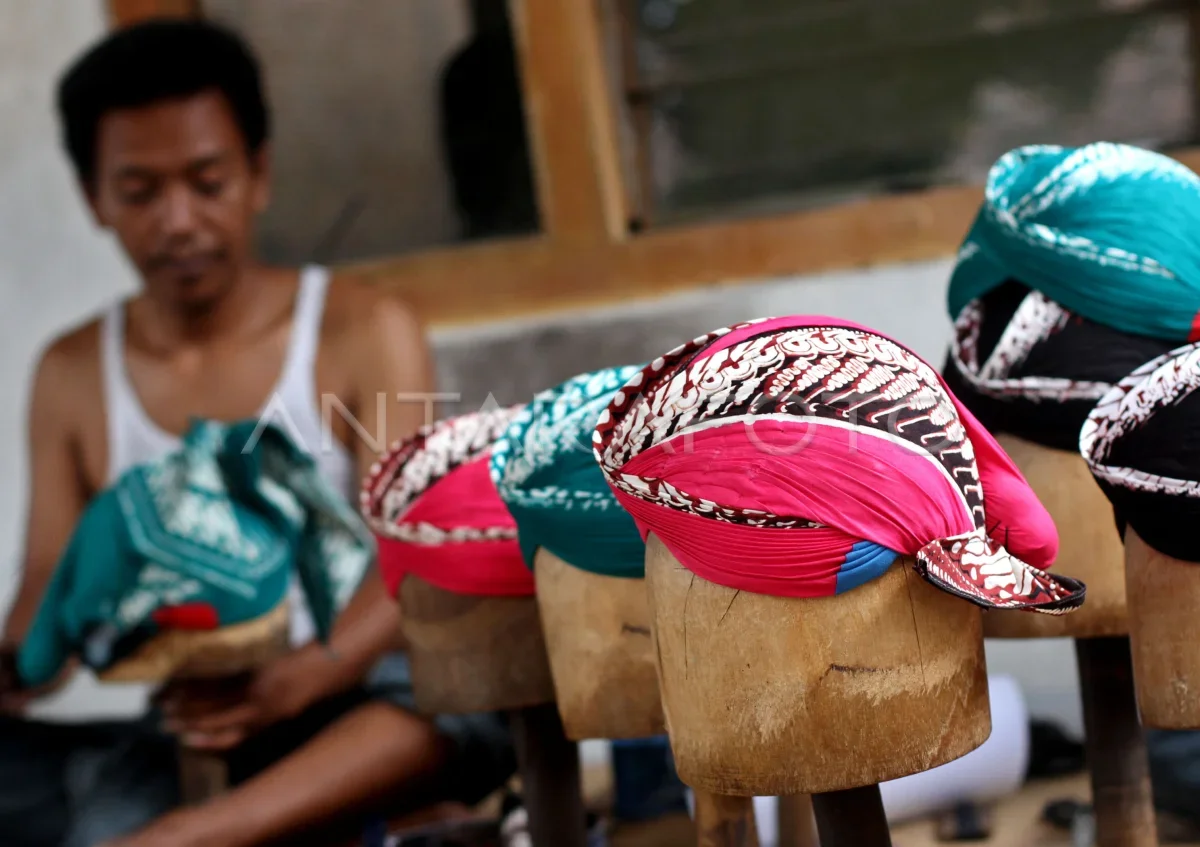
RRI.CO.ID, Yogyakarta - Amidst the rapid flow of modernization and changing lifestyles, some individuals faithfully preserve Javanese cultural heritage through their handiwork. Sosro Warsito, a blangkon craftsman from Clorot Hamlet, Gunungkidul Regency, Yogyakarta, has spent over five decades making this traditional Javanese head covering.
At 78 years old, Sosro Warsito still making blangkon orders from his modest home. Despite his age, he carefully smooths each fold of the batik cloth, the main material used to make Yogyakarta-style blangkon.
A blangkon is a traditional Javanese headgear worn by men, crafted from intricately folded and stitched batik fabric. For Sosro, the blangkon is more than just a craft product, it is a symbol of cultural identity that must be preserved. This belief has kept him engaged in this profession since 1970.
"As long as there are Javanese people, the blangkon will never disappear," Sosro said, according to the official website of the Yogyakarta regional administration.
Sosro's journey as a blangkon craftsman began with his love of Javanese culture. From a young age, he actively played gamelan and participated in various traditional arts activities. In 1969, when he was assigned to order blangkon for his gamelan group, he met a blangkon craftsman named Kasan Dayat in Piyaman, Gunungkidul.
That meeting marked the beginning of a long journey. Sosro's interest in blangkon prompted him to learn directly from Kasan Dayat. For about a year, Sosro studied blangkon-making techniques and assisted his teacher with various tasks as a form of devotion.
His sincerity and perseverance earned him trust. When Kasan Dayat's health declined, he handed over all the blangkon-making equipment to Sosro. Shortly thereafter, his teacher passed away.
From then on, Sosro's life became inextricably linked to batik cloth, needles, and the intricate folds characteristic of the Yogyakarta-style blangkon. He started taking and filling blangkon orders on his own. He continues this work to this day, committed to preserving one of Java's cultural heritages.
For decades, Sosro has focused on making Yogyakarta-style, or Mataraman-style, blangkon. He doesn't accept orders for Surakarta-style blangkon because he only learned the technique for making Yogyakarta-style blangkon from his teacher.
"From the beginning, I was only taught to make blangkon from Yogyakarta. Before I could learn the Surakarta style, my teacher passed away," he said.
Sosro maintains traditional standards because he wants to keep the cultural heritage of blangkon craftsmen alive.
Folding the fabric is crucial to making a blangkon. Batik cloth must be folded 15 to 17 times with precise measurements to create harmonious shapes and motifs. Accuracy is key; a small error can affect the blangkon's appearance.
Sosro admits that arranging these folds is the most difficult part of the production process. Therefore, although he occasionally receives help from local residents when orders increase, Sosro prefers to do most of the work himself to ensure quality.
Sosro does not work alone. His wife, Surami, faithfully assists with various stages of production, especially the sewing process. Together, they have kept the decades-old craft business going strong.
Sosro can make three blangkon a day, especially if the fabric has gone through the previous weaving stage. This productivity stems from a habit he has maintained over the years without compromising his quality standards.
This perseverance has also made Sosro's work known.He receives orders not only from Yogyakarta and Central Java but also from Lampung, Kalimantan, Bali, Surabaya, Malang, Kebumen, and Pacitan. According to Sosro, the high level of public interest proves that the blangkon still has a place in modern life.
"Nowadays, blangkon are not only worn by Javanese people. Many people from other regions also order them. That makes me confident that blangkon are still needed," he said.
The blangkon made by Sosro sell for between IDR 100,000 to IDR 200,000 each, depending on the type of batik fabric used. They offer a variety of motifs, including Kumitir Tulis, Modang Tulis, Winarnan, Kumitir Prima, Modang Prima, Poleng Prima, Celeng Kewengen, Kesuma Prima, Wilis, and plain or wulung. The Kumitir motif is the most popular among customers.
However, for Sosro, the value of a blangkon goes beyond its selling price. He views the craft as a means of preserving Javanese cultural identity for future generations.
"I want to preserve Javanese culture. I don't want the tradition of making blangkon to disappear or be outdone by other cultures," he emphasized.
After decades of commitment, his efforts were finally recognized with the 2025 DIY Cultural Award, presented by the Yogyakarta Regional Administration. The award recognizes Sosro's consistent efforts to preserve the blangkon craft as part of the Javanese people's Intangible Cultural Heritage.
For Sosro, however, the greatest reward isn't a trophy or a certificate. He is truly happy when he sees the blangkon worn at various traditional ceremonies, cultural activities, and in everyday life.
Now, at 78 years old, Sosro holds the same beliefs he had when he first entered this profession decades ago. He believes that culture will live on as long as there are people willing to preserve and cherish it.
"As long as Javanese people exist, I hope the blangkon never disappears. That's what I've always held onto," he said. ***
News Recomendation
Memuat berita terbaru.....