



Tirta Empul, The Sacred Spring and Poison‑Healing Legend
- 18 Mar 2026 17:00 WIB
- Voice of Indonesia
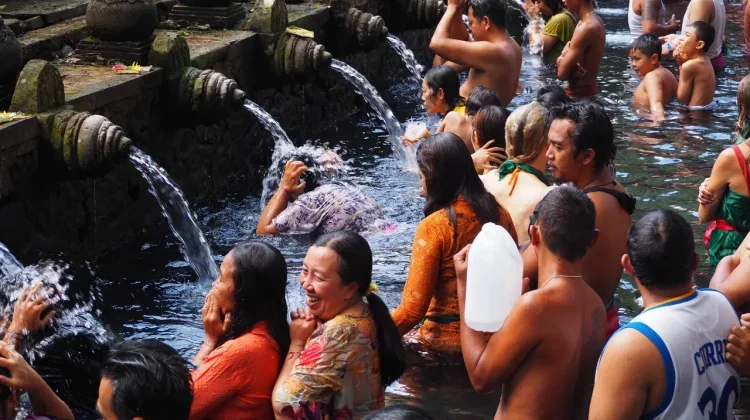
RRI.CO.ID, Jakarta – Pura Tirta Empul is located in Manukaya Village, Tampaksiring Subdistrict, Gianyar Regency, Bali Province. The temple is renowned for its distinctive architecture and for housing a natural spring within its precincts.
The combination of these two features makes Tirta Empul a popular destination for both foreign and domestic visitors. From Ngurah Rai International Airport, the distance is approximately 52 kilometers, with a travel time of about one and a half hours depending on traffic.
Although the site is not extremely close, access to Tirta Empul is relatively easy and the temple is frequently included in Gianyar‑area sightseeing routes.
According to local tradition, the origin of this temple is linked to the legend of King Mayadenawa. He is depicted as a tyrannical ruler who forbade his people from performing religious ceremonies to seek protection from the gods. This act provoked the anger of the deities led by Bhatara Indra, setting off a great battle.
After being defeated, Mayadenawa fled north toward Tampaksiring. Pursued by Indra’s forces, he used his magical powers to create a poisoned spring. The troops drank the water and died. Seeing this, Bhatara Indra thrust his spear into the ground, causing a new spring to emerge. This spring became known as Tirta Empul, and its holy waters were used to revive the fallen gods.
Pura Tirta Empul was built around this large spring in 962 CE during the reign of the Warmadewa dynasty under King Sri Candrabhayasingha Warmadewa. The name Tirta Empul is derived directly from the sacred spring within the temple complex, while the water source itself feeds the Pakerisan River.
The temple is dedicated to Dewa Wisnu, known in Hindu belief as Narayana. To the left of the temple grounds stands Tampaksiring Palace, which was constructed in 1954 as a retreat for President Soekarno during his visits to Bali. Today, the palace is used to host state guests.
Pura Tirta Empul has also hosted several notable international visitors. Among them is former US President Barack Obama, who visited on June 27, 2017. He was greeted by the local Bendesa Adat (traditional village head) and spent about half an hour touring the temple complex before leaving.
The Tirta Empul complex is spacious and surrounded by tranquil scenery. Upon entering, visitors pass through a candi bentar (split gate) and arrive at the outer courtyard, or jaba sisi.
Along this area are large, intricately carved Dwarapala guardian statues, accentuated with vivid gold‑toned details. As visitors move into the middle courtyard (jaba tengah), the atmosphere becomes more solemn.
Here they encounter the sacred spring water flowing into purification pools. This water is used for melukat, a ritual believed to cleanse the body and spirit. The pools contain 30 spouts, each associated with a different function, such as Pengelukatan, Pebersihan, Sudamala, and Pancuran Cetik, the so‑called “poison” spout.
The innermost section, jeroan, is usually less frequented by tourists but serves as the main worship area. Inside, a large spring pond contains green algae and small fish, surrounded by vividly painted sacred structures arranged in an orderly, harmonious layout.
Pura Tirta Empul is especially famous as one of the main sites for performing melukat, a Balinese purification ritual using holy spring water. The ceremony aims to cleanse the body, mind, and soul of negative energies, helping participants feel calmer and more balanced.
For Balinese Hindus, melukat is an important act of spiritual renewal, rejuvenation, and a way to seek safety and protection. The ritual is typically guided by local officiants who are experienced in assisting participants through the process.
The procedure begins with prayers, followed by bathing under the consecrated water spouts. Each step carries symbolic meaning and is believed to help alleviate mental burdens, reduce stress, and bring inner peace.
Many people also believe the ritual can support healing, improve career or business prospects, and help resolve personal matters. Non‑Hindu visitors are allowed to participate in melukat, provided they follow the temple’s rules.
Visitors must wear a sarong to cover the lower body and a sash at the waist. Women are generally not permitted to take part in the ritual during menstruation, in accordance with temple customs. (Annaila Azzahra/Bambang MBKA)
News Recomendation
Memuat berita terbaru.....