



Ancient Tomb Highlights Java’s Transition From Hindu-Buddhist to Islamic Era
- 28 Agt 2026 09:45 WIB
- Voice of Indonesia
Key Points
- An ancient tomb in Sembung Village, Tulungagung, estimated to date from the 16th or 17th century, features a Tembayat-style gravestone reflecting the transition from Hindu-Buddhist traditions to early Islam in Java.
- Residents have begun relocating the centuries-old burial site following community consultations, while heritage experts document its distinctive gravestone and cultural significance.
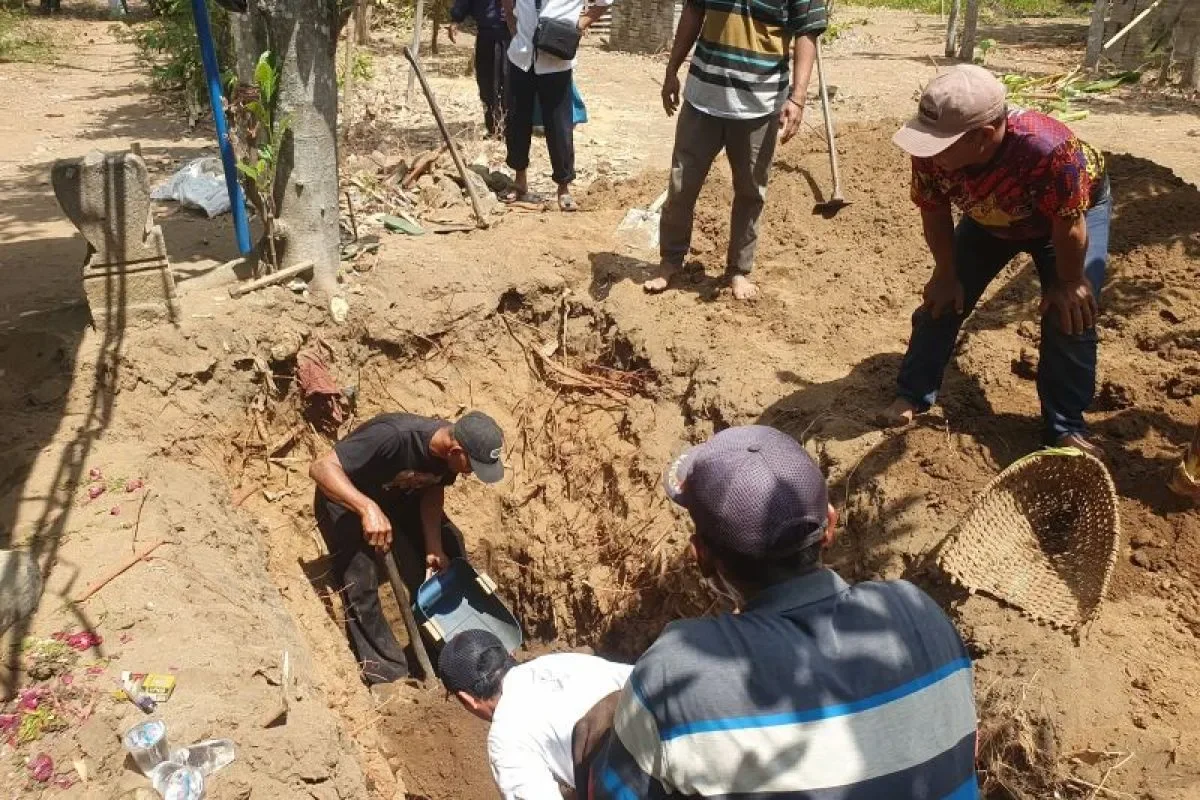
RRI.CO.ID, Tulungagung - The discovery and relocation of an ancient tomb in Sembung Village, Tulungagung Regency, East Java, took center stage on Thursday, August 27, 2026, offering rare physical evidence of Java’s transition from the classical Hindu-Buddhist era to early Islamic propagation in the 16th and 17th centuries.
The historical site features an unpolished andesite gravestone carved in the Tembayat or Baya style, displaying a distinctive wayang gunungan or ancient makara curve set atop a stepped stone base modeled after classical pre-Islamic sacred pedestals. First uncovered in 1995 beneath a felled rain tree on land owned by local resident Imam Mustajib, the unidentified tomb was excavated following cross-sectoral community consultations to transfer any remaining remains to a cemetery complex in Botoran Village.
Highlighting the fusion of classical Majapahit and Demak relief art with early Islamic burial traditions, the site drew significant attention from cultural heritage authorities even as initial 3-meter excavations revealed no organic remains, pointing to complete natural decomposition over the centuries.
Heritage experts and landholders noted that preserving artistic documentation of transitional artifacts sheds light on historical cultural blending during Java’s early Islamic period. Member of the Tulungagung Cultural Heritage Expert Team (TACB) Haryadi detailed the artistic and historical significance of the tomb’s gravestone design.
"The shape mirrors a wayang gunungan or ancient makara curve, carved directly from raw andesite with a stepped base that emulates classic pre-Islamic temple pedestals. Gravestones of this style capture a strong cultural acculturation blending classical Majapahit and Demak relief arts with early Islamic traditions," Haryadi said in Tulungagung on Thursday, August 27, 2026, as quoted by Antara.
Property owner Imam Mustajib explained the history of the discovery and the relocation process. " Given its age of several hundred years, we anticipated three possibilities: finding intact remains, finding fragmented bones, or discovering that the remains had entirely decomposed over time," Imam added. ***
News Recomendation
Loading latest news.....