



Jaktirta Project Strengthens Jakarta’s Integrated Flood Control System
- 02 Sep 2026 00:10 WIB
- Voice of Indonesia
Poin Utama
- The Jaktirta Project is strengthening Jakarta’s flood-control system through integrated infrastructure development from upstream to downstream.
- The project includes polder systems, pumps, river infrastructure, reservoirs, lakes, and retention ponds.
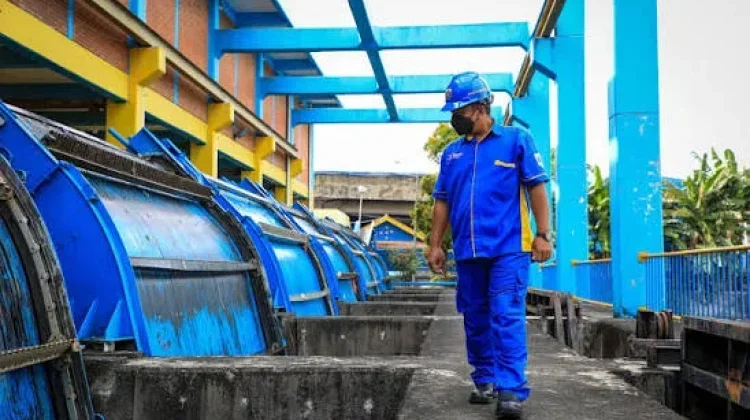
RRI.CO.ID, Jakarta - The Jaktirta Project is strengthening Jakarta’s flood control system through the development of integrated infrastructure from upstream to downstream. The project includes polder systems, river facilities and infrastructure, as well as the construction of reservoirs, lakes, and retention ponds.
Head of the Flood Control and Drainage Planning Subgroup at the Jakarta Provincial Water Resources Agency, Vega Fitria Mutiara Sari, explained that the Jaktirta Project was designed to increase Jakarta’s water storage capacity. According to her, the project is also aimed at creating urban spaces that are more adaptive to climate change.
Vega said Jakarta faces recurring floods due to a combination of extreme rainfall, upstream water flows, and limited drainage capacity. The situation is exacerbated by declining groundwater levels in coastal areas, meaning Jakarta requires a flood-control approach that continues to adapt.
She said rainfall is classified as extreme when it exceeds 150 millimetres. Meanwhile, rainfall in Jakarta was recorded at 377 millimetres in 2020, 368 millimetres in 2025, and 276 millimetres in 2026. According to Vega, the capacity of the currently available flood infrastructure still falls short of the design capacity set out in the master plan.
“If we aim for the master plan’s design capacity, compared with the current condition of our flood infrastructure, there is still a gap of 900 to 1,000 cubic metres per second,” she said in Jakarta on Tuesday, September 1, 2026.
The Jaktirta Project is being developed through the construction of polder systems and pumps, improvements to the capacity of rivers and channels, and the provision of retention ponds. The concept was designed as an integrated whole in line with the Jakarta Provincial Flood Control Master Plan, with retention ponds upstream and polder or pumping systems downstream.
Vega explained that construction sites were determined based on inundation maps showing areas that had experienced recurring floods over the past five years.
“The infrastructure being built also serves different functions, as pumps are used to drain water from low-lying areas, while retention ponds or reservoirs hold back rainwater runoff in upstream areas,” she explained.
In addition to controlling floods, the Jaktirta Project is expected to address inundation in 82 community units (RW), and reduce inundation by around 18 percent based on conditions over the past three years. Vega added that the infrastructure is also intended to serve as public space that can continue to be used by residents during the dry season.
The development of river infrastructure includes the construction of embankments, the adjustment of riverbed gradients, and dredging to increase flow capacity. Vega stressed that the public also has an important role to play by keeping drainage channels, rivers, reservoirs, retention ponds, and existing pumping facilities clean.
“Do not dispose of waste improperly, because waste plays a major role in reducing drainage-channel capacity. Waste entering pumps can cause blockages, causing the pumps to stop and reducing the effectiveness of flood control,” said Vega.
She stressed that the success of flood control does not depend solely on infrastructure development, but also on the involvement of all stakeholders.
“Everyone must play a role. All stakeholders must play a role,” said Vega, emphasising the importance of collaboration between the government and the public.
Furthermore, the Jaktirta Project is a strategic programme of the Jakarta Provincial Administration for the 2025–2027 period, covering various flood-control infrastructure projects across Jakarta’s five administrative regions.
The administration has also designated the development of polder systems, retention ponds or reservoirs, embankment reinforcement, and river-capacity improvements as key components of the project. (Annaila Azzahra-EN)
News Recomendation
Memuat berita terbaru.....