



Authorities Prepare Cultural Recovery Measures for Sade Village After Fire
- 23 Agt 2026 17:01 WIB
- Voice of Indonesia
Poin Utama
- A fire destroyed around 120 traditional houses in Sade Traditional Village on Saturday night, prompting emergency response and debris clearing.
- Authorities are inventorying cultural artifacts and documenting Sade’s traditions to guide cultural recovery and reconstruction.
- The local administration plans stronger disaster‑mitigation systems for traditional villages following fires in Sade and Bayan.
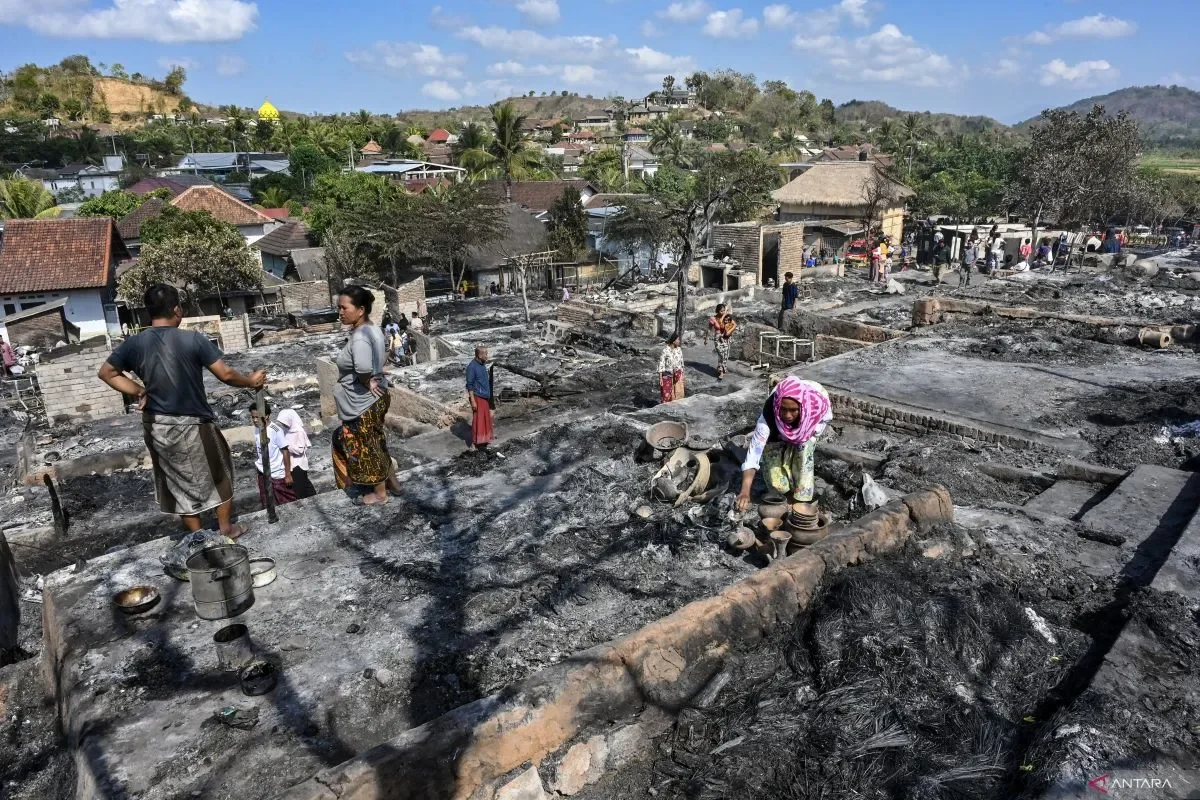
RRI.CO.ID, Central Lombok - A fire broke out at Sade Traditional Village in Central Lombok on Saturday night, August 22, 2026, destroying approximately 120 traditional houses and forcing residents to flee without saving valuables.
As of Sunday morning, firefighters were still extinguishing residual flames, cooling the site, and clearing burnt building materials.
Sade Traditional Village is an indigenous settlement in Central Lombok known internationally for its traditional Sasak architecture and weaving heritage. The village is home to generations of Sasak families who preserve ancestral customs, weaving traditions, and cultural practices that form the community’s identity.
The West Nusa Tenggara (NTB) Provincial Administration is now documenting and cataloging cultural elements affected by the fire to preserve cultural heritage and develop a recovery plan.
NTB Culture Agency Head Muhamad Ihwan said the inventory process includes identifying surviving cultural artifacts and documenting the knowledge, stories, and traditions of the indigenous Sade community. This data collection is necessary to assess damage to both tangible cultural objects and intangible cultural elements.
“The most important aspect is saving cultural artifacts, including the stories of local residents,” Ihwan said after inspecting Sade Traditional Village on Sunday, August 23, 2026, as quoted by Antara.
The NTB Culture Agency will also document weaving tools and equipment, which are vital to the community’s cultural life. Such documentation is considered crucial as a reference should burnt artifacts need to be restored or replicated.
“This hamlet is renowned for its weaving, so items related to weaving must be documented. They can then be replicated so that, in the event of a future fire, residents still possess other tools,” he said.
Once the inventory is complete, the government will develop plans to rebuild and reorganize the area. The process will involve the Cultural Preservation Agency, the Central Lombok Regency Administration, and traditional elders.
Ihwan emphasized that the indigenous community must be involved, as they are the owners and guardians of the culture that thrives in Sade Traditional Village.
“We are inviting the community, as the owners of this culture, to join us in considering how to ensure the Sade Traditional Village is not lost, especially given the area’s international renown,” he said.
Beyond post-fire recovery, the government is using the incident as an opportunity to evaluate protection systems for traditional villages. Ihwan noted that the fire at Bayan Traditional Village a few months ago, combined with the incident at Sade, highlights the need to strengthen disaster mitigation measures in traditional areas.
According to him, every traditional village in NTB needs firefighting systems or early warning systems, as well as personnel specifically trained to handle disasters.
Head of the Central Lombok Regency Disaster Mitigation Agency (BPBD), Ridwan Maruf, said joint teams from the Indonesian Military, National Police, local administration, and residents cleared debris on Sunday. Fire and rescue vehicles had been deployed since the fire broke out on Saturday night.
The cause of the fire has not yet been confirmed. Authorities are investigating potential causes, including a suspected electrical short circuit or other factors.
Preliminary data indicates approximately 120 houses were destroyed, while the number of affected residents is still being tallied. The government is preparing logistical aid and discussing temporary shelter locations for displaced residents.
A resident named Amaq Imi said the fire erupted suddenly at night while some residents were asleep, leaving no time to save valuables such as woven fabrics, money, or mobile phones. He and other residents are currently staying at relatives’ homes and hope for immediate government assistance, particularly food and basic necessities.
“We hope for government aid, as nothing could be saved -- only the clothes I am wearing right now,” he said.
Inventorying artifacts and cultural documentation marks the initial stage of the recovery process for Sade Traditional Village. Beyond helping assess the extent of the damage, this step is expected to serve as a foundation for preserving Sade’s cultural identity during post-fire reconstruction. ***
News Recomendation
Memuat berita terbaru.....