



Yogyakarta Supports PSEL to Process Waste in Line with Environmental Standards
- 12 Agt 2026 14:46 WIB
- Voice of Indonesia
Poin Utama
- The Yogyakarta City, Sleman Regency, and Bantul Regency administrations signed a cooperation agreement to develop a Waste-to-Electricity Processing (PSEL) project.
- The project is intended as a long-term solution to waste management challenges in Yogyakarta’s three largest waste-producing agglomeration areas.
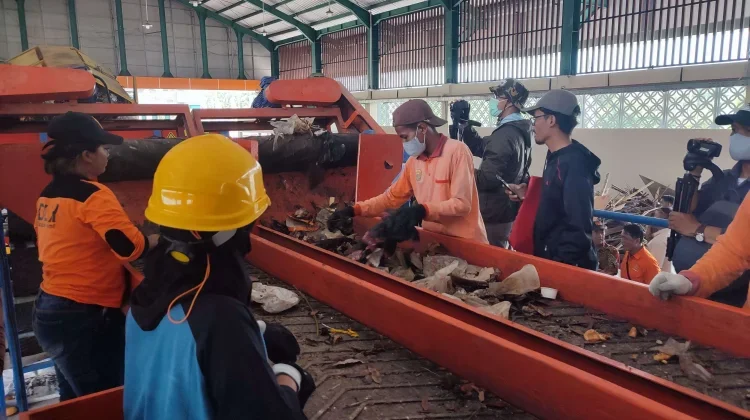
RRI.CO.ID, Yogyakarta - The Yogyakarta City Administration, together with the Sleman Regency Administration and Bantul Regency Administration in Yogyakarta Province has signed a cooperation agreement to develop the megaproject for Waste-to-Electricity Processing (PSEL). The signing was carried out by Yogyakarta Mayor alongside the Regents of Sleman and Bantul, at Gedhong Wilis in the Kepatihan Complex, Yogyakarta, on Tuesday, August 11, 2026.
The Governor of Yogyakarta Province, Sri Sultan Hamengku Buwono X, emphasized that regional limitations in waste management capacity necessitate investment intervention from third parties. “Third-party investment intervention is needed because regional capacity is limited, especially for the three agglomeration areas that are the largest waste contributors, namely Yogyakarta City, Sleman, and Bantul,” said the Governor on Tuesday.
Meanwhile, the two other regencies in Yogyakarta Province, Gunungkidul and Kulonprogo, are considered still capable of managing the waste generated in their respective areas.
“The development of PSEL is expected to be a long-term solution to address waste issues while transforming waste, which has been viewed as an environmental problem, into a source of energy that has beneficial value,” he conveyed, as quoted on Yogyakarta official website.
Meanwhile, Director of Investment at Danantara Indonesia, Fadli Rahman, said the PSEL project in Yogyakarta Province is targeted to begin full operations in the third or fourth quarter of 2028. Before entering the operational phase, the project is targeted to reach the groundbreaking stage by the end of 2026.
“Our target is to lay the first stone or conduct groundbreaking at the end of this year, in December 2026. So by the third or fourth quarter of 2028, it will be able to process waste for the Yogyakarta area,” said Fadli.
According to Fadli, the PSEL facility is designed to receive and process around 1,000 tons of waste per day. This capacity is expected to help reduce the waste burden that has so far had to be handled by local administration, particularly from the urban area of Yogyakarta and its agglomeration zones.
The waste processing facility will also apply strict environmental standards. Fadli explained that the standards used in developing the PSEL facility refer to European standards, which he said surpass Indonesian National Standards (SNI).
“The application of these standards is carried out to ensure that the waste processing process does not create new environmental problems, including air pollution, odor, or leachate,” he elaborated.
In the designed system, he said, waste entering the PSEL facility can go through a sorting or mixing process before being fed into the processing bunker. The bunker is designed to be closed and airtight to minimize the potential for odors from the waste.
“The waste can be sorted or mixed. It will enter a closed and airtight bunker so it does not produce odor,” explained Fadli.
Once inside the bunker, he continued, the waste will undergo a drying process for approximately five days. During this process, the water content from the waste will be removed so that the dried waste can be used as fuel in the energy processing process.
“Waste that has gone through this process is then used to generate heat. That heat is used to heat water until it produces steam. Next, the steam will drive a turbine, which then generates electrical energy,” he continued.
Fadli explained that with a processing capacity of around 1,000 tons of waste per day consistently, the facility is projected to generate electrical power of around 18 to 20 Megawatts (MW) per day.
The electricity generated is estimated to meet the needs of around 15,000 household connections. Thus, the project is not only directed at solving waste problems but also providing benefits in the form of electricity production.
In addition to generating electricity, he added, managing combustion residues is also an important part of the PSEL system. Fadli explained that the results of waste combustion will be in the form of bottom ash and fly ash, which will undergo further processing in accordance with established standards.
“This processing is directed to meet high environmental standards, even pushed to follow European standards. Thus, the residues produced from the waste processing process do not automatically become a new environmental problem,” he added.
An air filtration system will also be applied strictly. Air generated from the processing process will go through filtration stages before being released into the environment. This process aims to ensure that emissions from the facility continue to meet established environmental standards. ***
News Recomendation
Memuat berita terbaru.....