



Reviving Local Wisdoms Around Prambanan Cultural Heritage Site
- 28 Des 2024 13:37 WIB
- Voice of Indonesia
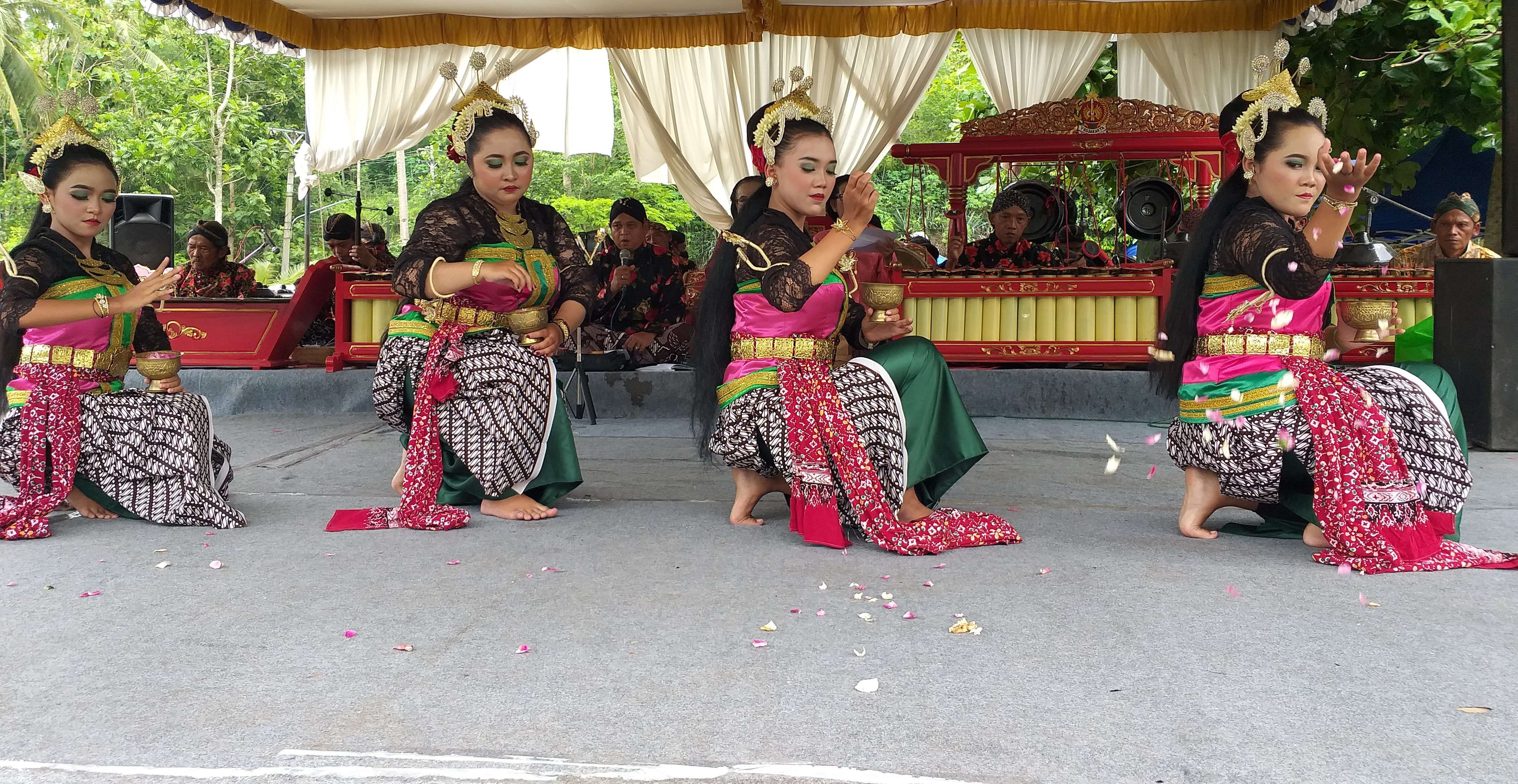
KBRN, Yogyakarta: Four teenage girls danced beautifully on the stage. They moved slowly and gently following the gamelan music instruments played behind them. All the dancers wore nice costumes. Towards the end of the performance, they lowered their bodies and took flowers from a small cup using on their right hands and scattered them.
“When I scattered the flowers, I felt a deep sacred moment,” said Zahra Putri Utami, one of the dancers after performing.
Zahra and her friends just performed a dance called 'Bedaya Samarsya Rasa' presented during 'Wukir Nyawiji' Cultural Festival held in Wukirharjo Village, Prambanan Subdistrict, Sleman Regency, Yogyakarta Province, recently. The festival was also an event to launch the new and the only dance jointly created by Wukirharjo artists.
Many Wukirharjo residents were waiting to watch the 'Bedaya Samarsya Rasa' dance. The word 'bedaya' means dance in Javanese, while 'samarsya rasa' mean the feeling of harmony.
Thanks God, it was not raining. The launching of 'Bedaya Samarsya Rasa' and other performances such as 'Angguk Dance' and 'Gambyong Anom Dance' ran well.
Wukirharjo is located to the south of Prambanan Temple, a world cultural heritage site. The village is situated on stone hills called Ciwa Plateau, covered with dense huge trees. It is home to some sacred places like springs. The community, too, still practices the ancestor’s customs and maintains various traditional foods.
The festival was organized by the Ministry of Culture's Directorate of Cultural Development and Utilization to explore local wisdoms existed around the world cultural heritage. The ministry has been assisting five villages around Prambanan temple for the same purpose. They are Wukirharjo, Gayamharjo, Sumberharjo, Madurejo, and Sambirejo Villages.
Kendal, a facilitator of the assistance program said the ministry wanted the local wisdom of the communities around Prambanan Temple to inspire the local and global people. “As such, it is not only the temple which is inspiring,” he said.
The ministry provided the assistance to Wukirharjo community from March to December 2024. After exploring their local wisdom and undergoing a long process of workshops and discussions, said Kendal, the community decided to transform one of their local wisdoms to a dance that later was called 'Bedaya Samarsya Rasa'.
 Four teenage girls from Wukirharjo Village are performing traditional 'Angguk Dance' during the 'Wukir Nyawiji' Cultural Festival in Wukirharjo Village, Prambanan Subdistrict, Sleman Regency, Yogyakarta Province, recently. (Photo: RRI/Bambang MBKA)
Wukirharjo Village Secretary Giyanto said that 'Bedaya Samarsya Rasa' was a classical dance inspired by the mythology of two dragons, namely Naga Raja and Naga Sundila, believed to be the spiritual guardians of the village since it was first established in the ancient times.
In Javanese mythology, a dragon is a symbol of strong feeling. Naga Raja symbolizes a feeling of peace or harmony, while Naga Sundila symbolizes temptation.
“All human beings face temptations, which can be overcome with strong and harmonious feelings,” he said.
Giyanto explained that 'Bedaya Samarsya Rasa' conveyed a message that the Wukirharjo community should live in harmony, safety, and comfort. Everyone should think beforehand whether their words or actions will hurt others or not.
“The dance is a medium to transfer the knowledge about our local wisdoms to the next generations," Giyanto said.
Kendal added that 'rasa' which literally means feeling in Javanese was the most important element in the Javanese people's life. This has been written in the 7th Century in the Wukir inscription found in Wukir Temple near Borobudur Temple in Magelang Regency, Central Java.
'Bedaya Samarsya Rasa' was created by Wukirharjo Cultural Workshop where Wukirharjo’s young generations learn various dances under the assistance of dancer Nia Agustina. The word 'bedaya' refers to classical traditional Javanese dances performed sacredly and meditatively.
“We choose this particular type of classical dances that is commensurate with the value it carries,” said Kendal.
Separately, Zahra said she was very proud to perform 'Bedaya Samarsya Rasa' after one month of practice that made her very anxious to perform it on the stage.
“I can feel the message that the dance carries,” she said.
Devi Kusumastuti, Chairperson of the Culture Ministry's Working Group on Cultural Ecosystem Empowerment at Villages Around World Cultural Heritage, expressed happiness that Wukirharjo had succeeded in building its cultural ecosystem. She expressed hope that the value of 'Bedaya Samarsya Rasa' was reflected on the local people's daily life.
“‘Bedaya Samarsya Rasa’ is an incredible work,” she said. ***
News Recomendation
Loading latest news.....