


Irene Umar: Indonesia should be a Creator, not just a Digital Marketplace
- 20 Feb 2025 20:46 WIB
- Voice of Indonesia
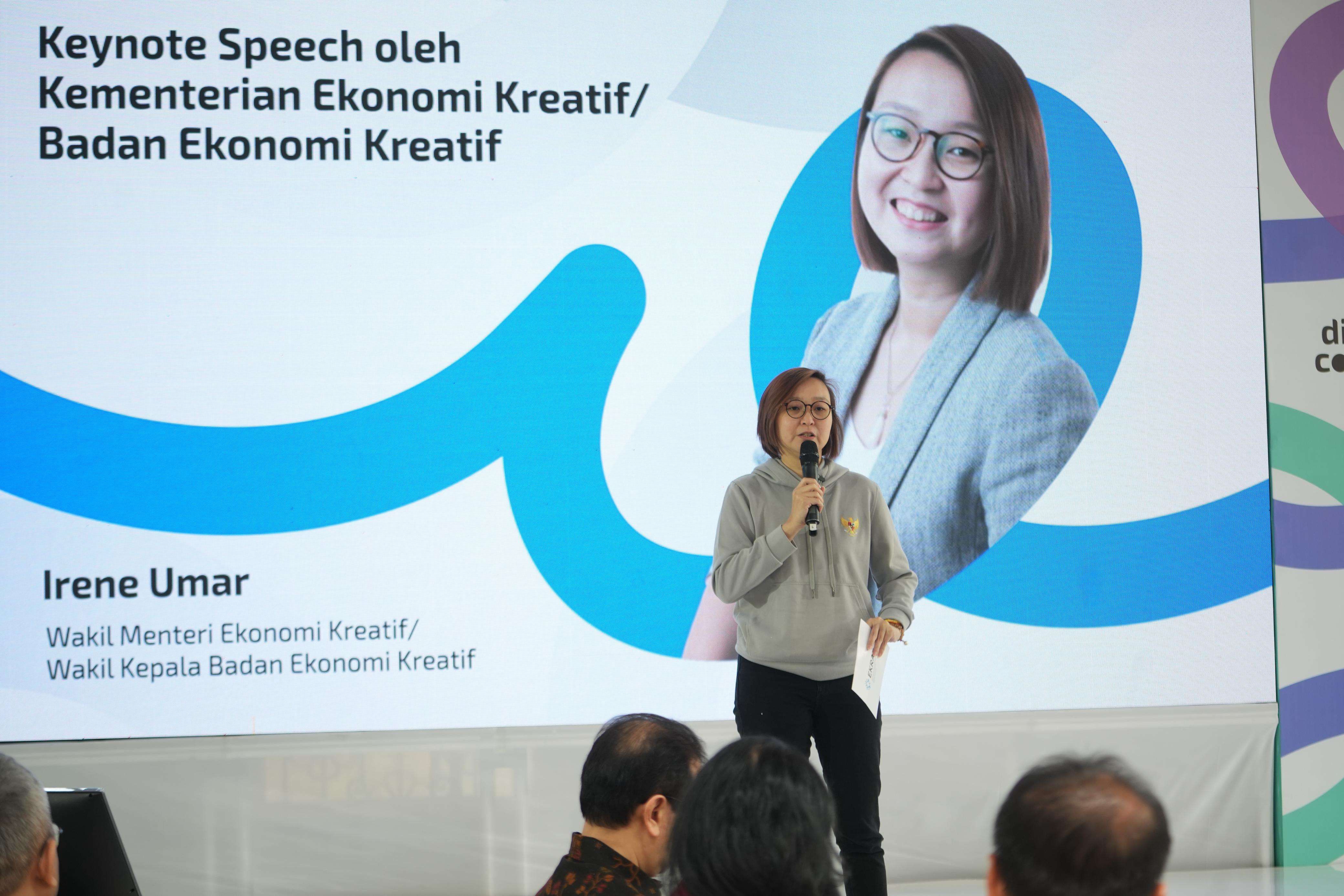
KBRN, Jakarta: Deputy Minister of Creative Economy Irene Umar emphasized the importance of mastering foreign languages, especially in the digital world. Irene Umar when attending the Dicoding Connect 2025 event in Jakarta, Thursday (20/2/2025) said limitation in English is still a challenge for many Indonesian.
“We must learn to speak in order to advance Indonesia. We must be relevant to the outside world so that Indonesia is not only seen as a market, but is able to become a creator,” said Irene, as quoted from her official statement.
Furthermore, Irene revealed the Ministry of Creative Economy's program in encouraging the digital world, one of which is through the “Emak-Emak Matic” (Emak-Emak Melek Teknologi) program. This program aims to reach all levels of society, especially housewives and those who do not have access to higher education. Since its launch last year, the program has been running in six cities and is targeted to reach 40 cities by 2025.
“This program aims to reach out the people who cannot afford to go to university, as well as empowering mothers at home. With the power of emak-emak, this program will continue to be developed and reach more cities in 2025,” she added.
In addition, Irene also highlighted the presence of the 'Global Game Jam' last January, where in 48 hours developers managed to create a prototype game that was activated in 12 cities in Indonesia. The results of this prototype will later be developed and adapted in public spaces as a game in each game corner.
Meanwhile, CEO of Dicoding, Narenda Wicaksono, revealed that there are two main challenges in the digital industry in Indonesia. First, as a vast country, Indonesia's economic potential is spread across various islands, thus requiring more digital talents in various regions. Second, the contribution of artificial intelligence (AI) to Indonesia's Gross Domestic Product (GDP) is still below that of developed countries.
“The two main challenges we raise are the vastness of Indonesia, which requires digital talents in various regions, and the contribution of AI to GDP, which is still low compared to developed countries. We must work to improve this so that Indonesia can compete at the global level,” said Narenda.
He also said that the contribution of the information technology (IT) sector to Indonesia's GDP is currently at 4.34 percent, based on data from the Central Statistics Agency (BPS) in 2024. In comparison, in developed countries such as the United States and China, the figure ranges from 8-10 percent.
“We need to increase digitalization, both in number and quality of digital talents. Dicoding will continue to collaborate with various ministries, including Ministry of Creative Economy, to accelerate the growth of the digital industry in Indonesia,” he added.
News Recomendation
Loading latest news.....