



RI-Aussie Strengthen Research Collaboration on Energy, Clean Water
- 14 Okt 2025 22:25 WIB
- Voice of Indonesia
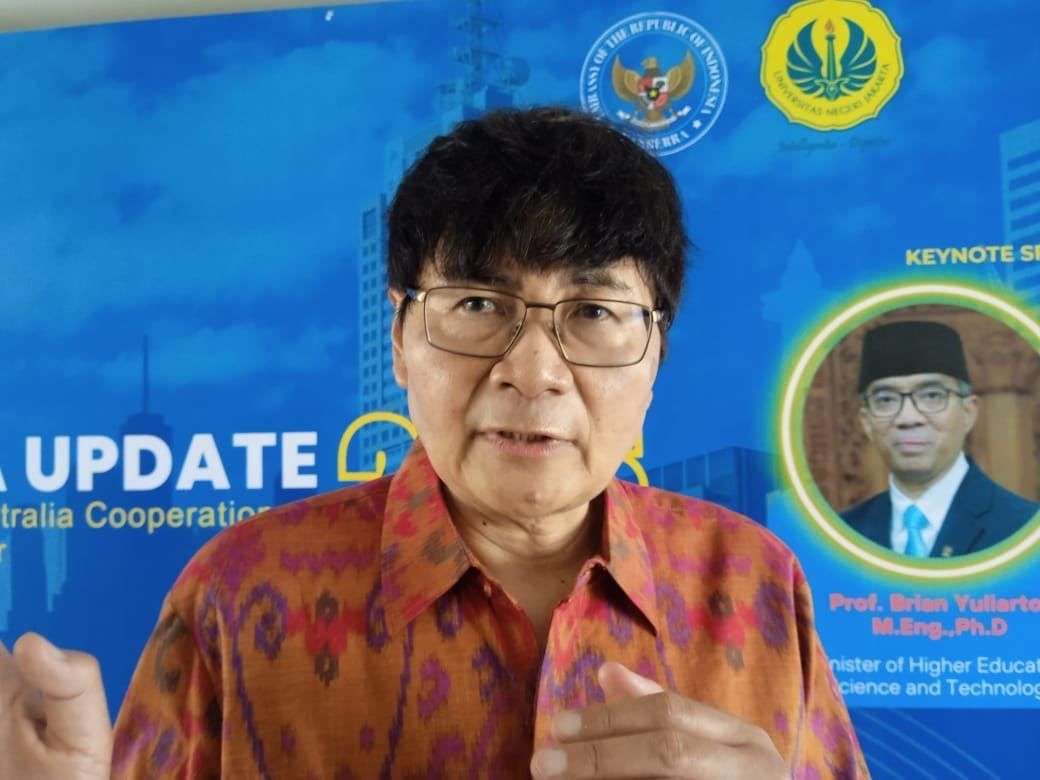
KBRN, Jakarta: The Indonesian Embassy in Australia is deepening its collaboration with universities in both countries, focusing on education, joint research, and technological innovation. Key areas of cooperation include energy transition, clean water access, healthcare, and industrial downstreaming.
“We’re developing many exchange programs and joint research initiatives," said Siswo Pramono, Indonesian Ambassador to Australia and Vanuatu, during the Australia Update 2025 event titled “Deepening Indonesia-Australia Cooperation Through the Education Sector” at Universitas Negeri Jakarta on Tuesday, October 14, 2025..
"For example, we’re preparing our human resources to become experts in energy transition. This is being done in partnership with various universities, including BRIN (National Research and Innovation Agency) and the University of Melbourne,” he added.
Beyond energy, Ambassador Siswo highlighted joint efforts to improve clean water access through collaborative projects between Indonesian and Australian universities. These initiatives offer hands-on experience for Indonesian students and researchers, bridging theory and field application.
“One pilot project involves Universitas Diponegoro in Semarang and the Australian National University (ANU) in Canberra. They’re developing desalination technology to convert seawater into drinkable freshwater for communities,” he explained.
The Ambassador expressed hope that such collaborations would make Indonesia-Australia relations more productive in tackling global challenges, especially in renewable energy and environmental sustainability.
Meanwhile, Prof. Komarudin, Rector of Universitas Negeri Jakarta (UNJ), outlined three foundational pillars for producing highly competitive graduates: human resource development, infrastructure enhancement, and curriculum renewal.
“Our main strategy is strengthening human resources, especially lecturers and educators at UNJ. The second is improving infrastructure, and the third is updating academic programs and curricula,” Komarudin said.
He emphasized that improving educator quality and adopting adaptive curricula would lead to graduates who are both excellent and relevant to the job market. Strengthening networks between universities and international institutions, he added, is a strategic move to open global opportunities for students.
"With these three pillars, we hope the learning process will truly produce excellent human resources. We will further strengthen this with cooperation networks, both domestically and internationally," he concluded. (Naura Sofia/Sri Wahyuni)
News Recomendation
Loading latest news.....