


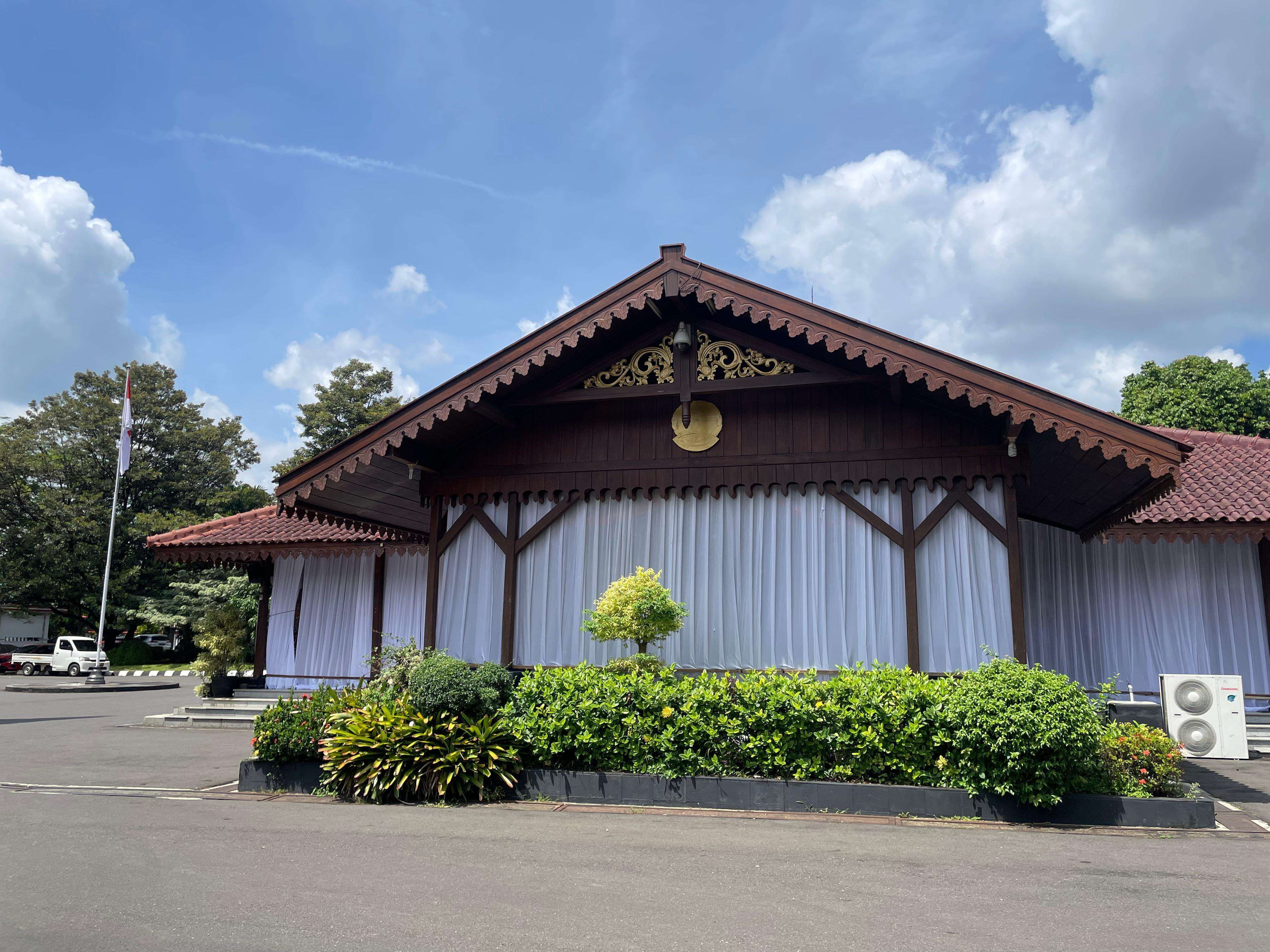
KBRN, Banyumas: In the heart of Purwokerto stands Pendopo Si Panji, a traditional open-air Javanese hall. It has no walls, creating an open, welcoming space where governance, community interaction, and cultural traditions come together. Built in the 18th century by the seventh Regent of Banyumas, Raden Tumenggung Yudanegara II, the pendopo is more than a physical structure; it symbolizes Banyumasan identity and heritage.
Banyumas Regency, located in Central Java approximately 350 km southeast of Jakarta, is easily accessible by train. Purwokerto has since grown into a hub of administration, cultural activity, and regional diplomacy. Though serene in appearance, Pendopo Si Panji has witnessed a long journey, evolving from a traditional center of power to a venue welcoming international guests.
Originally, Pendopo Si Panji stood north of the old Banyumas town square. When the regency administration moved to Purwokerto on January 7, 1937, the pendopo was relocated as well. To commemorate its original site, the government built a replica named Bale Adipati Mrapat about 16 km away.
Its architecture is known as “Joglo Tajug,” a distinctive blend of Javanese and Sundanese styles, with a 36-pillar joglo structure and a Tajug/Masjidan Lawakan roof without wuwungan, giving the appearance of a traditional mosque. The Babancong roof further reflects Sundanese architectural influence. Some historians believe the unique design also subtly critiques the Javanese court, linked to the execution of Yudanegara I in Kartasura.
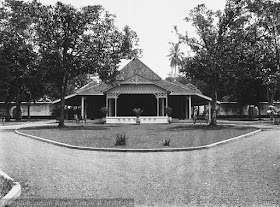
Pendopo Si Panji, Banyumas, 1930. (Photo:Banyumas Youth, Sports, Culture & Tourism Office)
The name “Si Panji” honors Panji Ganda Subrata (Bagus Kunthing), Yudanegara II’s son, who spent his childhood in the Kartasura Palace. During the pendopo’s relocation to Purwokerto, the sacred pillars were not only moved but ceremonially rotated, paraded, and honored according to tradition.
Three saka pillars were carried in stages from Banyumas, while one pillar, Saka Si Panji, was placed in Purwokerto earlier. When all four were reinstated, the pendopo was considered “alive” again, accompanied by kentongan drums, kuda lumping performances, and traditional lengger dance.
Upon entering the hall, visitors are immediately greeted by cultural symbols of Banyumas. Protocol Staff and Keeper of the Heritage Hall at Banyumas Regency Office, R. Dwi Hana Satria Wibawa, explained, Tuesday (25/11/2025), that the mounted deer head represents vigilance, agility, prosperity, and harmony with nature, symbolizing Banyumas society’s connection with spiritual and environmental values. Kentongan serves as a symbol of communal alertness, the bedug reflects Islamic acculturation since the Mataram era, and the gamelan is regularly played every Friday Kliwon by district representatives.
At the rear lies Ruang Joko Kaiman, named after the first Regent of Banyumas, showcasing Bawor carvings and a complete series of portraits of all regents up to the 31st. Deeper within, Ruang Pusaka houses heirlooms such as keris, spears, amulets, and the Singa Dipa treasure.
Four sacred heirlooms are displayed only during the Banyumas Regency Anniversary Parade: Tombak Kyai Genjring, Keris Nala Praja, Keris Gajah Endra, and Keris Sempana Bener. Hana noted these objects represent Banyumas’ character, firm, honest, humble, and trustworthy.
As a center of governance, culture, and diplomatic hospitality, Pendopo Si Panji remains actively used today. Head of Protocol and Communication of the Banyumas Regency Secretariat, Wahyu Adhi Fibrianto, said at the pendopo, Monday (24/11/2025), that the site continues to play a central role in both government and community activities.
"Pendopo Si Panji is not a space frozen in history. It continues to breathe, hosting official events, community gatherings, and international exchanges. Here, tradition and diplomacy coexist," he stated.
This role was evident again during the 50th Diplomatic Forum Welcome Dinner hosted by Voice of Indonesia RRI, Tuesday (25/11/2025), when six visiting ambassadors experienced Banyumas’ cultural hospitality in this historic venue. Amid wooden carvings, soft lamplight, and the gentle resonance of gamelan, the international guests directly engaged with the region’s cultural narrative.
One of the guests, Ambassador Extraordinary and Plenipotentiary of the Republic of Cuba and ASEAN, Dagmar González Grau, expressed her admiration for Indonesia’s cultural richness and her personal experience at Pendopo Si Panji. She highlighted how historical and cultural heritage, local hospitality, and diverse traditions made her feel close and comfortable, much like being at home.
"In Cuba, there are many Spanish colonial buildings recognized by UNESCO. Every corner of Havana tells its own history. Indonesia is similarly rich, beautiful, and diverse. Being here feels like being at home. The culture is wonderful, the people are friendly, and there is always so much joy within a single culture," she said.
Her words serve as a reminder that heritage buildings like Pendopo Si Panji are not merely relics of the past but bridges connecting history, culture, and international friendship. Once built to shelter the people of Banyumas, Pendopo Si Panji now embraces global dialogue, without losing its own identity.
News Recomendation
Loading latest news.....