



Remembering Pramoedya Ananta Toer, Celebrating 100 Years of Literary Legacy
- 06 Feb 2025 11:51 WIB
- Voice of Indonesia
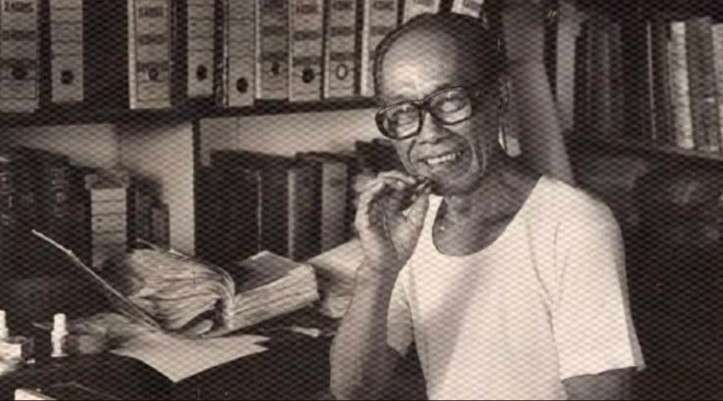
KBRN, Jakarta: Pramoedya Ananta Toer, often called Pram, stands as one of Indonesia's most revered literary figures.
Every year, his devoted followers, known as "Pramists," gather at his childhood home to commemorate his birthday.
This year's centennial celebration, themed "100 Years of Pram: Living in Persecution," honors the writer's enduring legacy, as quoted by rri.co.id.
A Literary Life Forged in Struggle
Pramoedya, the eldest of nine children, was born on February 6, 1925, in Blora, Central Java. His father, M. Toer, was a teacher and local political figure who chaired the Blora branch of the Indonesian National Party (PNI).
His mother, Saidah, was the daughter of a penghulu (Muslim wedding officiant) who received a Dutch education.
Pramoedya's education began at the Boedi Oetomo Institute, where his father taught.
He later attended Radio Vakschool in Surabaya before working as a typist for the Japanese news agency Domei in Jakarta. After witnessing discrimination at Domei, he left the capital.
From Resistance Fighter to Acclaimed Author
Upon hearing news of Indonesia's independence, Pramoedya joined the People's Security Army (BKR) in Cikampek. During this time, he began writing his first novel, Sepuluh Kepala NICA (Ten NICA Heads), which was unfortunately lost.
After leaving the military, Pramoedya worked as a magazine editor and gained recognition as a prolific writer.
In 1947, he was arrested by Dutch forces for distributing resistance leaflets and magazines. Imprisoned in various locations, he penned short stories and novels, including Perburuan (The Hunt) and Keluarga Gerilya (Guerrilla Family).
A Legacy of Literary Resilience
After his release, Pramoedya wrote prolifically, producing acclaimed works such as Korupsi (Corruption). His travels to the Netherlands and China further shaped his thinking.
After he visited China, Pramoedya's views shifted, and he embraced the concept of guided democracy. He became involved in various arts and cultural activities, serving as an advisor to the Ministry of People's Power.
In 1965, Pramoedya was arrested without trial due to his association with Lekra, a cultural organization linked to communism.
He was exiled to Buru Island, where he continued to write, producing monumental works such as the Buru Quartet.
A Lasting Impact on Indonesian Literature
After his release in 1979, Pramoedya remained active, his works continuing to influence Indonesian literature.
Pramoedya Ananta Toer received numerous awards for his contributions to the literary world. He passed away on April 30, 2006, leaving a legacy of invaluable literary works.
Selected Works
Pramoedya's novels are frequently used as teaching material in Indonesian universities. His notable works include:
- This Earth of Mankind - Buru Quartet #1 (1980)
- Child of All Nations - Buru Quartet #2 (1980)
- Footsteps - Buru Quartet #3 (1985)
- House of Glass - Buru Quartet #4 (1988)
- The Mute's Soliloquy: A Memoir (1995-1996)
- Arus Balik (1995)
- Arok of Java (1999)
- Larasati (2000)
- The Hunt
- Guerrilla Family
- Corruption
Awards and Recognition
Throughout his life, Pramoedya received numerous accolades, including the following:
- Balai Pustaka Award (1951, 1995)
- Magsaysay Award (Philippines)
- PEN International Award (1998)
- Honorary Doctorate of Humane Letters from the University of Michigan (1999)
- Fukuoka Cultural Grand Prize (Japan, 2000)
- Norwegian Authors' Union Award. ***
News Recomendation
Loading latest news.....