



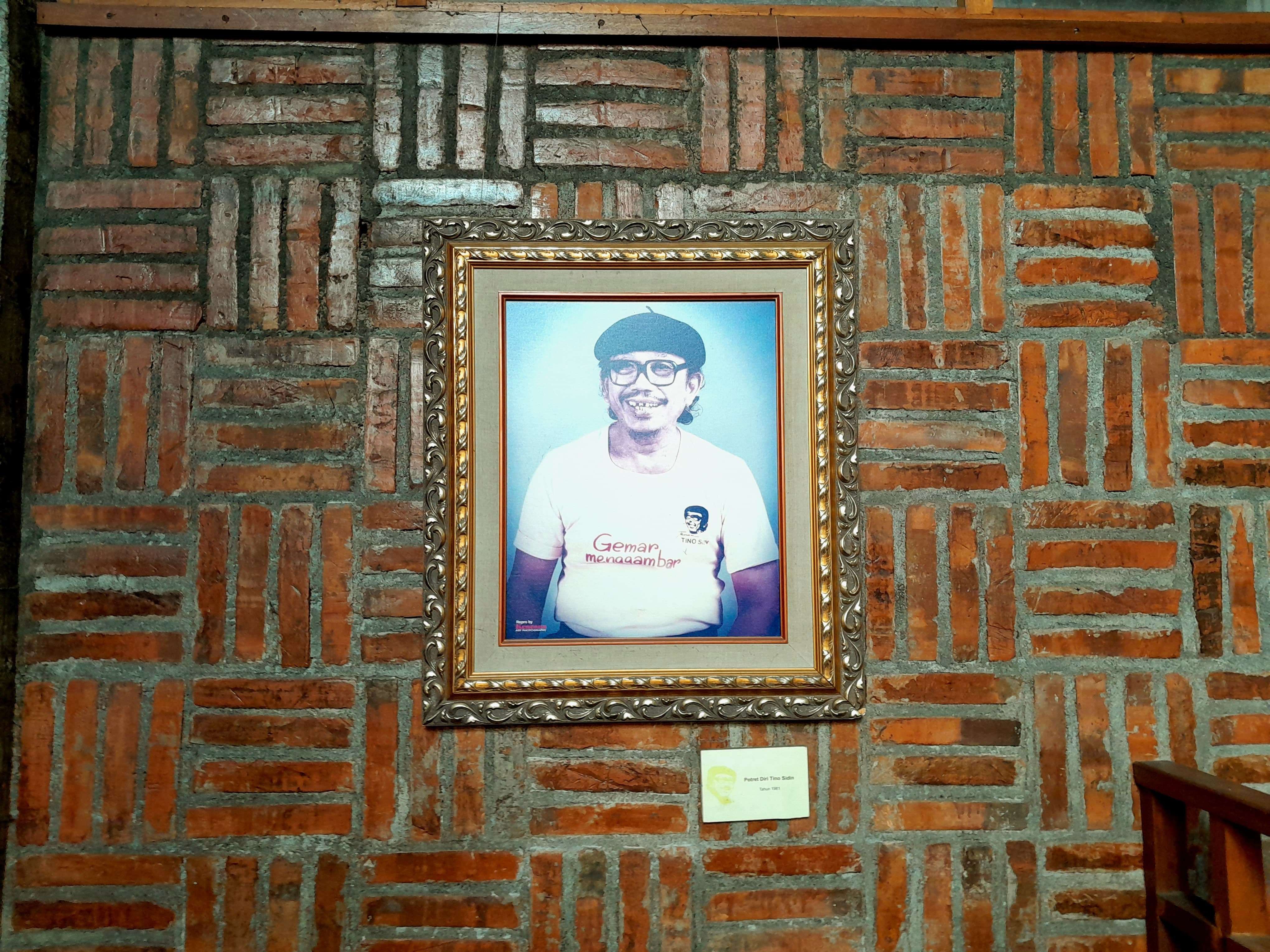
KBRN, Yogyakarta: The Indonesian art world owes a lot to Tino Sidin, a legendary figure whose passion for drawing has sparked the creativity of Indonesian children, especially in the 1970s to 1990s.
Died on December 29, 1995, at the age of 70, in Jakarta, Tino Sidin's legacy continues to live on and inspire many Indonesians, especially younger generations, decades later.
His colorful and distinctive works can still be found today at his residence in Bantul, Yogyakarta, which has been turned into Taman Tino Sidin Museum since 2017. This museum serves as a place for the public to learn more about Tino Sidin and his works.
Best known for his popular television show on state-owned television TVRI, "Gemar Menggambar" (Let's Draw), Tino's impact extended far beyond the realm of art education.
Pak Tino Sidin, as he was affectionately known, successfully instilled a love of art in Indonesian children through his easy-to-understand and enthusiastic teaching methods. By encouraging exploration and self-expression, he helped children overcome their fear of drawing.
"One of his innovative techniques involved transforming numbers into animals, a method that sparked children's imagination and enthusiasm for art," explained Panca Takariyati 'Titik' Sidin, Tino's youngest daughter. "He was also generous with his praise, often encouraging children with positive affirmations like 'That's wonderful!' or 'Don't be afraid to try again.' His supportive approach created a safe space for children to experiment and grow."
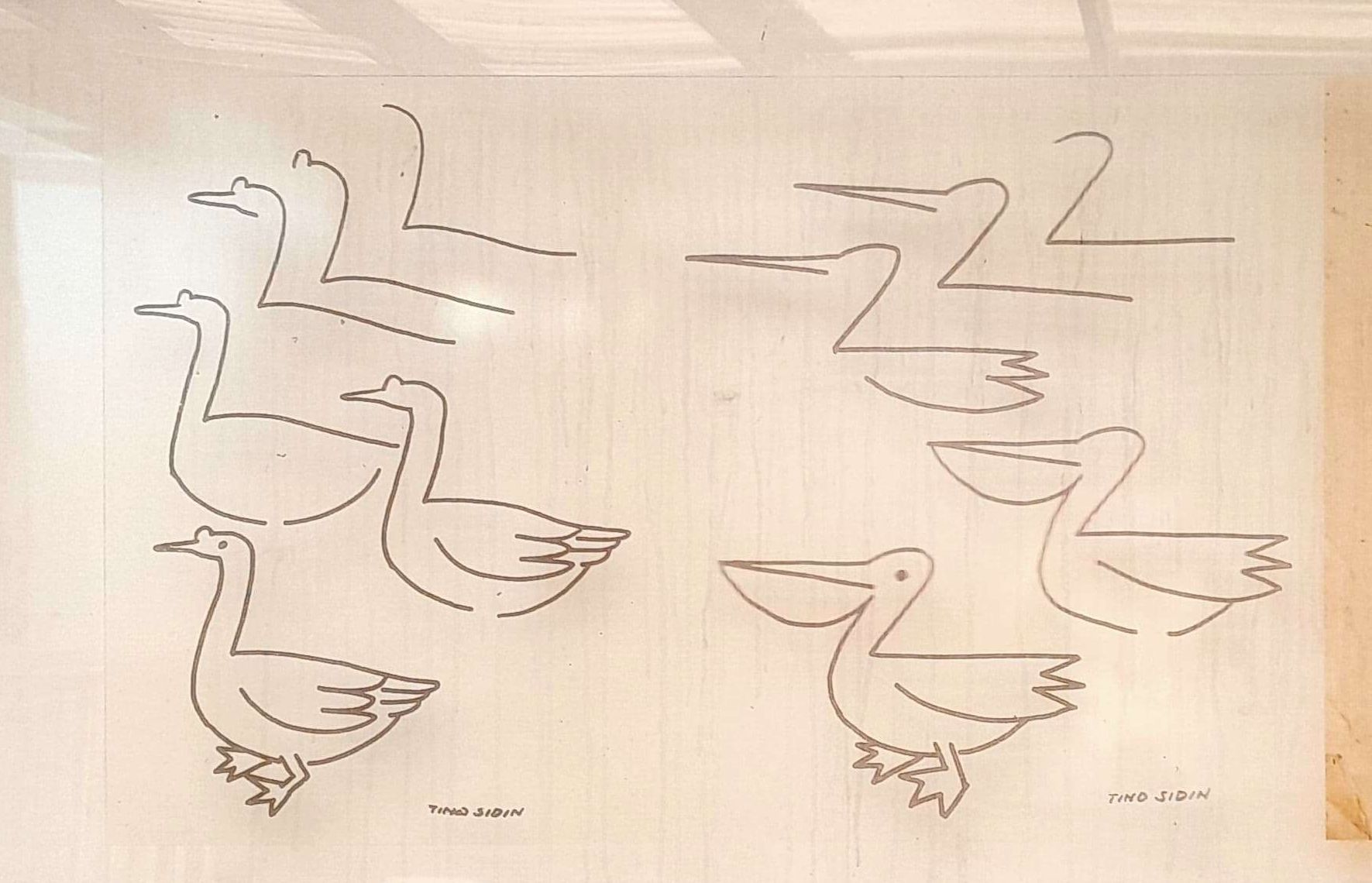
One of Pak Tino Sidin's teaching methods involved transforming numbers into animals. For instance, the number 2 could be shaped into a duck or a pelican. (Photo: RRI English/Diva Rifdah Rizkia Puspitaningnala)
Born in Tebing Tinggi, North Sumatra, in 1925, Tino Sidin's life was shaped by both the tumultuous events of Indonesia's colonial past and his unwavering dedication to art.
As a young man, he experienced the harsh realities of Japanese occupation, forced into labor as a Romusha. Despite these challenging circumstances, Sidin found solace and expression in art, often sketching in the sand during his breaks.
The Japanese military noticed his talent and gave him an unexpected job: heading up the poster department at the local information office.
It was this experience that sparked his lifelong passion for art.
"Dad was always a natural artist," said Panca Takariyati Sidin, Tino's youngest daughter. "He spent his childhood drawing with his grandfather, who wasn't exactly thrilled about it at first. But Dad showed him that art could be more than just a hobby.
After Indonesia gained independence, Tino had the opportunity to study at the Indonesian Academy of Fine Arts (ASRI), now known as the Indonesian Institute of the Arts (ISI) Yogyakarta, thanks to a scholarship funded by Japanese war reparations.
In addition to being a painter, Tino Sidin was also an active art teacher, particularly at Taman Siswa, one of Indonesia's oldest modern educational institutions.
"Tino Sidin's artwork is characterized by naturalistic expressionism, blending realistic representations with expressive colors that evoke deep emotions," said Titik.
Tino Sidin also created sketches for coloring and painting competitions. He frequently traveled around Indonesia to judge drawing competitions participated in by dozens of children.
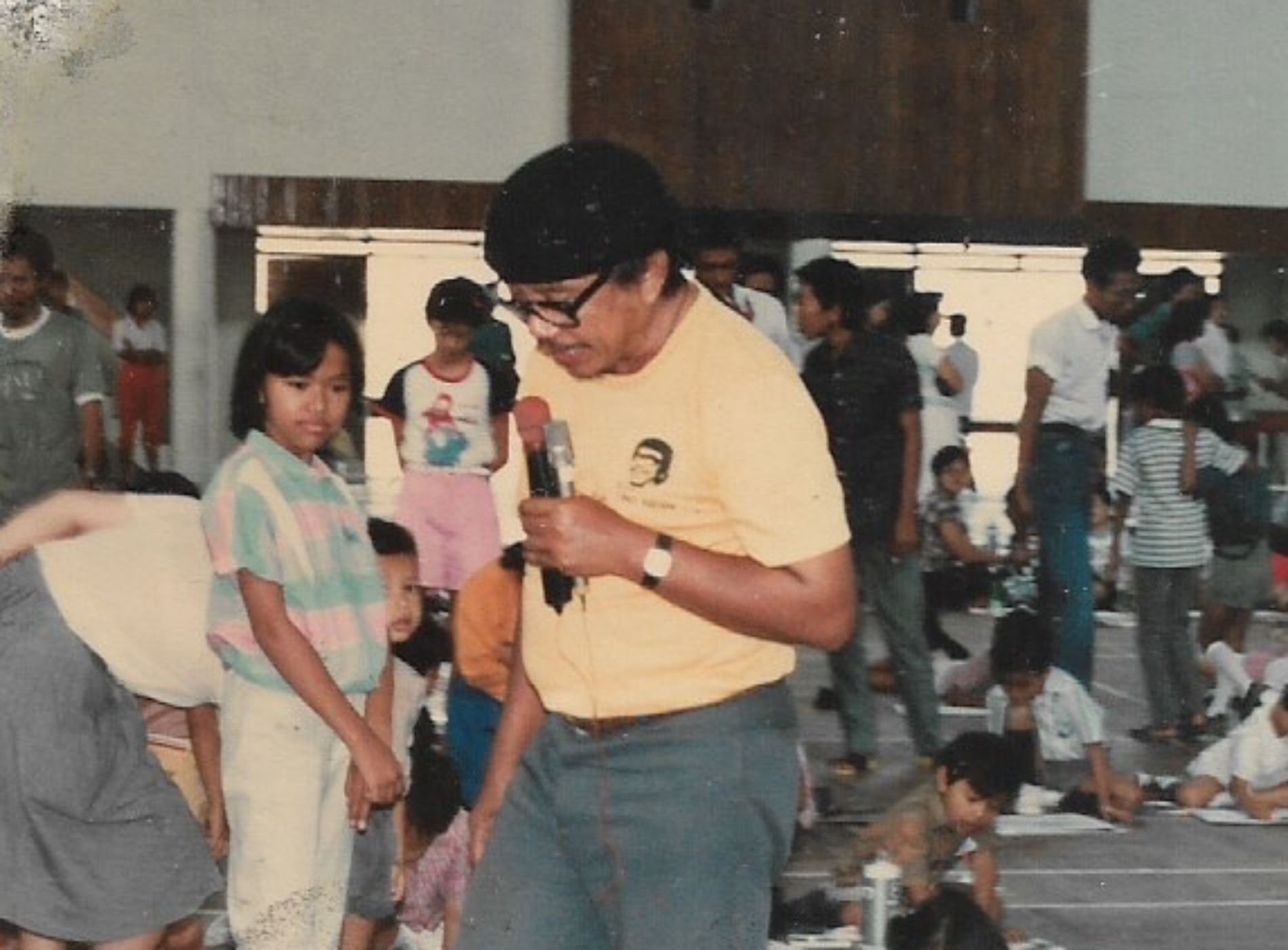
One of the drawing competitions with Pak Tino Sidin in Surakarta, Central Java, in the 1980s. (Photo: Doc. Hendrawan Setiawan)
His inspiring works, such as "Menggambar Mewarnai Merakit" (Drawing, Coloring, and Assembling), "Ayo Kita Menggambar" (Let's Draw), and the ten-volume "Gemar Menggambar" (Let's Draw) series, have been widely used as teaching materials for elementary school art teachers.
Some of his other works were in comic book form, such as 'Ibu Pertiwi' (Mother Earth), 'Bandung Lautan Api' (Bandung, The Sea of Fire), 'Bawang Merah Bawang Putih' (Red Onion and Garlic), and 'Pak Kumis' (Mr. Mustache)," Wiwik shared, an educator in Taman Tino Sidin Museum.
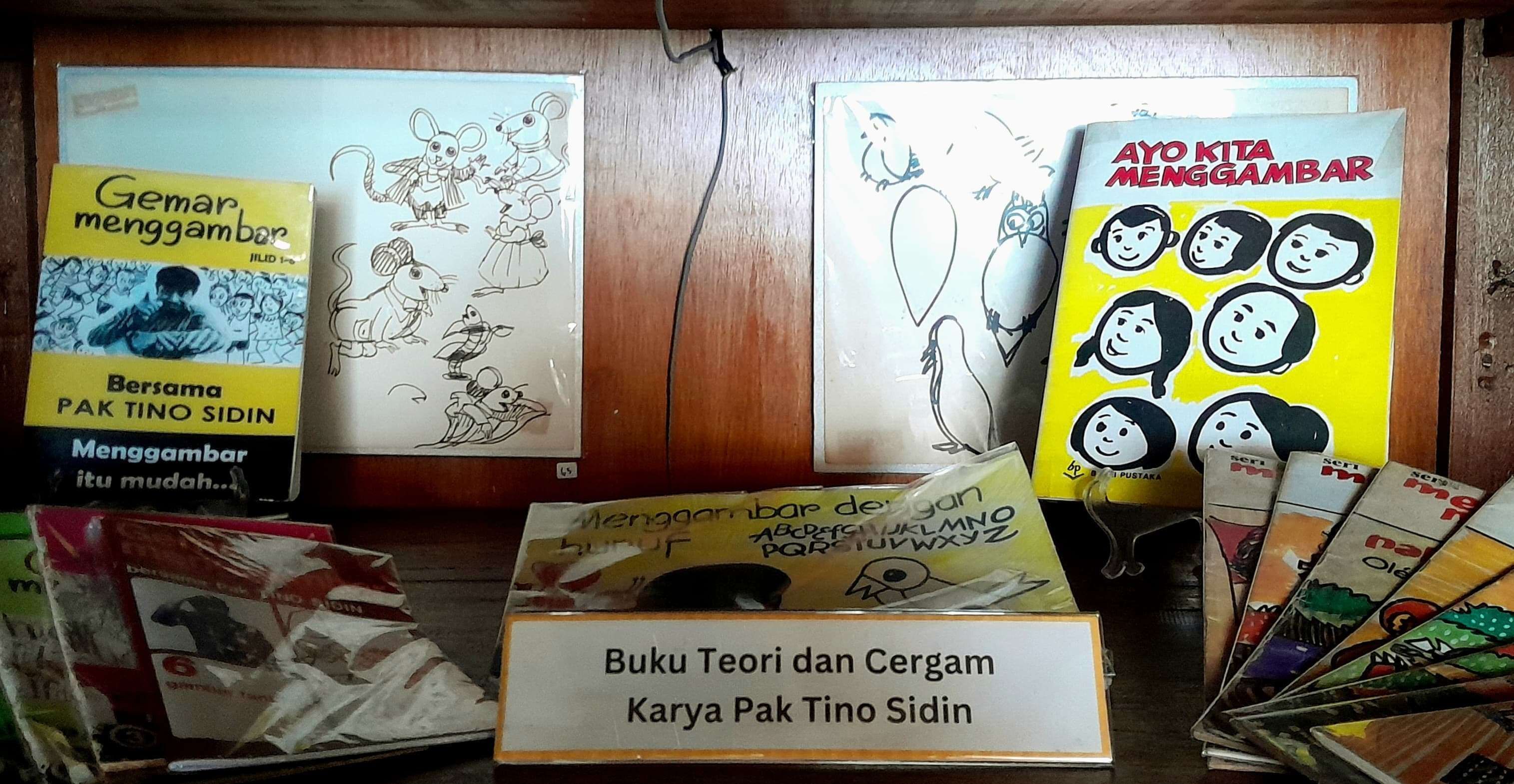
Several of Tino Sidin's drawing theory books and illustrated stories are on display at the Tino Sidin Museum in Bantul, Yogyakarta.
He also established several art studios in Jakarta and received numerous prestigious awards, including recognitions from the Nusa Laila Puteri School in Brunei Darussalam, the Indonesian Broadcasting Commission (KPI), and the Yogyakarta Provincial Administration.
Several of Tino Sidin's drawing theory books and illustrated stories are on display at the Tino Sidin Museum in Bantul, Yogyakarta. ***
News Recomendation
Loading latest news.....