



Enjoying Maratua’s Coastal Exotica, Maritime Heritage for the Archipelago
- 04 Agt 2026 10:56 WIB
- Voice of Indonesia
Key Points
- Maratua Island in East Kalimantan offers world-class marine tourism, featuring karst cliffs, hidden lagoons, coral reefs, and rich marine biodiversity within the Derawan Islands conservation area.
- Gumantung Cave and Halo Tabung Cave are among the island’s signature attractions, offering canoeing, kayaking, cliff jumping, and exploration of crystal-clear brackish-water caves.
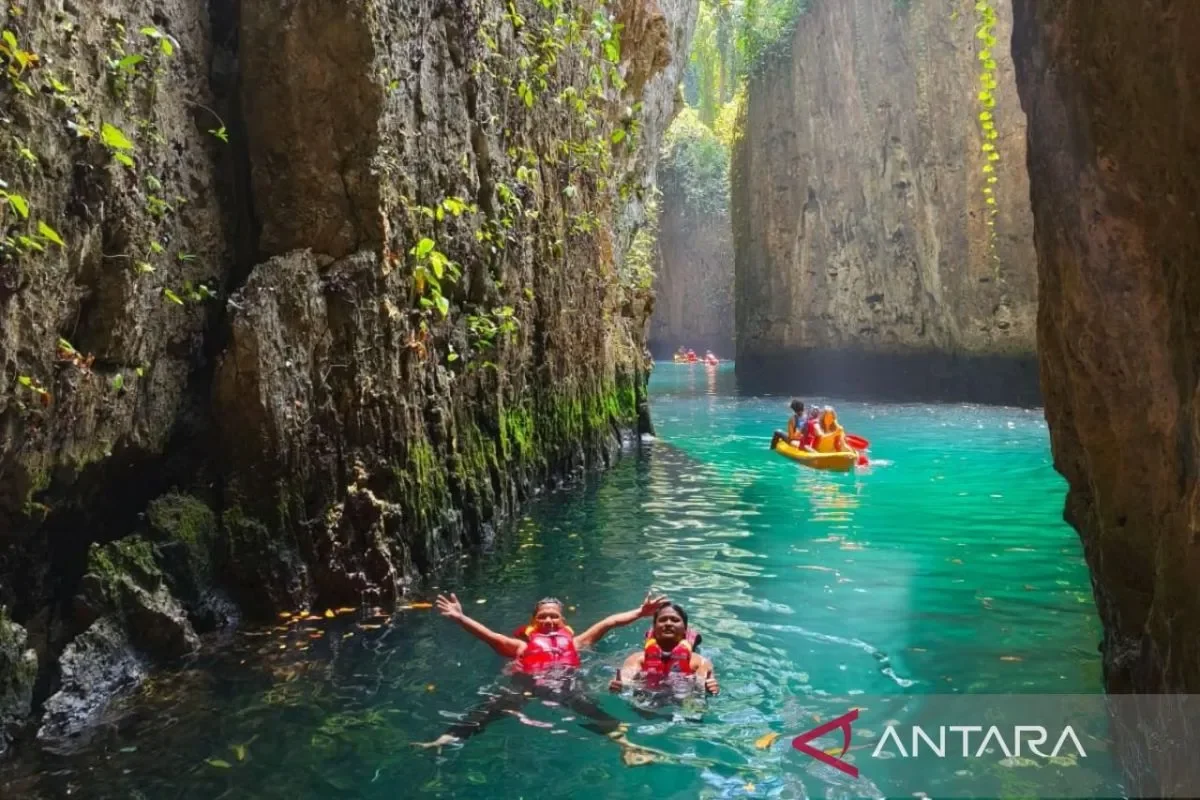
RRI.CO.ID, Berau - Beyond its sweeping ocean views, Maratua Island in Berau Regency, East Kalimantan, holds geological wonders in the form of karst cliffs and brackish-water cave passages formed over thousands of years. Destinations such as Gumantung Cave and Halo Tabung Cave have now become major speleological attractions, offering the sensation of exploring hidden lagoons and cliff jumping into natural crystal-clear pools.
Part of the Derawan Islands conservation area, Maratua Island is not merely a geographic outpost on the nation’s border, but a marine natural laboratory with boundless appeal.
At the northernmost edge of Indonesia, lies an island inhabited by around 4,000 people and surrounded by the clear turquoise expanse of the Sulawesi Sea. Maratua’s land area reaches about 384 square kilometers, while its waters span around 3,735 square kilometers.
Maratua lies within the Derawan Islands cluster, which has been designated a National Strategic Tourism Area (KSPN). Decorated with captivating white sand, the island stands like a tropical paradise gem for visitors.
Its U-shaped, or crescent-like, form creates a wide lagoon with calm beaches on the inner side, while the outer side faces deep sea rich in biodiversity.
“The combination of land karst ecosystems and underwater coral reefs makes Maratua one of the world-class marine tourism destinations,” said East Kalimantan Tourism Agency Head, Muhammad Faisal, on Tuesday, August 4, 2026.
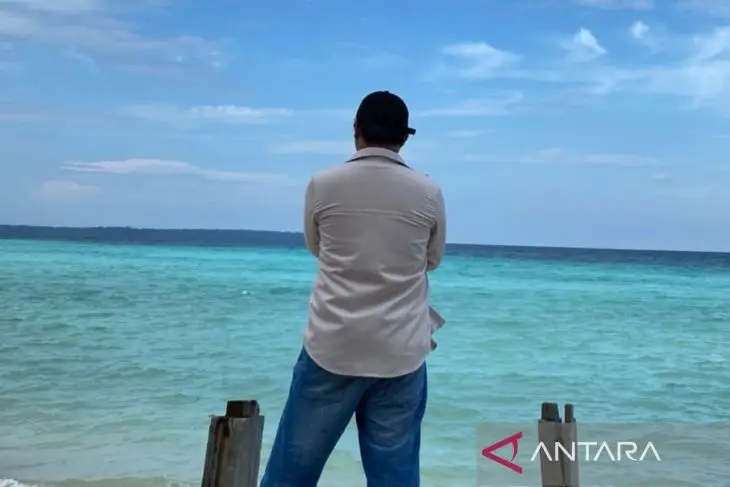
A trip to Maratua is incomplete without exploring its brackish-water caves, swimming with sea turtles, and watching thousands of fish swirl in the deep sea.
Hidden behind lush green vegetation, Maratua also holds geological beauty. One must-visit destination is Gumantung Cave.
Located in Teluk Alulu, the cave offers a tranquil and soothing journey through a hidden lagoon. From the island’s main pier, visitors can travel by motorcycle to the starting point of the trek.
The trail is well laid out, with light soil and rocky terrain, before continuing on foot along a shaded path under the trees. Upon reaching the cave entrance, towering karst cliffs immediately come into view. The cliffs frame a clear brackish lake with shades ranging from silvery blue to turquoise green.
The water’s surface is as still as a mirror, reflecting sunlight that filters through the gaps between stalactites and stalagmites. What makes Gumantung Cave unique is how it is experienced. Its spacious interior and deep water allow visitors to travel through limestone passages by canoe or kayak.
Each paddle stroke creates the sensation of exploring a captivating underground world. The quiet atmosphere, broken only by droplets falling from the cave ceiling, makes the site a place of reflection for nature lovers.
No less enchanting, Maratua also has Halo Tabung Cave in Payung-Payung Village, a coastal area rich in limestone landscapes.
“The name Halo Tabung comes from the Bajau language. Halo means cave or coastal lagoon, while Tabung refers to a type of kakap or tompel fish that used to be commonly found around the bridge estuary,” said Maratua Subdistrict Head, Ashari, as quoted by Antara.
Halo Tabung Cave was formed through the dissolution of limestone over thousands of years. Rainwater containing carbon dioxide creates a weak acid that slowly dissolves the limestone along cracks, forming a cone-shaped depression about 25 meters deep.
The depression is filled with crystal-clear brackish water from seawater infiltration through karst rock crevices. Because it is only about 50 meters from the shoreline, the water level inside the cave follows the sea tide cycle.
| Baca juga: Tikus Island Features White Sand in Seram |
For adrenaline seekers, Halo Tabung Cave offers a spectacular natural pool. Visitors can jump from karst cliffs about five meters high into the clear blue water.
The clarity of the water makes the cave floor and underwater rock formations visible even without swimming goggles. Diving or simply floating in this open cave offers an experience difficult to find elsewhere.
Beyond its karst appeal, Maratua is also known among world divers as a spectacular underwater stage. One of its main icons is the Barracuda Tornado phenomenon. This rare phenomenon refers to thousands of barracuda swimming in a helix-shaped swirl resembling a tornado beneath the sea.
In the world, the phenomenon is best known in only two locations, such as Sipadan Island in Malaysia and the waters around Maratua Island in Indonesia. The best diving spots are in the Big Fish Country area or The Channel, not far from Nabucco Island.
When underwater currents strengthen, thousands of barracuda gather to form an endlessly rotating silver wall. Divers from around the world are willing to travel far to witness this natural wonder in person.
Maratua is also recognized as one of the largest natural nesting grounds in Southeast Asia for green turtles (Chelonia mydas) and hawksbill turtles (Eretmochelys imbricata). Its fertile seagrass beds and shallow coral reefs make the island an ideal habitat for hundreds of turtles.
Along various parts of the coast, especially around resorts and wooden piers in Bohesilian and Payung-Payung villages, visitors can watch turtles swimming gracefully from the pier.
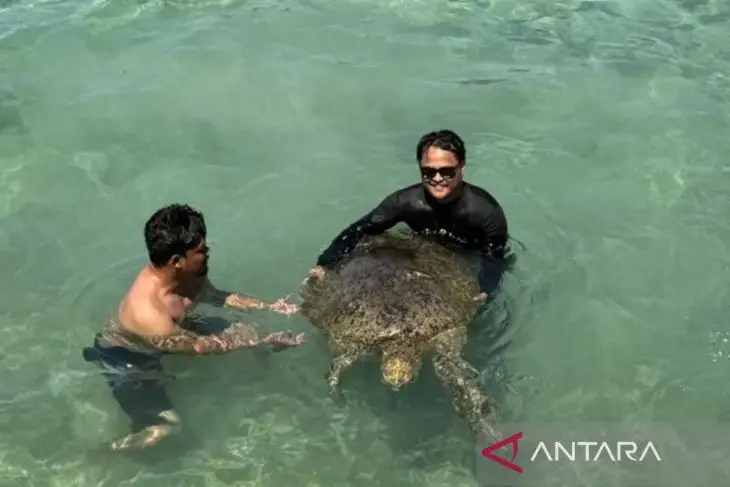
Without having to dive too deep, tourists only need a snorkel to swim alongside these ancient reptiles. At night, accompanied by local guides and conservation officers, visitors can also observe mother turtles coming ashore to lay eggs.
A trip to Maratua is not complete without crossing to Kakaban Island, an uplifted coral atoll within the same tourism management area. In the middle of Kakaban lies a saltwater lake of about 400 hectares, surrounded by karst cliffs.
Kakaban Lake is home to four unique species of jellyfish that evolved over thousands of years and lost their ability to sting. Two of them are the golden jellyfish (Mastigias papua) and the upside-down jellyfish (Cassiopea ornata).
Swimming among thousands of gentle golden jellyfish is a magical and unforgettable experience.
“Maratua Island’s popularity continues to grow among domestic and international tourists. In response, the Berau Regency Administration and the East Kalimantan Provincial Administration are actively improving supporting infrastructure, such as piers and ironwood walkways,” said Muhammad Faisal.
Maratua now has Maratua Airport, which can accommodate medium-sized aircraft. Tourists can fly directly or transit through Kalimarau Airport in Tanjung Redeb, or via Samarinda and Balikpapan.
For those choosing sea routes, fast boats are also available daily from Tanjung Redeb Port and Teluk Sulaiman Port in Biduk-Biduk. Accommodation options are increasingly diverse, ranging from community-run homestays and overwater villas to international-standard resorts.
Tourists can also enjoy a variety of fresh seafood caught by local fishermen and buy a range of regional souvenirs. “Tourism development in Maratua adopts the principles of the blue economy and sustainable conservation,” said Faisal.
The Berau Regency Administration has implemented Regional Regulation No. 8/2024 on investment facilitation. The regulation requires every developer to preserve coral reefs, mangrove forests, and marine conservation areas.
“Communities organized in tourism awareness groups are actively involved as guides, ecotourism managers, and protectors of the marine ecosystem,” he added.
Maratua Island stands as proof of the richness of the archipelago’s natural blessings. From karst cliffs and hidden lagoons in Gumantung Cave and Halo Tabung Cave, to the Barracuda Tornado in the deep sea and the hospitality of coastal communities living alongside nature, everything comes together to create an unforgettable experience.
Maratua stands as both a maritime stronghold and a showcase of Indonesian tourism ready to welcome the world with its enduring natural beauty. Exploring Maratua is not just about enjoying a holiday, but also about feeling pride in the beauty and sovereignty of Indonesia’s outermost region. ***
News Recomendation
Loading latest news.....