



Candra Naya, A Silent Witness of Chinese Heritage in Batavia
- 04 Feb 2026 17:48 WIB
- Voice of Indonesia
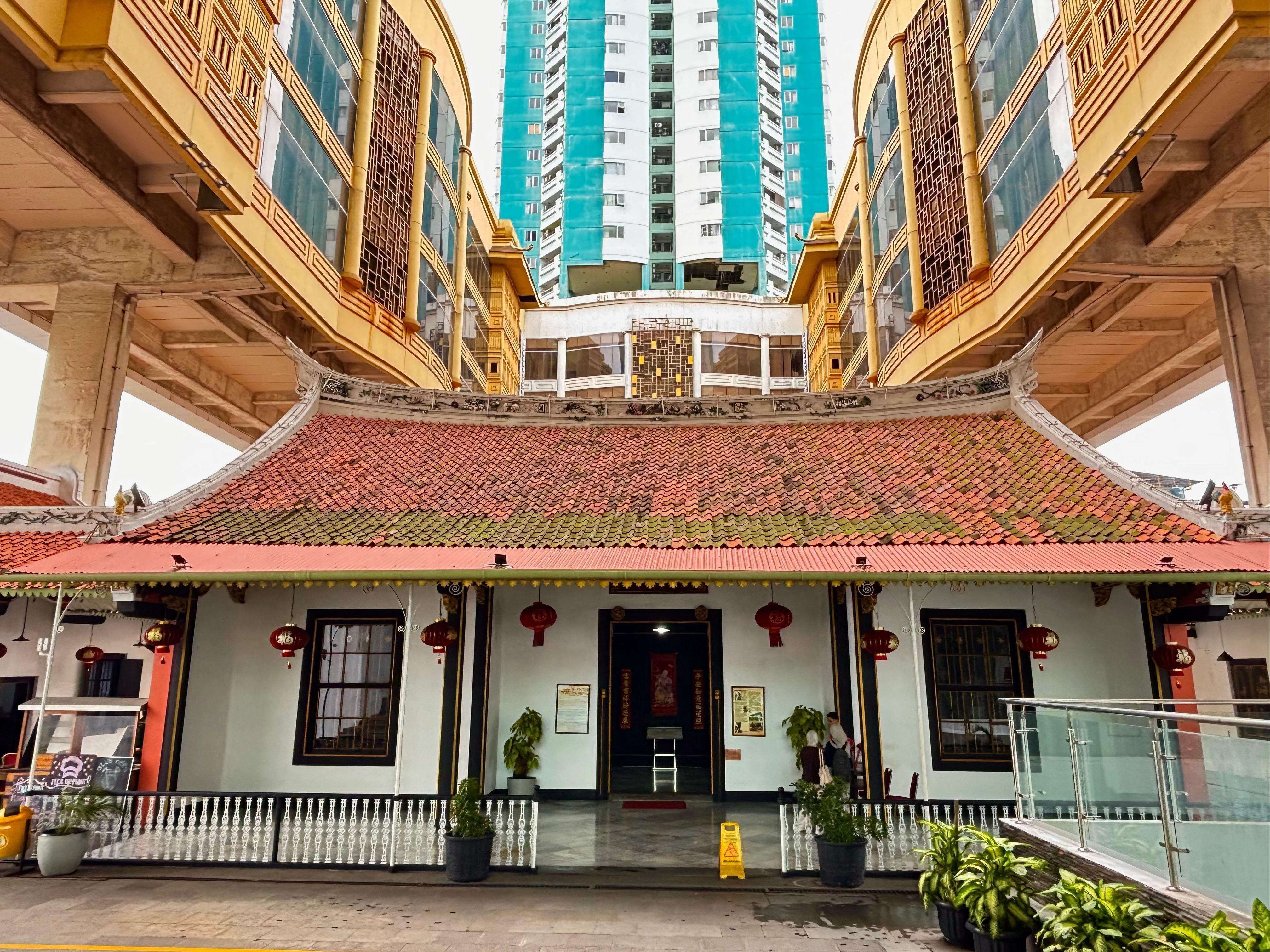
RRI.CO.ID, Jakarta – The Candra Naya building, once the Xinming Association headquarters, stands as a silent witness to centuries of Chinese history in Batavia. Nestled in the heart of Glodok, Indonesia’s largest Chinatown in Taman Sari, West Jakarta, it remains a landmark of cultural resilience amid the city’s rapid modernization.
Located at Jalan Gajah Mada No. 188, the site embodies Glodok’s legacy as a colonial-era hub for herbal medicine, electronics, and traditional Chinese heritage.
Formally designated a Cultural Heritage Site in 2021 under Governor’s Decree No. 475/1993, the building has transitioned from a private ancestral residence into a public landmark, offering visitors a rare glimpse of historic architecture preserved within Jakarta’s urban landscape.
Originally spanning 2,250 square meters, Candra Naya was the grand residence of the Khouw van Tamboen family during the colonial period. It was notably home to Khouw Kim An, the last Majoor der Chinezen (Major of the Chinese) in Batavia, who served from 1910–1918 and again from 1927–1942, following predecessors Tan Eng Goan, Tan Tjoen Tiat, Lie Tjoe Hong, and Tio Tek Ho.
/zn2rw0dkrp09izl.jpeg)
Visitors walk through the spacious central hall of Candra Naya, which showcases historical portraits of old Glodok and traditional paintings. (Photo: RRI/Diva Rifdah Rizkia Puspitaningnala)
Constructed in distinct Chinese architectural style on the former grounds of Villa Kroet, an 18th-century Dutch estate, Candra Naya is one of only two surviving Chinese major residences in Jakarta.
The Khouw Tian Sek family, a prominent landowning dynasty, commissioned three identical mansions along Jalan Gajah Mada - at numbers 168, 188, and 204 - for their sons.
Of these, only Candra Naya endures in its authentic form. The other two were repurposed after independence: No. 168 became State Senior High School 2 (SMA 2) Jakarta, while No. 204 served as the Embassy of the People’s Republic of China before both were demolished.
Historical inscriptions inside Candra Naya reveal its origins. Characters etched on wall panels read: “recorded in the year of the rabbit in the middle of the autumn month". Because the “Fire Rabbit” year occurs only once every 60 years, scholars date the building’s construction to either 1807 or 1867.
These details underscore its role as a vital link to Batavia’s past, reflecting the prominence of Chinese leadership and the elite social fabric of the 19th-century colonial administration.
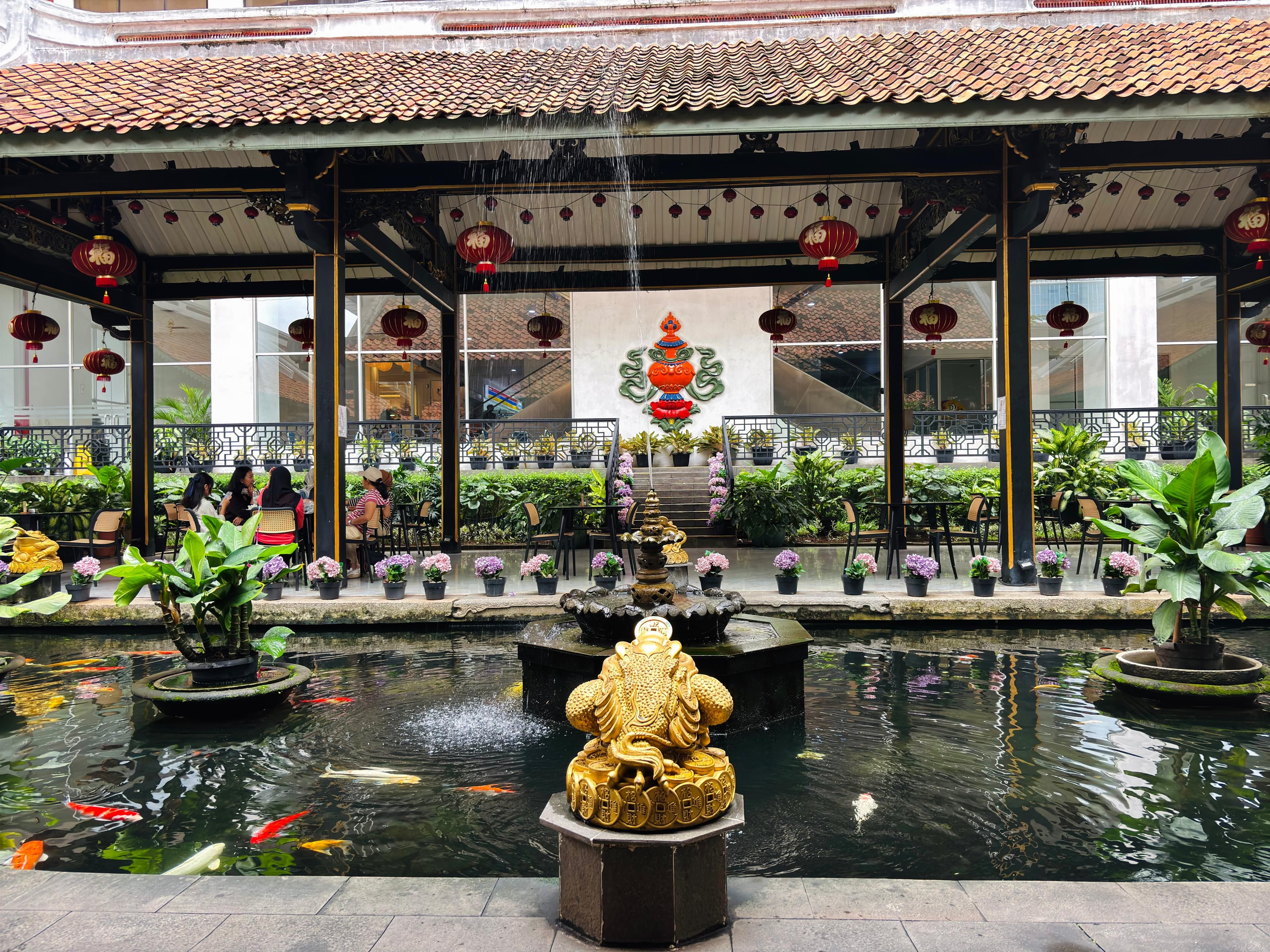
The front and rear wings of Candra Naya are divided by an open courtyard featuring a lotus pond, where vibrant koi fish glide beneath the water’s surface. In the past, this serene space served as a private retreat for the Khouw family. (Photo: RRI/Diva Rifdah Rizkia Puspitaningnala)
Following World War II, the Sin Ming Hui social association was established at the site on January 20, 1946, to aid war victims. In 1965, it was renamed Candra Naya in line with government recommendations for Chinese-Indonesian organizations.
Over time, the building evolved into a multipurpose hub, housing a polyclinic that grew into Sumber Waras Hospital, sports clubs for badminton and martial arts, and educational institutions that eventually gave rise to Universitas Tarumanagara.
Widely known as the “Major’s House”, Candra Naya was also the ancestral home of Khouw Kim An, a banker and founding member of Tiong Hwa Hwe Kwan, who died in a Japanese concentration camp in 1945.
While its precise construction date remains debated, the residence once accommodated Khouw Tjeng Tjoan, his 14 wives, and 24 sons, serving both as a family home and administrative office.
/qd27pl7xxov5l7y.jpeg)
A visitor observes the historical records of Candra Naya displayed in elegant frames within the building's interior. (Photo: RRI/Diva Rifdah Rizkia Puspitaningnala)
Today, visitors can explore Candra Naya free of charge by reservation, with opening hours from Tuesday to Sunday, 9 a.m. to 4:30 p.m. local time.
Misni, a traveler from Pati, Central Java, expressed admiration for its endurance. “I was impressed that an old building from the Dutch era could survive until now and still be well-maintained,” she said.
Amid Jakarta’s towering skyscrapers, the preservation of Candra Naya stands as a testament to Indonesia’s commitment to safeguarding its diverse architectural heritage.
As Misni observed. “Seeing its position among modern buildings, the effort to preserve the structure and its history must be very strong; it deserves appreciation,” she concluded. ***
News Recomendation
Loading latest news.....