


Bantul's Krebet Tourism Village, Thriving Hub for Wood Batik Crafts
- 02 Okt 2025 20:32 WIB
- Voice of Indonesia
/jfmpq0f7rmrwlxb.jpeg)
KBRN, Bantul: October is a month of national pride in Indonesia, with celebrations for Pancasila Day on October 1, and National Batik Day on October 2nd. The latter honors the country’s traditional textile, which UNESCO designated as a "Masterpiece of the Oral and Intangible Heritage of Humanity" in 2009, an event now celebrated worldwide.
The batik industry is a cornerstone of Indonesia’s creative economy, providing livelihoods for artisans, designers, and business owners. A prime example of this economic benefit is Krebet Tourism Village, located in Krebet Hamlet, Sendangsari Village, Pajangan Subdistrict, Bantul Regency, Yogyakarta.
Situated about 14 km from Yogyakarta's Ground Zero, it has become a renowned center for wood batik, drawing visitors with its rich cultural and natural environment.
/naa2qvowfpjrk1r.jpeg)
Handcrafted by skilled artisans at the Peni wood batik workshop, these distinctive masks highlight the intricate patterns and vibrant hues that define their signature craft. (Photo: RRI/Diva Rifdah Rizkia Puspitaningnala)
The village is home to around 1,000 residents, with 350 working as wood batik artisans. This commitment to the craft is a collective effort, bringing together people of all ages to preserve and grow their traditions.
The community has a clear division of labor: the women are skilled wood batik artisans and instructors who lead workshops, while the men process raw wood into a variety of products. The finished items range from practical household goods to beautiful decorative pieces, including masks, tissue boxes, and puppets.
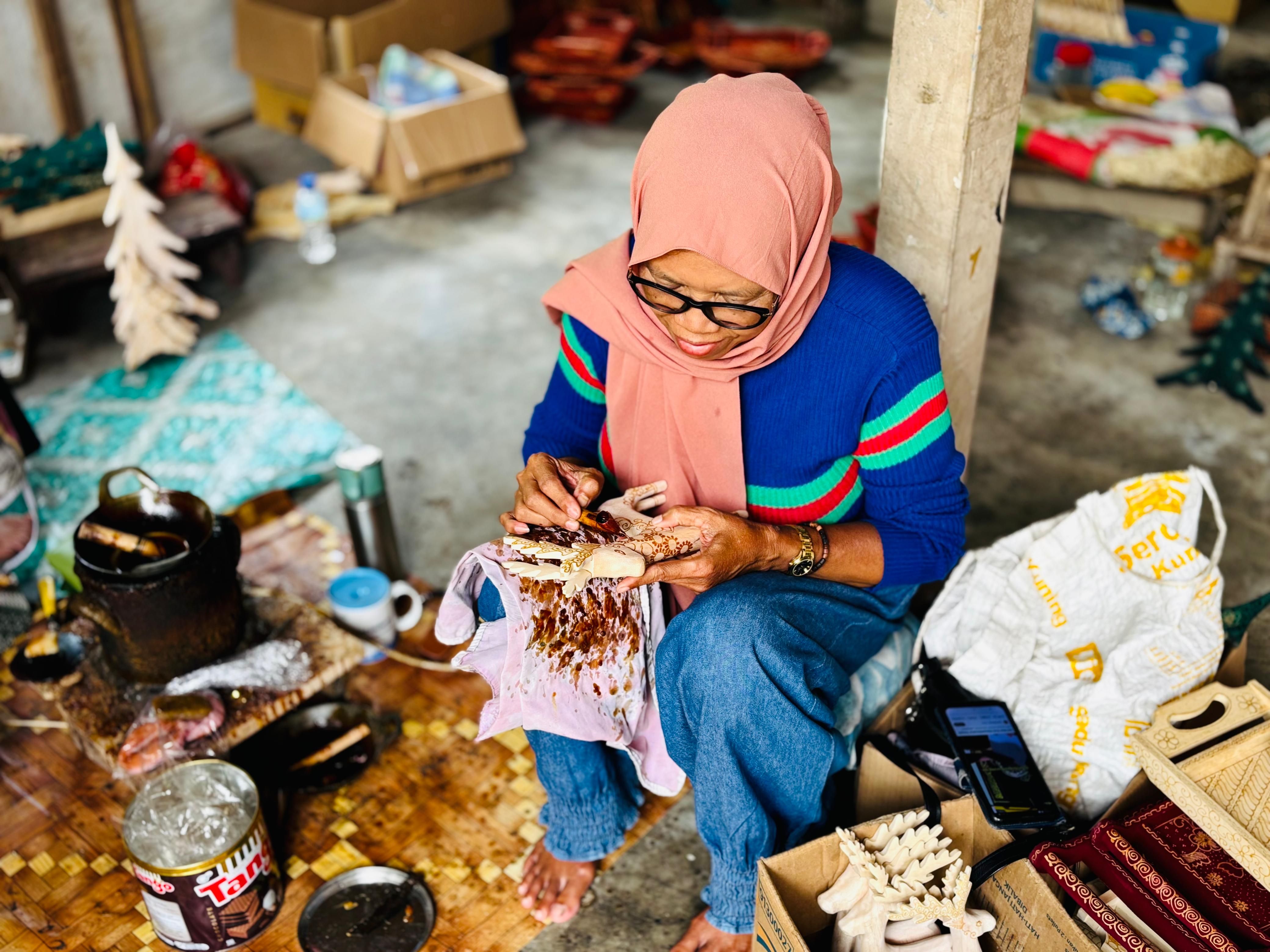
Mariasih, one of many women artisans in the village, looked working with quiet focus, applies hot wax to a wooden surface as part of the intricate process of crafting a unique wood batik piece. (Photo: RRI/Diva Rifdah Rizkia Puspitaningnala)
"Here in Krebet, everyone, from the young to the elderly, works hand in hand to move our village forward. We’re united by this craft and by our shared commitment to uplifting the community,” said Riyadi Jibril, affectionately known as Jib, Deputy Chair of Krebet Tourism Village, on Thursday, October 2, 2025.
Beyond the products themselves, the village offers a wide range of tourism packages, all developed by the community. These include educational workshops for making wood batik and engaging activities that teach traditional games once played by children in the village.
The village's offerings also showcase a rich cultural life, featuring performances and workshops in traditional arts like karawitan (Javanese gamelan orchestra), hadroh (Islamic devotional singing), gending (gamelan compositions), jathilan (trance dance), and other traditional performances.
Visitors can also enjoy local cuisine, with the renowned gudeg manggar as a standout specialty. Gudeg is Yogakarta's traditional dish with young jackfruit as its main raw ingredient. In gudeg manggar, the main ingredient is replaced with manggar (coconut flower).
Krebet wood batik artisans, who work across 47 different workshops in the hamlet, produce a variety of wood batik products, including masks, ashtrays, puppets, trays, and other household goods and home decorations that showcase their unique skills.
/srf0imym4b8ge78.jpeg)
A skilled artisan carefully carved a wooden block with a small knife, shaping its surface to form the base of a wood batik piece. (Photo: RRI/Diva Rifdah Rizkia Puspitaningnala)
"We want to share our heritage, not just sell products. Through our packages, visitors can truly experience our traditions, and feel the rhythm of our culture through our arts, food, and hospitality," Jib explained.
The wood craftsmanship tradition in Krebet Hamlet began in the 1970s when local farmers, living in a hilly, limestone area, started making simple tools like ladles and knives to supplement their income.
This craft evolved significantly when Gunjiar, a self-taught carver, took on the challenge of making a detailed mask, leading him to apprentice with a renowned mask maker to perfect his skills.
Other local artisans further established the trade; Kemiskidi honed his craft and opened the Peni workshop, using the sales to fund his high school education, while Anton Wahono pivoted from producing leather puppets to wood puppets in 1988 due to a new government policy on raw leather exports.
Though the craft was not a primary source of income in the early 1980s, rising market demand eventually led to both the Peni and Punokawan workshops hiring more residents, transforming the craft into a vital part of the local economy.
According to Yulianto, a member of the Krebet Tourism Village management team, the wood batik creation process begins with transforming raw wood logs, such as mahogany, teak, or albasia, into planks. These planks are then cut into specific shapes, followed by a meticulous carving and smoothing process.
“The intricate batik work begins with a pencil sketch of the desired motif on the wooden surface. Artisans then use a canting (a pen-like tool) to apply hot wax to the pattern before the piece is submerged in dye,” Yulianto explained.
“After the dye sets, the wax is carefully removed in a process called nglorot to reveal the design. A final protective coating is applied to the dried piece to ensure the colors remain vibrant, after which it is ready for packaging or display in the showroom,” he added.
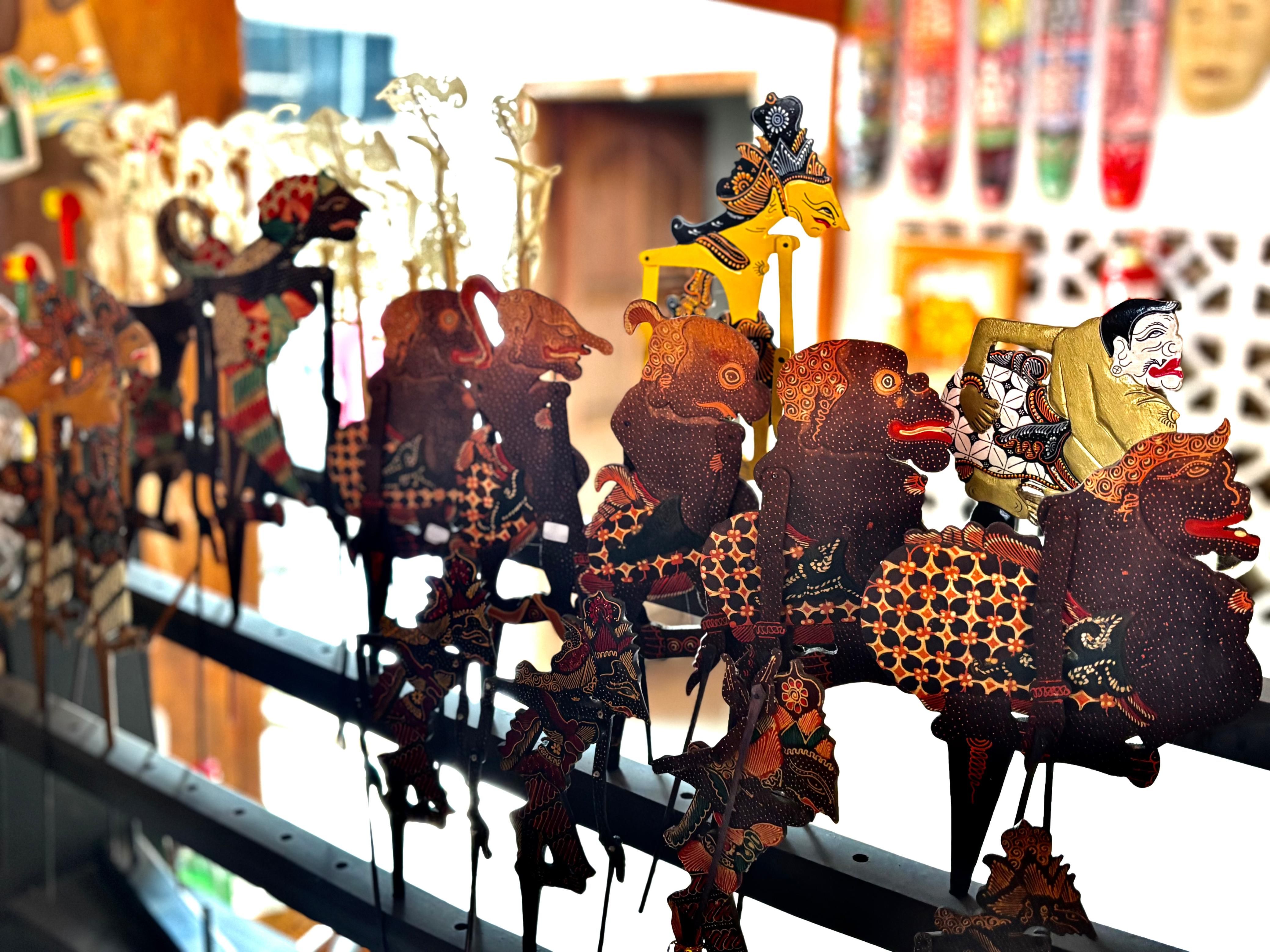
Crafted by artisans at the Punokawan workshop, these wood batik puppets highlight their skill in reimagining a traditional art form. (Photo: RRI/Diva Rifdah Rizkia Puspitaningnala)
The village's artisans work every day from 8 a.m. to 5 p.m. local time, taking holidays and special event days off. Their finished products, which range in price from IDR 3,500 (USD 0,21) to millions of rupiah, are popular with both local and international customers
The village also offers tourism packages for visitors who want a hands-on experience. These packages, which include everything from simple workshops to more comprehensive tours, are available for prices starting from IDR 20,000 (USD 1,20) up to IDR 1.5 million (USD 90,21).
The name Krebet has two origin stories. According to one local belief, it comes from the word kerabat (relatives), as the village was a gathering point for Mataram Kingdom relatives on their way to the Mangir hamlet, which is located about 4 km away.
Another version tells of Jaka Tingkir, who was also known as Mas Karebet. “He meditated under a large tree on his journey to Mangir, and the tree was named after him as the Karebet tree,” Yulianto explained.
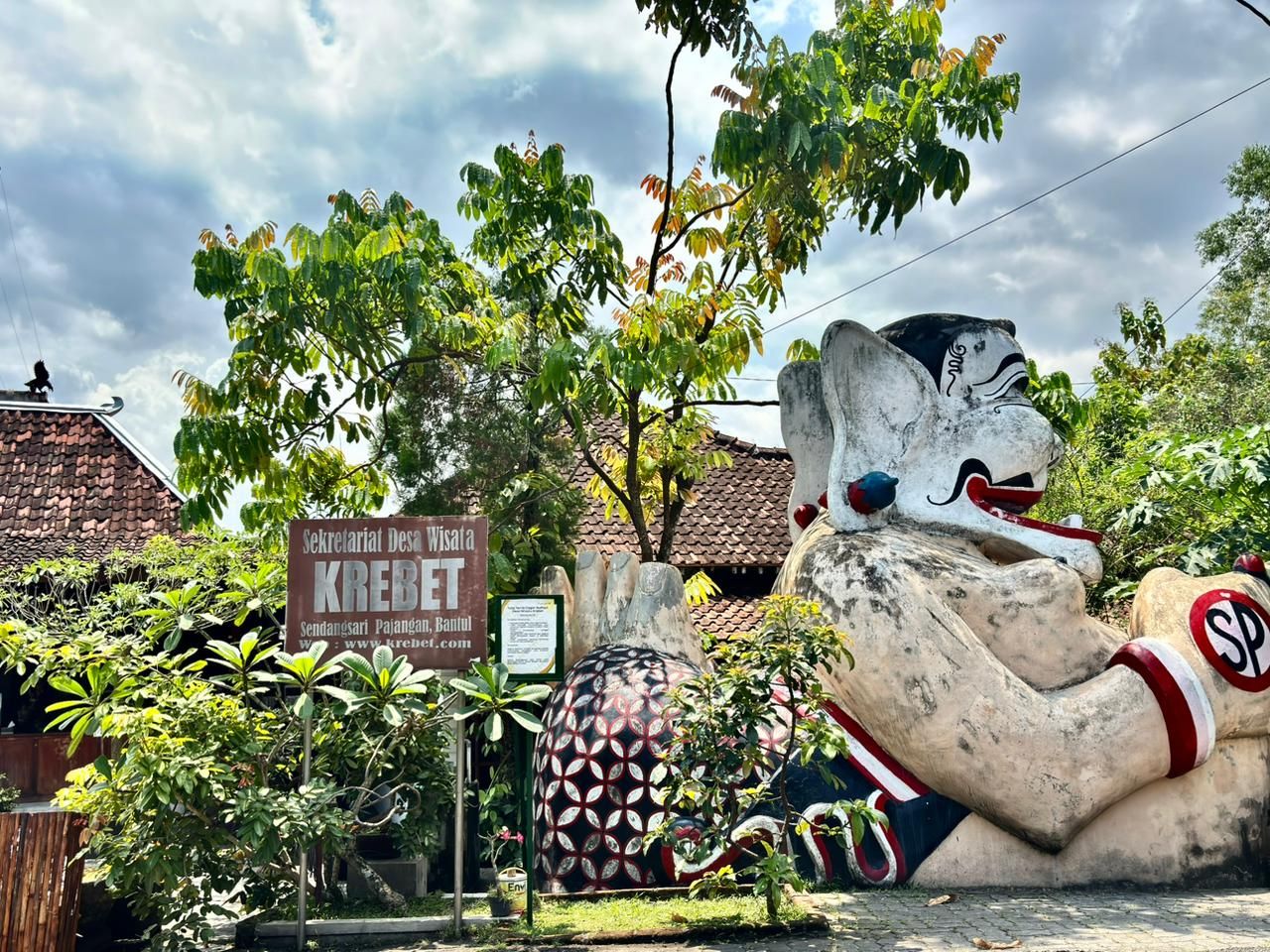
A statue of Semar, the iconic figure of Krebet Tourism Village, stands at a site once believed to be a resting place of Jaka Tingkir, also known as Mas Karebet. (Photo: RRI/Diva Rifdah Rizkia Puspitaningnala)
Krebet's efforts have brought it significant recognition, including a spot among the top 50 tourism villages at the 2024 Indonesian Tourism Village Awards (ADWI). The village’s ambition is to become a world-class green tourism destination, a goal reflected in its products reaching international markets.
This reputation is built on numerous achievements, from representing Bantul Regency and the Yogyakarta Province (DIY) in various events to winning first place as the province's 2024 Digital Tourism Village. Several local batik workshops have also received awards from the Indonesian World Records Museum (MURI), acknowledging their unique contributions to the craft.
Commemorating the National Batik Day, Jib and the residents of Krebet Hamlet express hopes that batik will continue to develop, as wood batik and craftsmanship serve as a primary livelihood for the community. They believe the continued growth of this art form is essential for their economic sustainability and the future of their village.
"Batik isn't just a craft for us; it's our main livelihood. Our greatest hope is young people will carry on this tradition, ensuring our batik's future is secure," Jib concluded. ***
News Recomendation
Loading latest news.....