


Lasem, A Town of Living History and Cultural Harmony
- 15 Sep 2025 00:55 WIB
- Voice of Indonesia
KBRN, Rembang: Lasem, a coastal town on the northern edge of Central Java, is home to centuries-old Chinese architecture that still stands proudly today.
Among its most iconic buildings is Lawang Ombo, meaning Big Door, a former opium house featured in the book Chinese Houses of Southeast Asia: The Eclectic Architecture of Sojourners and Settlers by Ronald G. Knapp, with photography by A. Chester Ong (2010).
For history and cultural tourism enthusiasts, visiting Lasem, often called 'Little Tiongkok', offers an unforgettable experience. The town, located in Rembang Regency, also serves as a silent witness to a major people’s uprising against Dutch colonial rule, an episode largely absent from Indonesia’s official history.
Between 1740 and 1743, Chinese and Javanese communities in Lasem and surrounding areas united to resist the Dutch East India Company (Vereenigde Oostindische Compagnie, or VOC). The conflict in Lasem was part of a broader historical event known as Geger Pecinan, or the 1740 Chinese Massacre.
Three key figures led the resistance in Lasem: Regent Oei Ing Kiat (Tumenggung Widyaningrat), Raden Panji Margana (son of Regent Tejakusuma V), and Tan Ke Wie, a martial arts instructor and brickmaker. All three were killed in battle at different times.
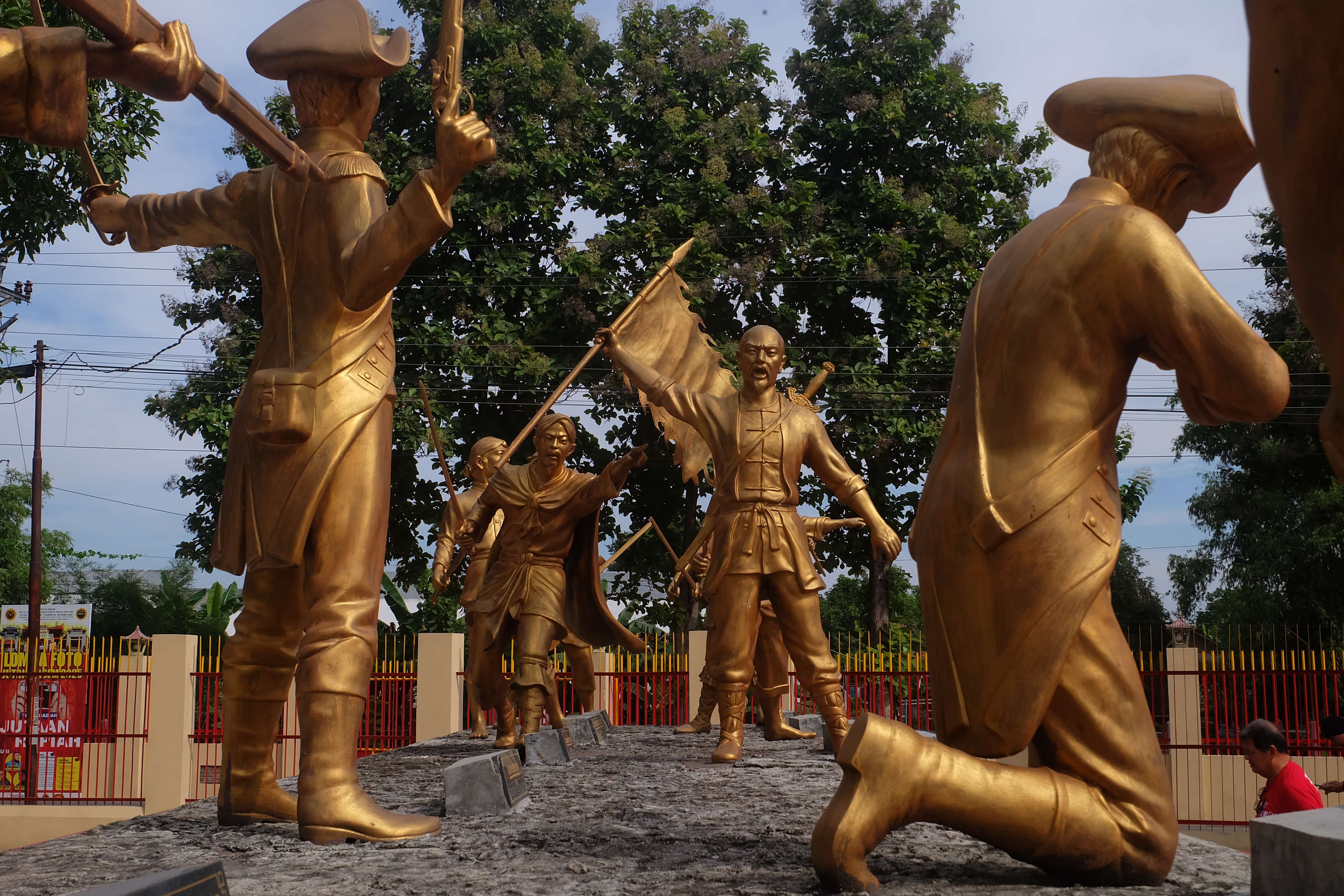
To honor their legacy, the Lasem community built a large monument in the courtyard of Cu An Kiong Temple in Soditan Village. The temple, with its pink gate and front-wall murals, was originally built by a follower of Admiral Cheng Ho, who visited Lasem in 1500.
The golden-yellow monument depicts the three Lasem heroes alongside warriors from the Mataram Kingdom (Kartosuro era), battling VOC troops led by Captain Nathaniel Steinmetz. Though constructed years ago, the monument was officially inaugurated by Deputy Minister of Culture Giring Ganesha in April 2025.
“The monument stands in the spacious courtyard of Cu An Kiong Temple,” said temple expert Kwa Tong Hay from Semarang via WhatsApp messaging recently.
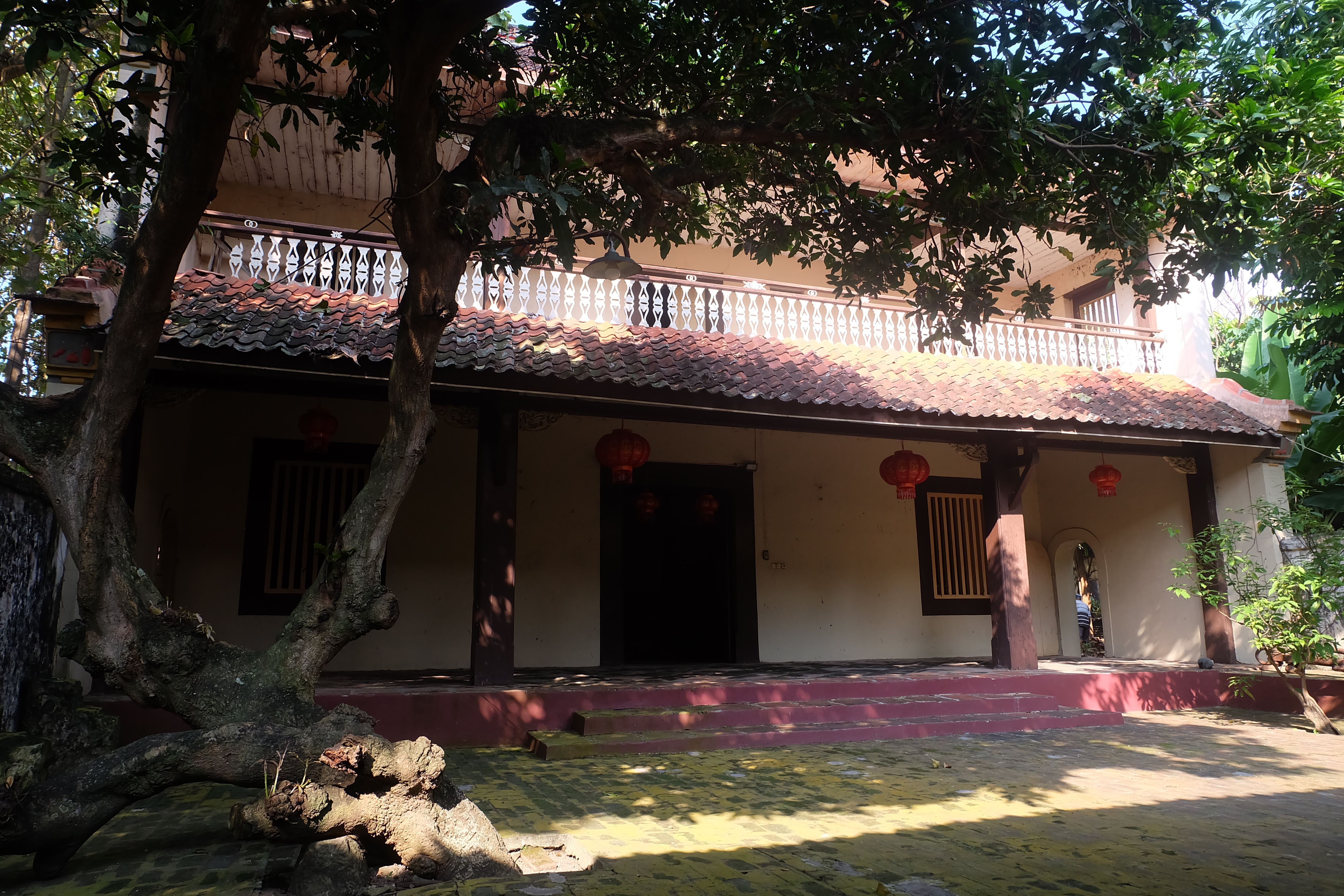 A two-story structure stands within the Chinese-style residence known as Lawang Ombo, one of Lasem’s centuries-old heritage houses. Once infamous as an opium den, the building now draws attention for its architectural beauty and layered history. (Photo: RRI/Bambang MBKA)
Seno Joko Suyono, journalist and founder of the Borobudur Writers and Cultural Festival (BWCF), described Lasem as a town with layered history. “Many people don’t realize Lasem’s connection to the Geger Pecinan,” he said during the BWCF opening in Lasem, June 2025.
Sadly, this history remains unfamiliar to many Lasem residents. On Indonesia’s Independence Day, August 17, no special ceremony was held to honor the town’s three musketeers and their fellow warriors.
“Independence celebrations here are just like anywhere else, nothing special,” said Sukarmiati, a Lasem resident and cultural history enthusiast.
Iwan Santosa, editor of Geger Pecinan 1740–1743: The Chinese–Javanese Alliance Against the VOC by historian Daradjadi (Gramedia, 2017), wrote that in many respects, the Chinese Revolt was larger than the Diponegoro War, which lasted five years (1825–1830) and was confined to Yogyakarta and Banyumas.
In contrast, the Chinese Revolt spread across Java and its effects lingered for 17 years. Yet only the Diponegoro War is recognized in Indonesia’s official history, with Prince Diponegoro honored as a national hero. None of the Chinese fighters have received similar recognition.
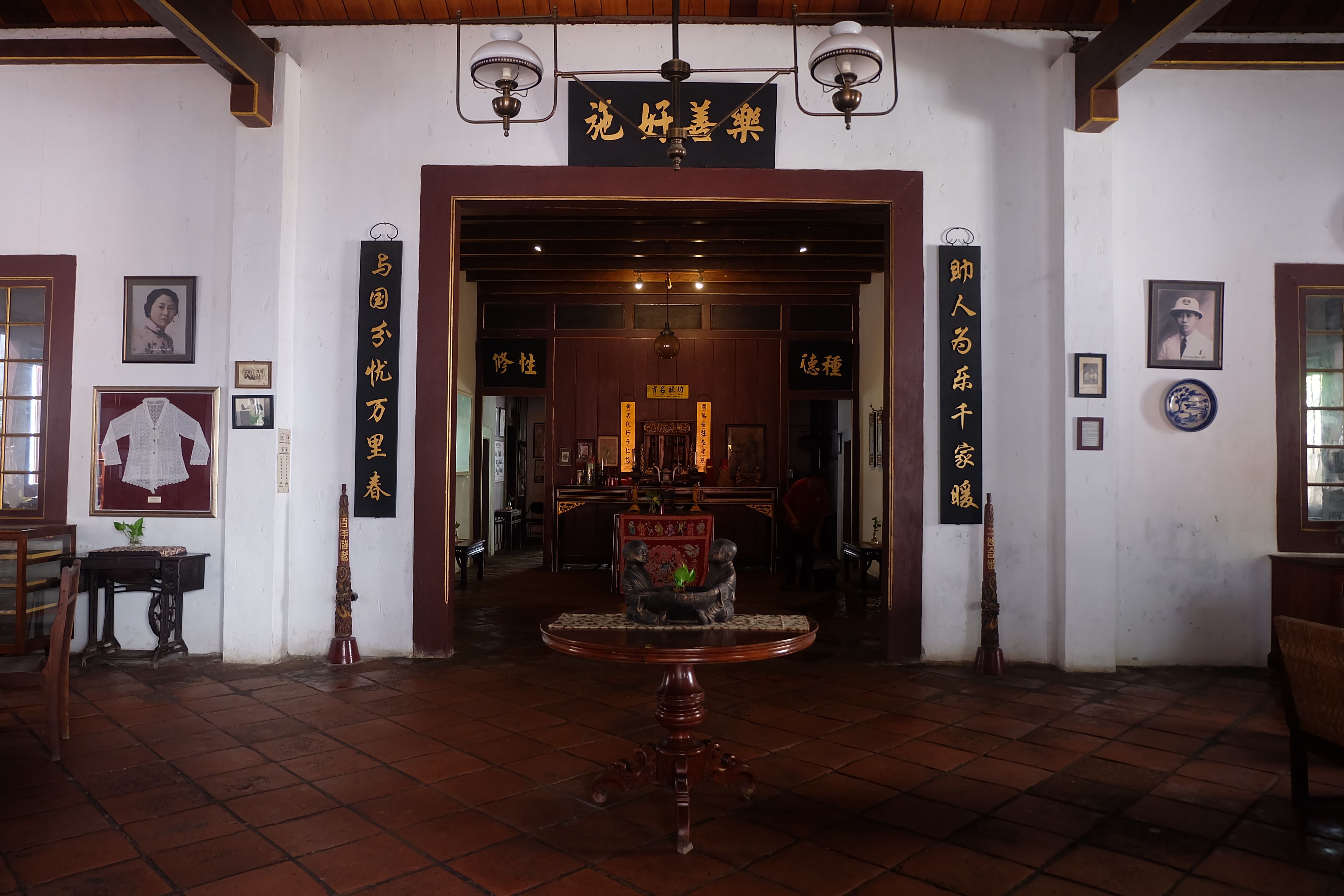 Interior of the living room of Oei House, Lasem. Built in 1818, the house remains well preserved and now serves as a café and hotel. (Photo: RRI/Bambang MBKA)
The roots of the Chinese Massacre trace back to Batavia (now Jakarta) in 1690, when the VOC imposed quotas on Chinese immigrants and extorted those who entered illegally. Tensions escalated in July 1740, when the Raad van Indie (Council of the Indies) began raiding and arresting Chinese residents deemed suspicious.
Outraged, the Chinese community, led by Captain Sepanjang (Souw Pan Tjiang), rose up and attacked VOC outposts to free those detained.
Governor General Adriaan Valckenier responded with brutal force, ordering mass arrests and executions. Over 10,000 people, including women and children, were killed.
Rather than quelling the rebellion, the VOC’s cruelty fueled a larger uprising. The revolt spread eastward from Batavia to Lasem, then part of the Mataram Kingdom with its capital in Kartosura.
According to Daradjadi, Lasem welcomed the rebels. Oei Ing Kiat, Raden Panji Margana, and Tan Ke Wie rallied both Chinese and Javanese communities to resist the VOC.
In August 1741, King Pakubuwono II of Mataram initially supported the rebel coalition, hoping to expel the VOC due to its interference and trade monopoly. With royal backing, the rebels destroyed the VOC fort in Kartosura.
However, by early 1742, Pakubuwono II reversed his position and allied with the VOC, fearing the rebels would ultimately lose. Former allies became enemies. The rebels now faced both VOC and Mataram forces.
Against the odds, the Chinese–Javanese coalition seized the Mataram Palace in Kartosura. Pakubuwono II fled to Magetan (now in East Java) with VOC support, and was replaced by Amangkurat V, a noble who had supported the rebels from the start.
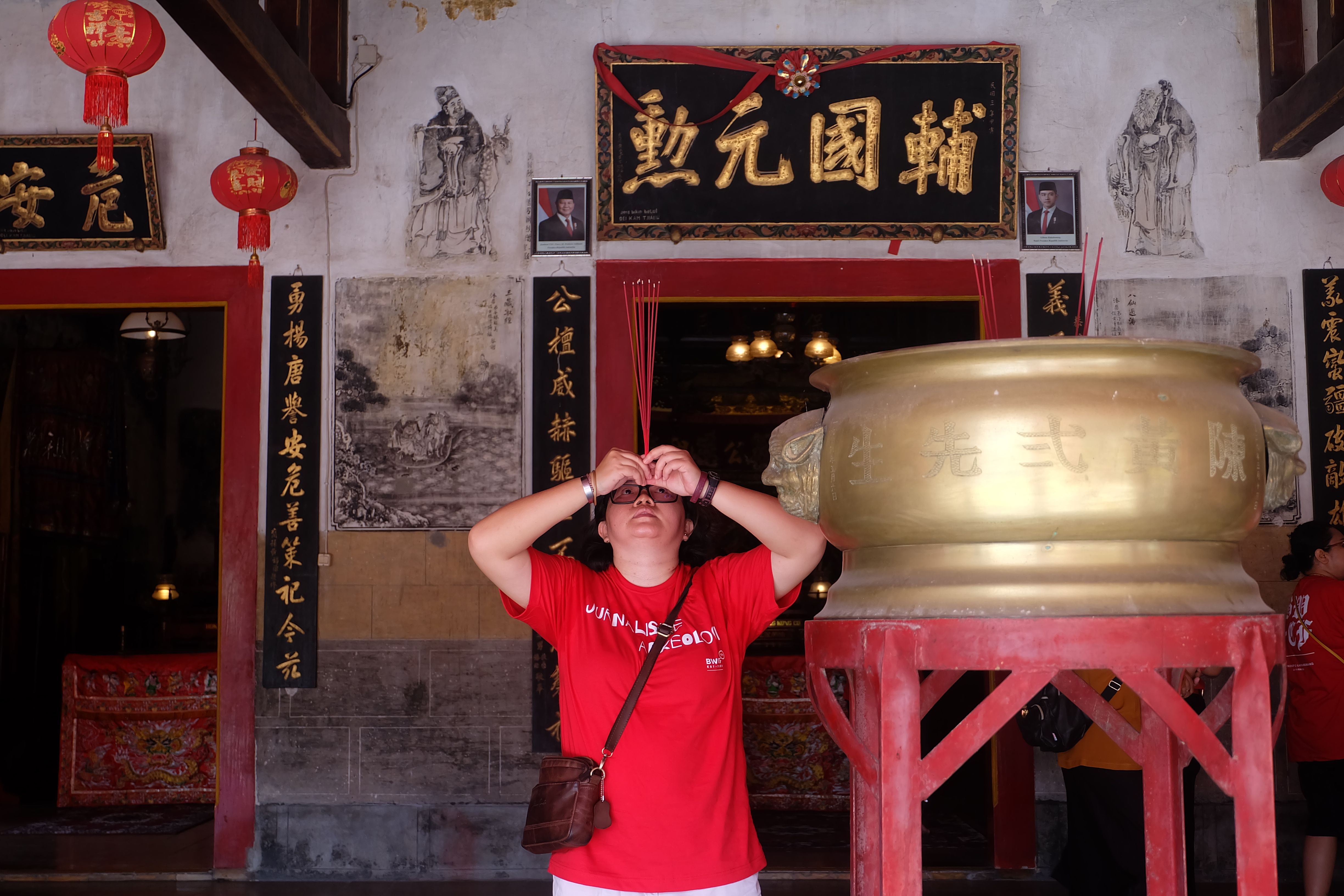 A woman offers prayers at Gie Yong Bio Temple in Babagan Village, Lasem. Built in 1780, the temple honors three local warriors, Oei Ing Kiat, Raden Panji Margana, and Tan Ke Wie, who led the resistance against colonial forces. (Photo: RRI/Bambang MBKA)
To honor Lasem’s three heroes, the local Chinese community built Gie Yong Bio Temple in Babagan Village in 1780. In southern Chinese tradition, temples are often built to venerate revered individuals.
The temple, dominated by red and yellow hues, features a swallowtail roof. During the BWCF visit, Kwa Tong Hay explained that the three Lasem heroes formed an army called Gi Yong Kun. “Gi (or Yi) means justice, Yong means brave, and Kun means army,” Kwa Tong Hay said.
History lovers can also visit the Museum of the Chinese–Javanese Struggle Against the VOC (1740–1743), founded by businessman and heritage advocate Udaya Halim, also known for the Benteng Heritage Museum in Tangerang, Banten.
The museum is housed in a large Chinese-style building in Sumberejo Village, near Lasem. Udaya named it Liem Heritage: The Hidden Treasure of Rembang.
When he acquired the 200-year-old house, it was dilapidated and inhabited by bats. Historically, it served as both a temple and the residence of Bhante Sri Mahathera Pannavaro, a prominent Indonesian Buddhist figure.
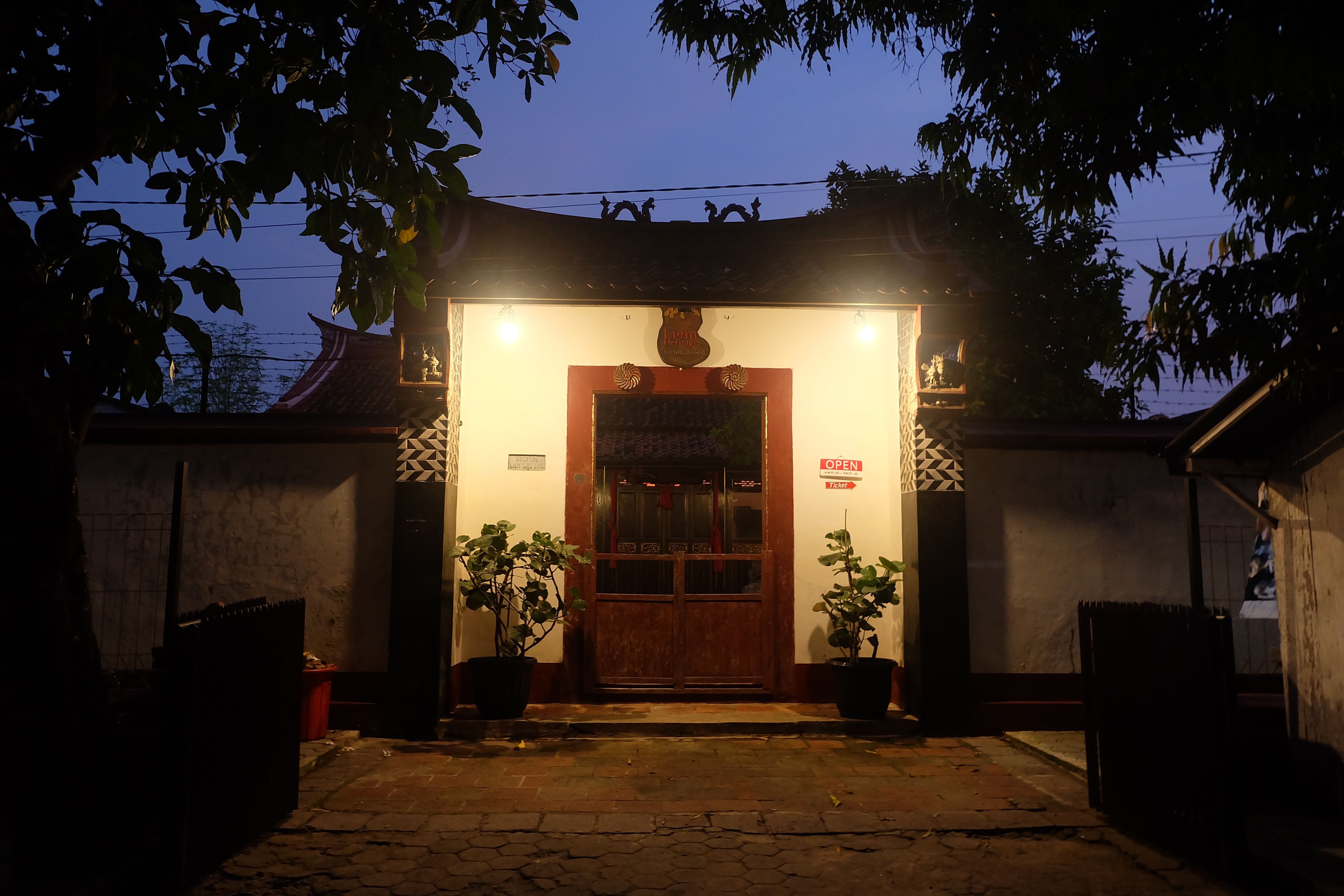 The gate of Liem Heritage: The Hidden Treasure of Rembang stands in Sumberejo Village, Rembang, just a short distance from Lasem. Elegant gates like this are a hallmark of traditional Chinese-style houses found throughout Lasem and Rembang. (Photo: RRI/Bambang MBKA)
After seven years of restoration, the building now shines once again.
The museum showcases aspects of Chinese culture in Indonesia, including calendars, festivals, zodiac (shio), cuisine, and traditional tools like scales, farming clothes, and hoes, evidence of centuries-old cultural blending between Chinese and Javanese communities.
Following the revolt, the VOC enforced social segregation, separating Chinese, Indian, and Arab residents from Javanese communities. These groups were confined to designated areas and prohibited from mingling with Javanese locals.
The colonial government also spread negative stereotypes about the Chinese to sow division and prevent future alliances like the one that had threatened VOC rule.
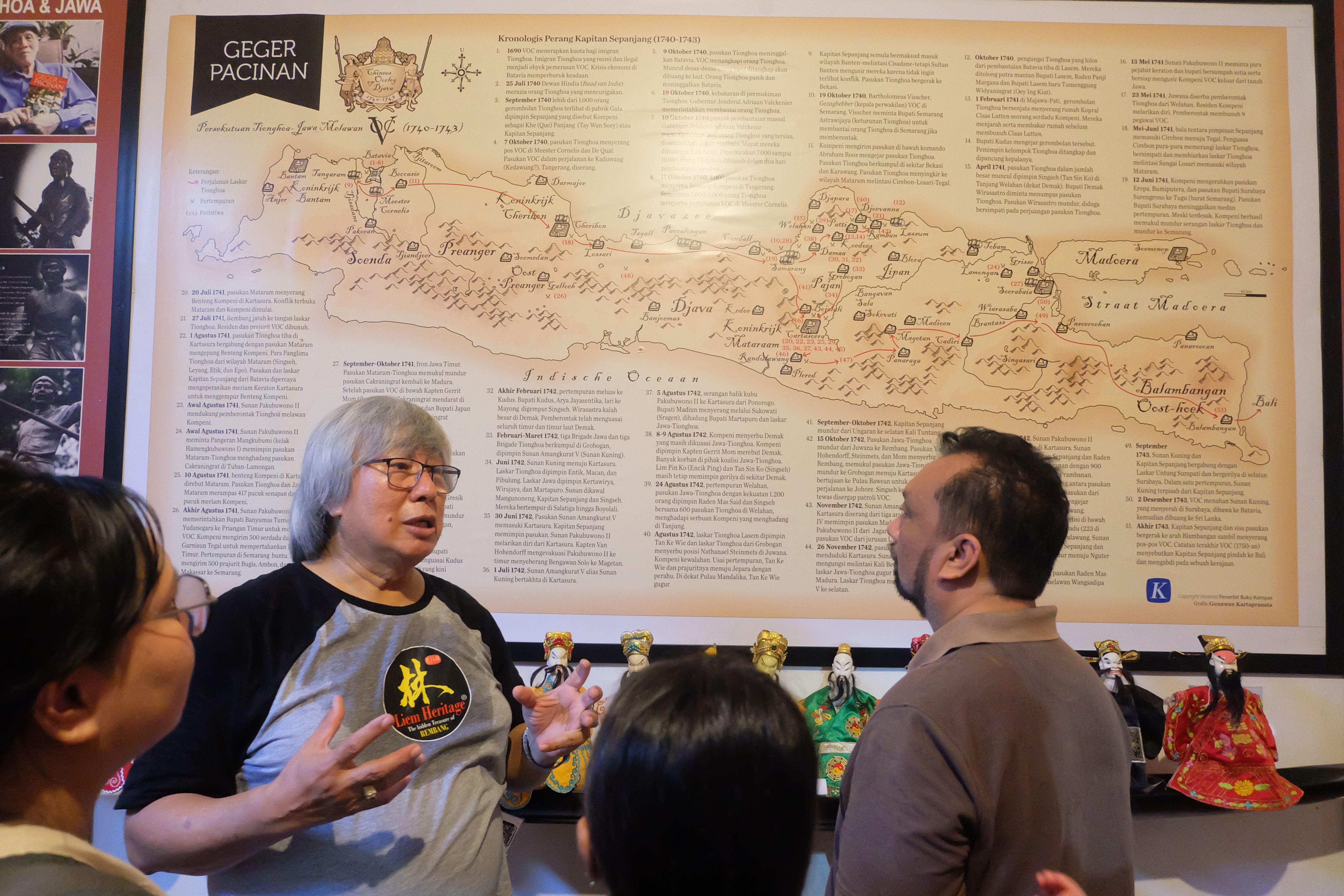 Udaya Halim, founder of the Museum of the Chinese–Javanese Struggle Against the VOC (1740–1743), shares insights into a pivotal historical event known to historians as 'Geger Pecinan', or the 1740 Chinese Massacre. (Photo: RRI/Bambang MBKA)
 Unfortunately, such stigmas persist today, leaving Chinese Indonesians vulnerable to discrimination. Often seen as "outsiders", they’ve been targeted during political unrest, most notably during the 1998 reform movement.
Contemporary artist FX Harsono explored this theme in his 2023 exhibition Spinae at Baik Art Gallery, Jakarta. Inspired by the crown of thorns worn by Jesus, he portrayed the silent suffering of Chinese Indonesians. Though often perceived as privileged or wealthy, symbolized by a crown, they quietly endure the pain of prejudice, represented by thorns.
Visiting Lasem is an act of mental decolonization, a way to challenge inherited biases and colonial narratives about Chinese Indonesians. It’s the only town in Indonesia that commemorates the historic solidarity between Chinese and Javanese communities.
Udaya expressed hope that more Indonesians will come to understand this history in "Little Tiongkok". As the saying goes, to understand the present and future, one must first know the past. “It would be beautiful if these two ethnic groups could truly unite,” said Udaya, his white hair glowing softly as he smiled. ***
News Recomendation
Loading latest news.....