


National Press Monument, Education on Indonesia's Press History
- 26 Mar 2025 23:43 WIB
- Voice of Indonesia
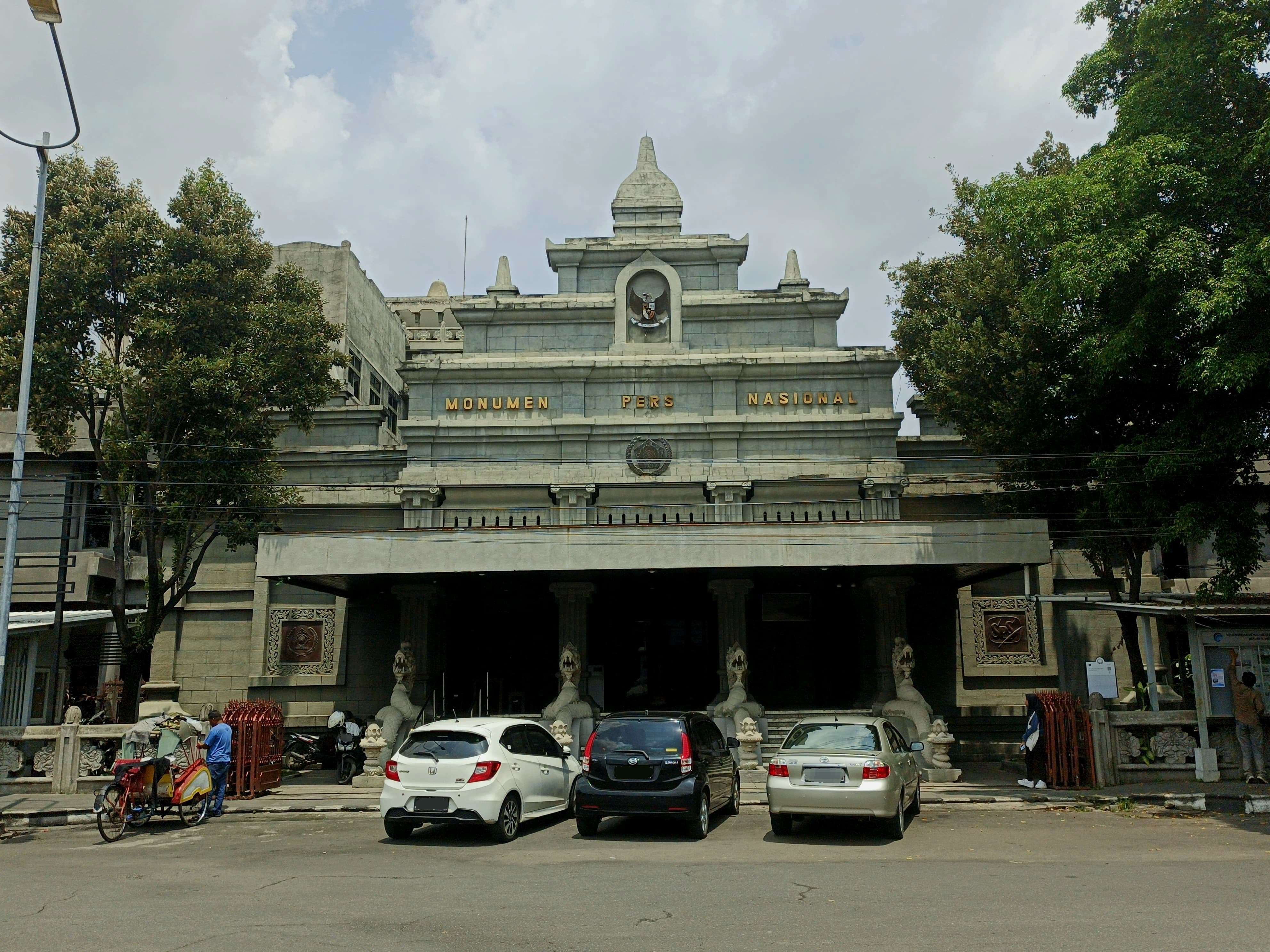
KBRN, Surakarta: In the heart of Surakarta, precisely at Jalan Gajahmada No. 59, Timuran Village, Banjarsari Subdistrict, Surakarta City, Central Java, stands the magnificent National Press Monument, a specialized museum dedicated to preserving the long journey of Indonesian mass media.
Visitors are invited to traverse a time tunnel through a collection of historical artifacts, ranging from ancient communication technologies like typewriters and transmitters to national newspaper archives that chronicle every moment of changing times.
A nostalgic atmosphere envelops every corner of the museum, rekindling the spirit of the information warriors who shaped the face of Indonesian press.
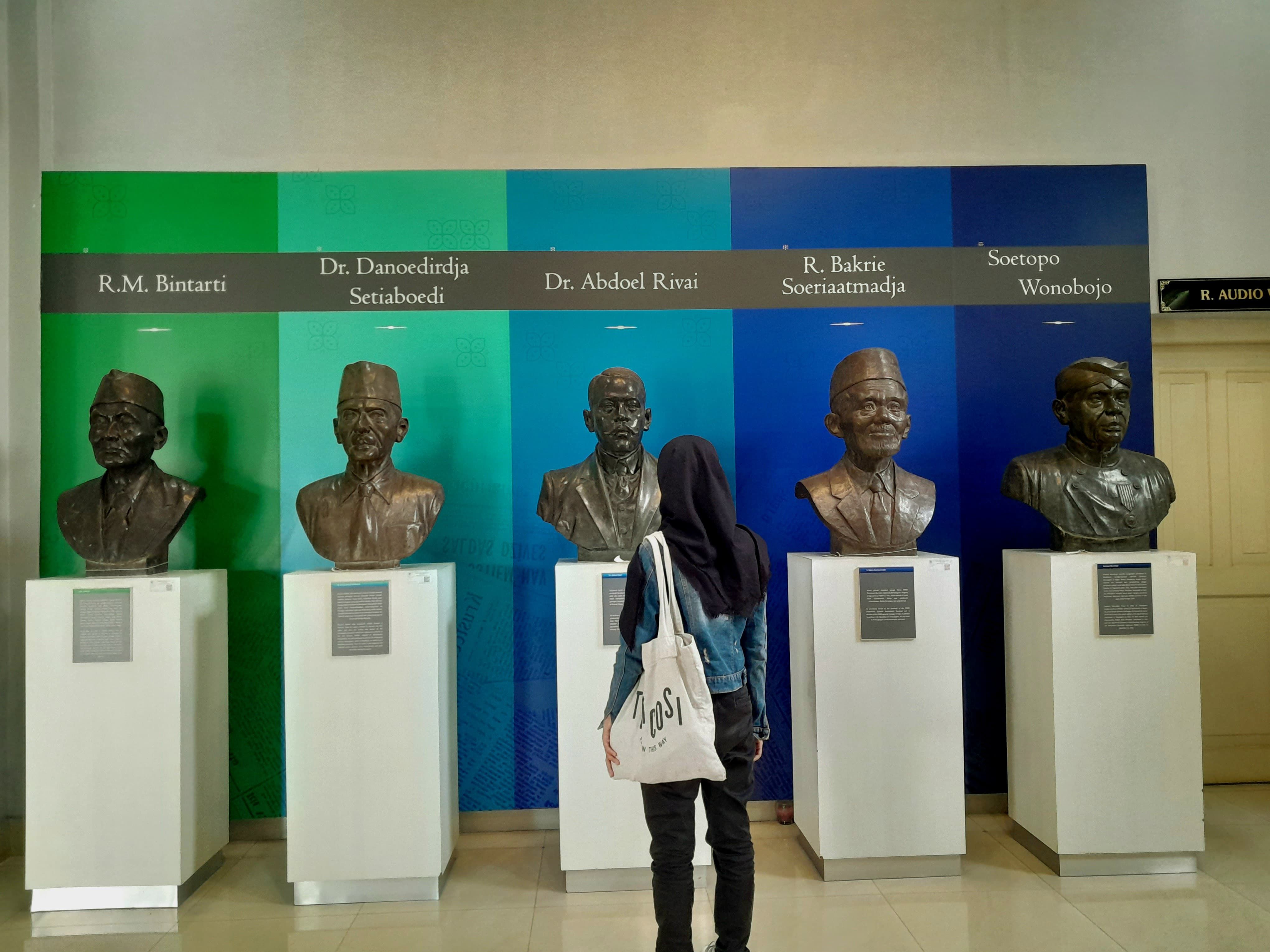
Bronze busts honoring Indonesian press pioneers R.M. Bintarti, Dr. Danoedirdja Setiaboedi, Dr. Abdoel Rivai, R. Bakrie Soeriaatmadja, and Soetopo Wonobojo were displayed. A visitor gazed at the statues, which stood as a tribute to their significant contributions to Indonesian journalism. (Photo: RRI English/Diva Rifdah Rizkia Puspitaningnala)
"This monument not only narrates a journey as a press museum, but the building itself has a unique story, as it is a registered cultural heritage building," said Rista Ayu Cahyaning Ratri, a guide at the National Press Monument, on Wednesday, March 26, 2025.
"This museum becomes a place to store, maintain, and communicate to the public about the history of the press in Indonesia," she added.
The museum, located west of the Mangkunegaran Palace, consists of two sections: the old building and the new building. The old building, established in 1918, showcases the history of Indonesian press through thematic exhibitions.
"This museum officially became a cultural heritage site on September 24, 2018, inaugurated by then Minister of Education and Culture Muhadjir Effendy," said Danang, another guide at the National Press Monument.
The new building houses a collection of artifacts belonging to historical journalists. Visitors can access the Print Media Archive Service in the south building, which stores a collection of the Archipelago print media from pre-independence to the present day.
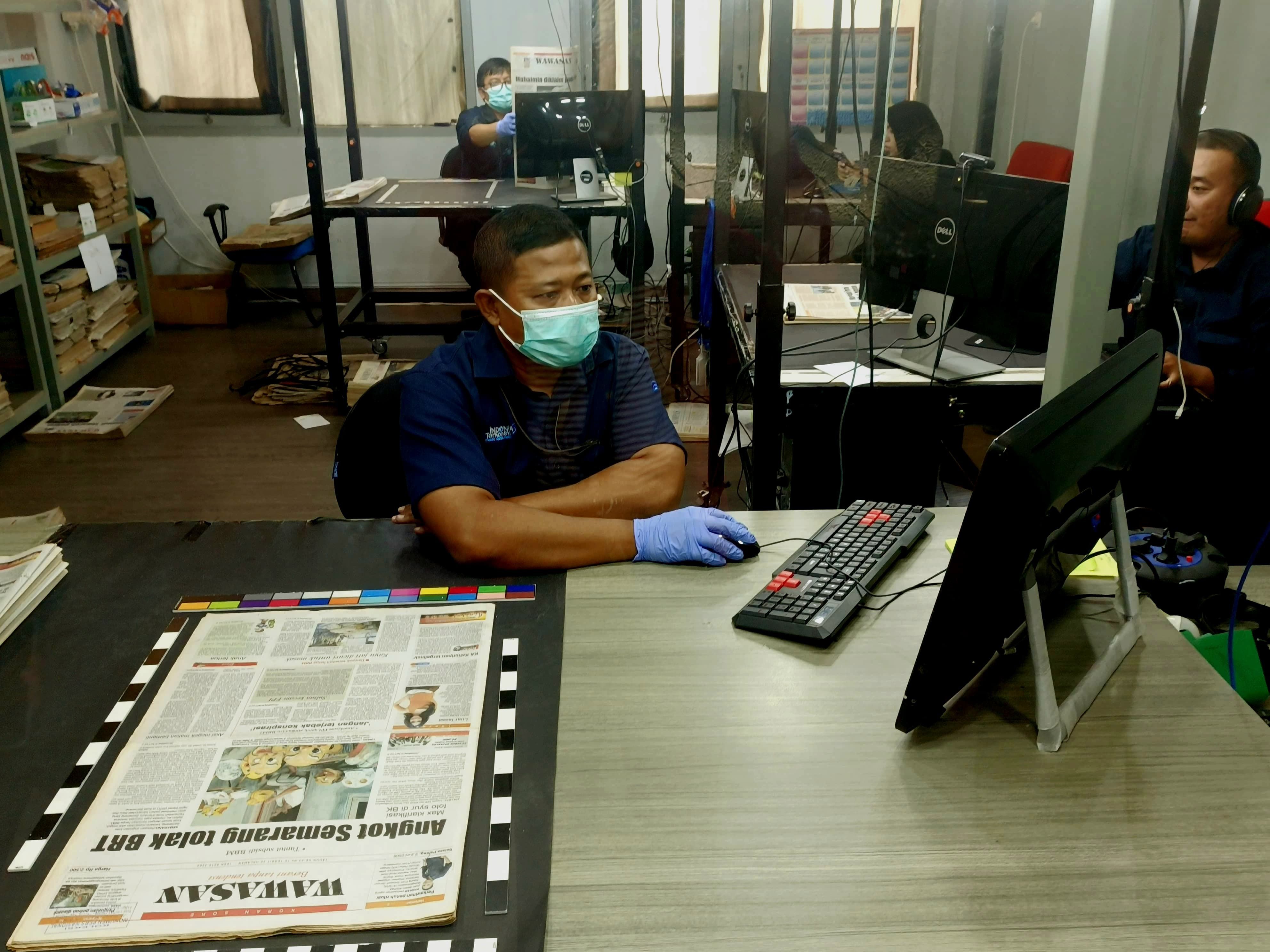
Newspapers and magazines, spanning from pre-independence to the present, were scanned daily and digitized on computers. Workers processed the historical documents, converting them into digital formats for preservation and accessibility. (Photo: RRI English/Diva Rifdah Rizkia Puspitaningnala)
The upper floor houses the library and print media digitization services, while the third and fourth floors are designated for storing and conserving the collection.
Danang said that in addition to the library, which has 20,000 books predominantly about press and history in its collection, the museum also has a children's library and the so-called Kemala room, used when the main library is full.
"The name Atmojo comes from a Yogyakarta journalist, Kemala Atmojo, who donated his books to this room," explained Danang.
Upon entering the main building of the National Press Monument, visitors are invited to delve into the long journey of Indonesian press history.
The audio-visual room provides insights into the world of media, while the Mangkunegaran Room honors Kanjeng Gusti Pangeran Adipati Arya (KGPAA) Mangkunegara VII, the donor of this historic building.
In the Inauguration Room, the brief history of the monument's establishment is beautifully inscribed, evoking a sense of nostalgia for the past.
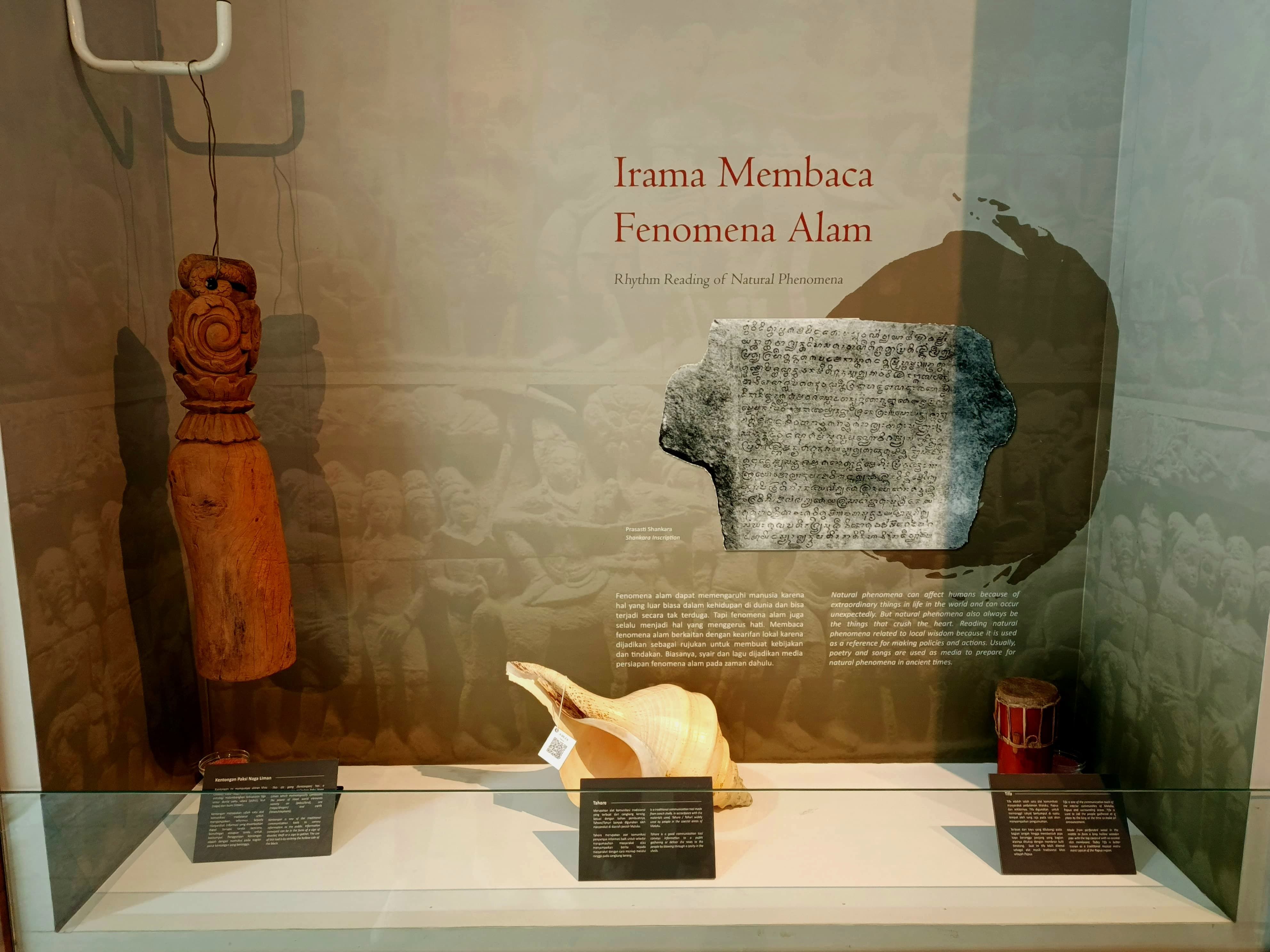
The exhibit featured traditional Indonesian communication tools, such as a kentongan (slit gong), a conch shell trumpet, and a tifa drum. These artifacts demonstrated how communities communicated prior to the advent of modern technology. (Photo: RRI English/Diva Rifdah Rizkia Puspitaningnala)
"The catalog records 33 exhibited items, not including statues, print media, etc," revealed Danang.
The journey continues to the Surakarta City Press History Room, where ancient newspapers and magazines are neatly stored, silent witnesses to the development of media in Surakarta City. In this room, the traces of press organizations that once thrived in Surakarta are also revealed.
The adventure through press history culminates in the Cultural Hall, which showcases the evolution of communication and press in Indonesia from its inception.
Each room in the National Press Monument is a window into the past, taking visitors on an unforgettable journey through Indonesian press history.
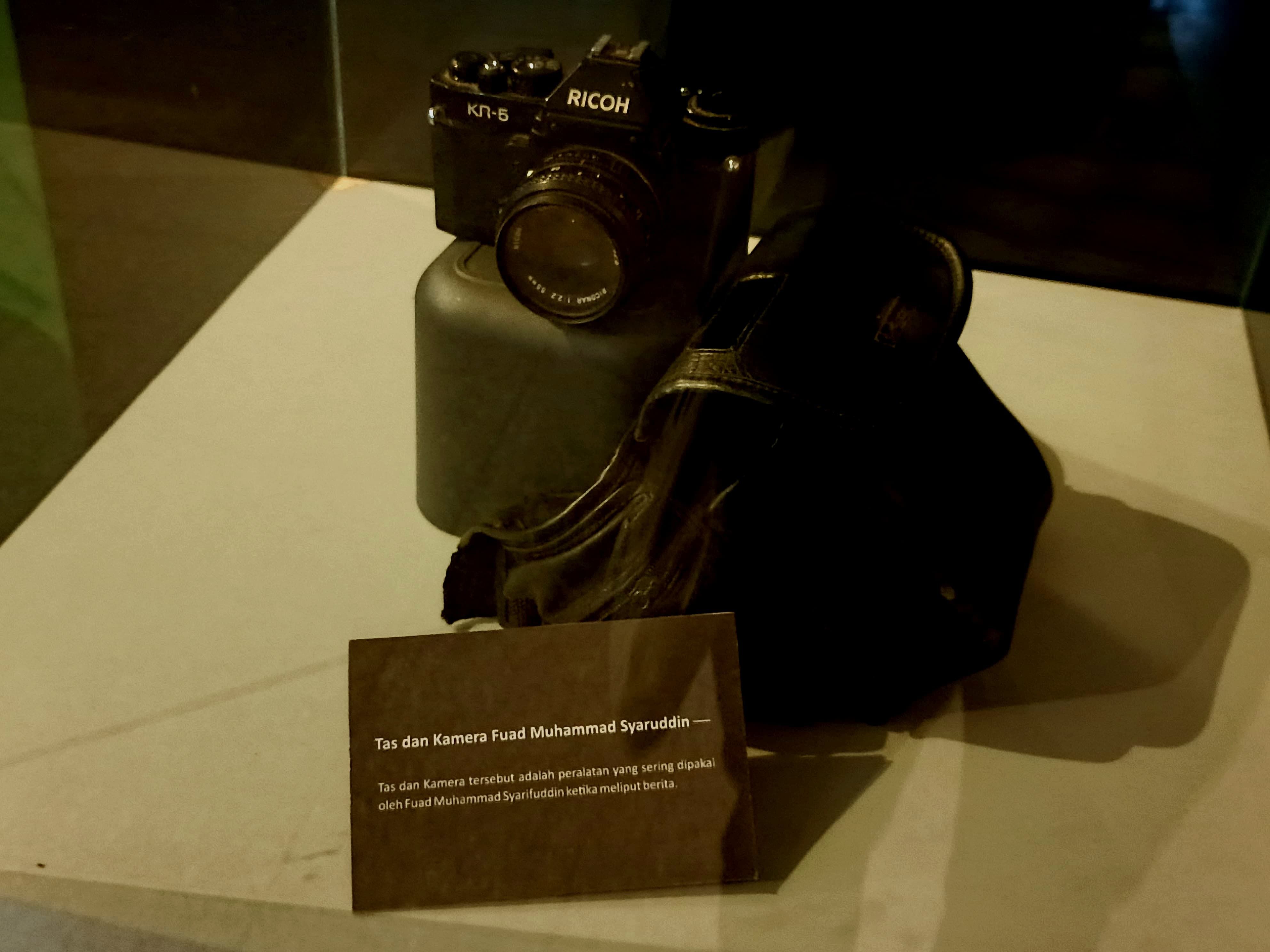
Journalist Fuad Muhammad Syaruddin's bag and camera, displayed as artifacts, were tools he frequently used while reporting. Affectionately called Udin, he was known for his critical reporting on government policies and military activities during the New Order era. Tragically, he was attacked by unidentified assailants on August 13, 1996, and died three days later on August 16, 1996. (Photo: RRI English/Diva Rifdah Rizkia Puspitaningnala)
KGPAA Sri Mangkunegara VII initiated the construction of the National Press Monument in 1918, formerly known as Societeit Sasana Soeka. This building initially functioned as an assembly hall and meeting space, where nobles sought entertainment and social interaction.
Mas Aboekasan Atmodirono, a visionary architect from Wonosobo, designed this building in 1917, bringing a captivating touch of classical architecture.
This building was turned into the National Press Monument because in 1946, it was used as the venue for the first congress of the Indonesian Journalists Association (PWI), where they declared the establishment of the association.
"They wanted to have a museum so that their journey could continue to be seen, and their spirit could be passed on to future generations," explained Ayu.
President Soeharto inaugurated the National Press Monument in 1978, marking a significant milestone in the preservation of Indonesian mass media history. Today, this monument not only functions as a museum but also an information and education center.
Visitors can enjoy a comprehensive library service, a print media reading room that houses collections of physical and digital newspapers, and a reading terrace and bulletin board in the front yard that enhance the public space.
"On the front terrace, a reading board displays national and local daily newspapers, refreshed each morning between 6 and 7 a.m. Publications featured include Kompas, Suara Merdeka, Solo Pos, Kedaulatan Rakyat, Jawa Pos, and Media Indonesia," Danang explained.
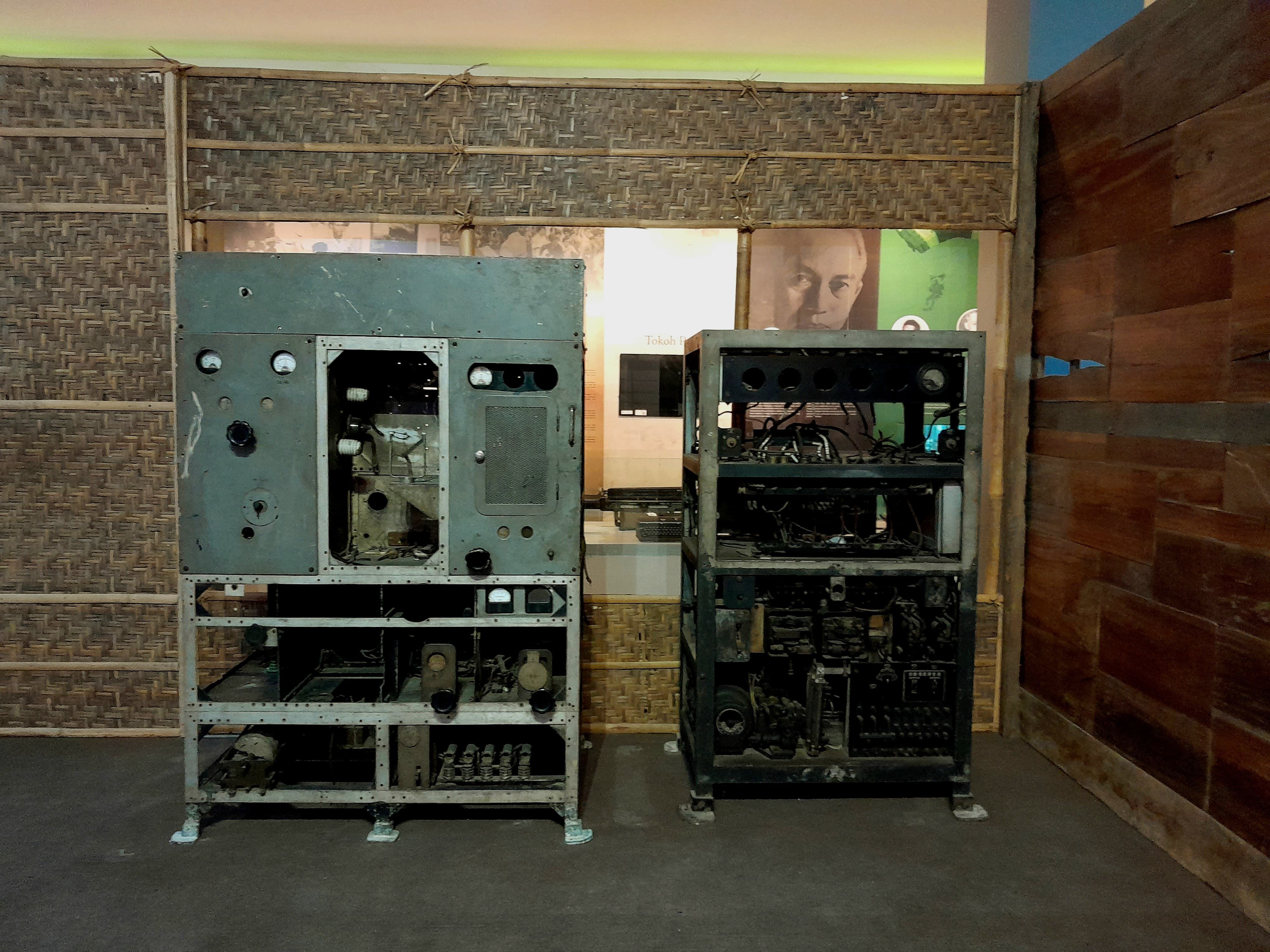
The "Goat Radio Transmitter," (Radio Kambing) a 1-kilowatt device from Balong village, Jenawi Subdistrict, Karanganyar Regency, Central Java, was displayed. Its history marked by broadcasts amidst the sounds of bleating goats. This transmitter, central to Indonesian independence broadcasts, was later housed in the National Press Monument Surakarta. (Photo: RRI English/Diva Rifdah Rizkia Puspitaningnala)
Situated on a 2.5-acre plot, the National Press Monument boasts a magnificent classical-style building spanning 2,059 square meters. Now managed by Ministry of Communication and Digital, the monument exudes a unique charm that captures the imagination.
More than a historical landmark, it serves as a portal connecting the past to the present.
The harmonious blend of classic architecture and comprehensive print media services is a major attraction for visitors. Here, the history of the Indonesian press is brought to life, allowing the younger generation to delve into the footsteps of pioneering journalists.
This monument is not just about the past, but also about how history shapes the present and future of the Indonesian press.
"The architecture of the National Press Monument blends Hindu-Buddhist styles, evident in the stupa ornaments and temple shapes, with a front facade adorned with dragons, and colonial styles marked by large pillars and wide windows," explained Danang.
Visitors can explore 350,000 rare newspaper copies, from the colonial era to the present day, with new additions arriving daily. In addition to viewing physical newspapers, visitors are also facilitated with digitally converted collections.
Routine activities here include exhibitions on February 9th, the anniversary of the National Press Monument, as well as festivals, workshops, competitions, and live music. "These activities aim to remind the public that this monument is still active and relevant today," said Ayu.
More than just a museum, this place has become a magnet for the younger generation, with an average daily visit of over 100 people. Its appeal lies not only in its strategic location but also in the various free facilities offered.
Visitors are pampered with free parking, Wi-Fi access, and library services. For those hungry for information, data requests from digital newspaper archives are also provided free of charge.
Furthermore, holders of Surakarta Identity Card (KTP) or students studying in the city can borrow books for free. The National Press Monument is open every Monday to Saturday, from 9 a.m. to 3 p.m. local time. ***
News Recomendation
Loading latest news.....