


Dharma Wiratama Museum, Silent Witness of RI Army's Struggle
- 19 Mar 2025 00:39 WIB
- Voice of Indonesia
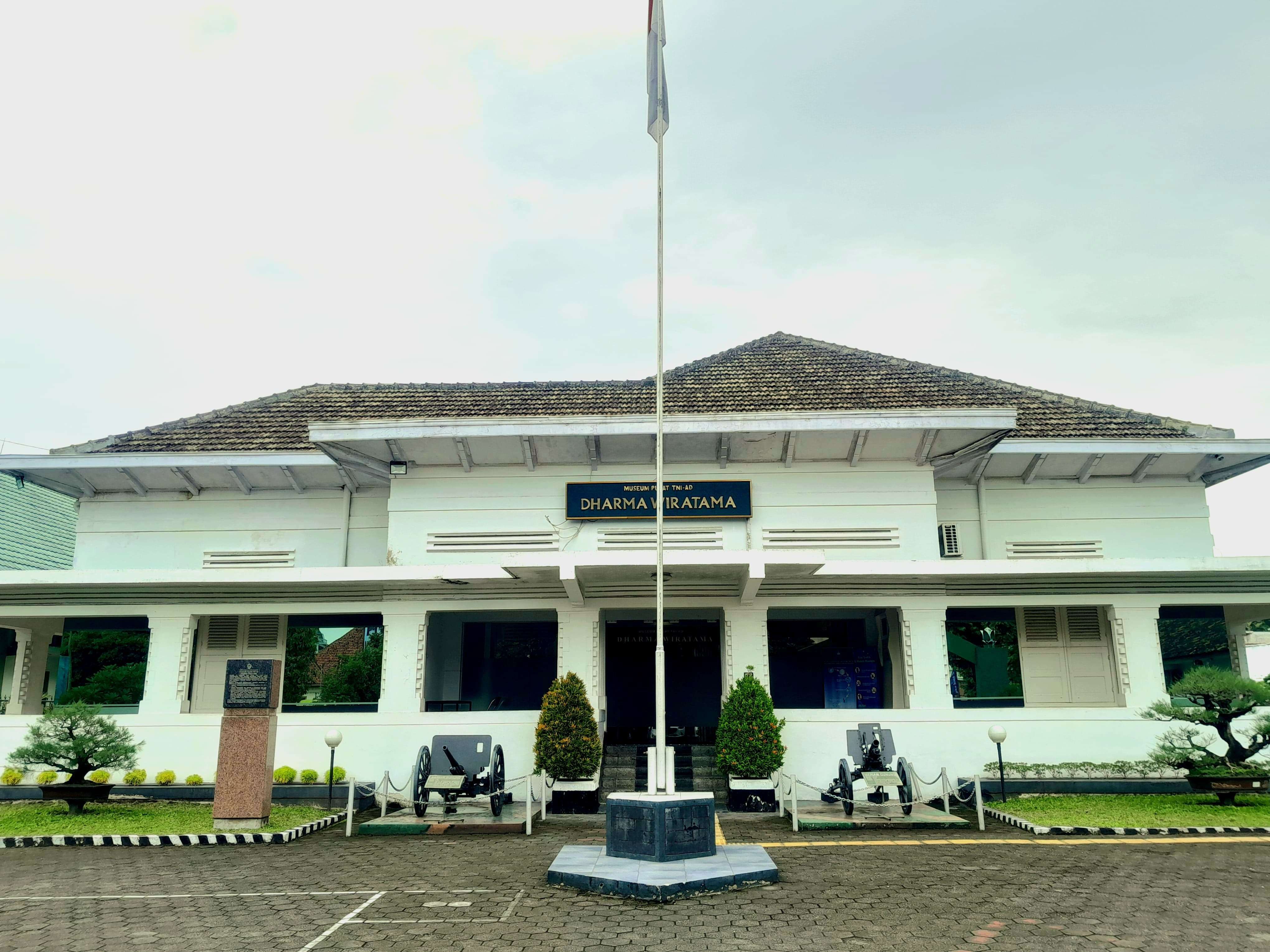
KBRN, Yogyakarta: In the bustling city of Yogyakarta, the Indonesian Army's (TNI AD) Dharma Wiratama Central Museum stands as a sentinel of history, preserving the legacy of the Army's struggle.
Located on Jalan Jenderal Sudirman No. 75, Terban Village, Gondokusuman Subdistrict, Yogyakarta, this museum houses a rich collection of weaponry, military equipment, and war paraphernalia, each piece a silent witness to the nation's fight for independence.
"Dharma Wiratama itself means noble service. The total number of collections here is 4,296, including 1,120 weapon collections," explains Eko Ari Kusnanto, a Sergeant Major of the TNI AD, on Tuesday, March 18, 2025.
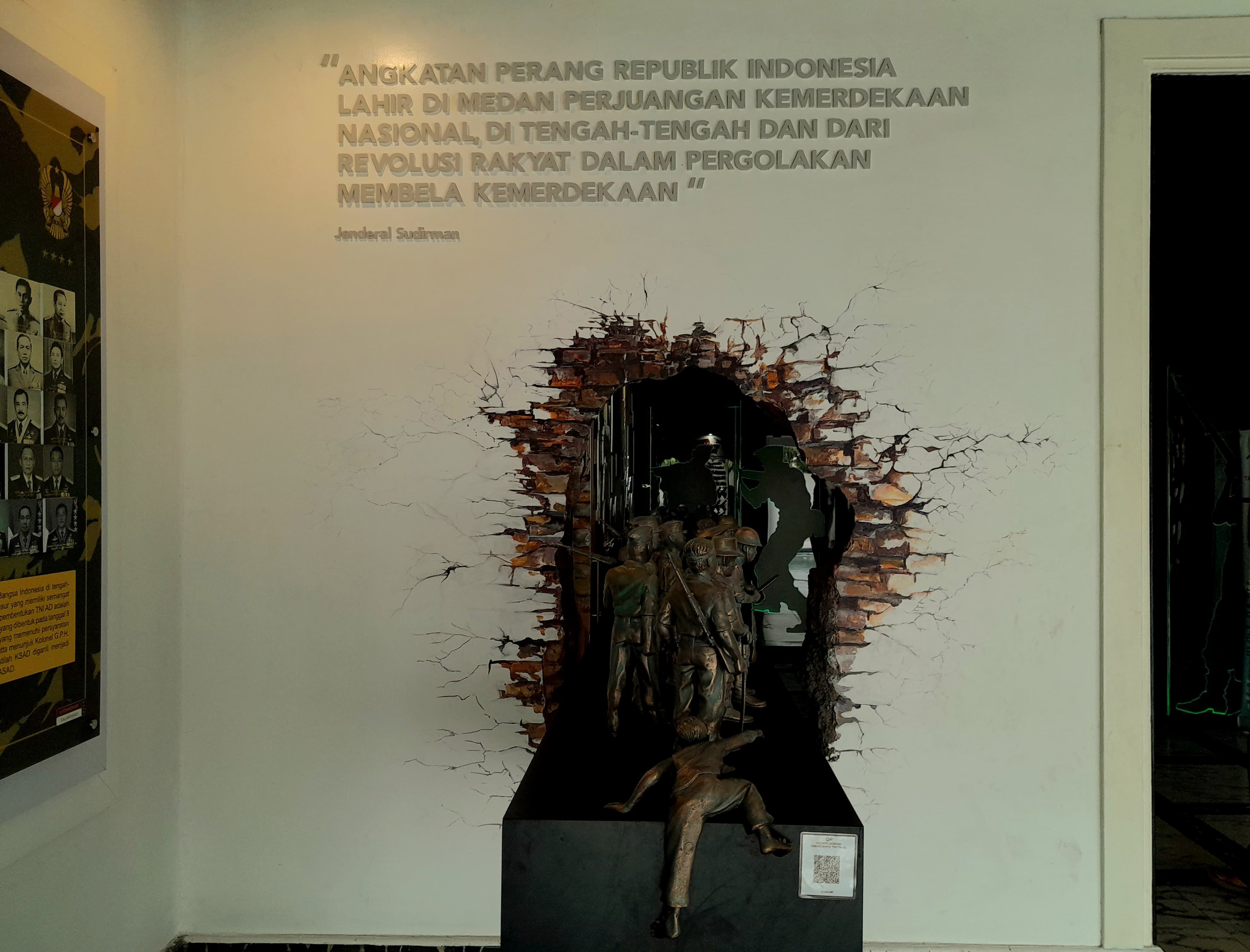
The artwork symbolized the Indonesian struggle against the Dutch colonial, using the "colonial wall" as a central motif. It portrayed the united front of the Army, People's Security Army (TKR), and the community, who together breached this barrier, paving the way for independence. (Photo: RRI English/Diva Rifdah Rizkia Puspitaningnala)
Established in 1904, the museum building has undergone various transformations, reflecting the shifting tides of history. From its origins as a residence for Dutch plantation administrators, it served as a Japanese military base during World War II.
Following Indonesia's proclamation of independence, it became the first Army Headquarters. Later, it functioned as the Headquarters of the Military Resort Command (Korem) 72 Pamungkas.
The museum also bears witness to the dark events of the 1965 G30S/PKI (the September 30 Movement/Indonesian Communist Party) coup, when Col. Inf. Katamso and Lt. Col. Inf. Sugiyono were abducted and murdered. Sugiyono, then Chief of Staff of Korem 72, was tragically abducted from his office and brutally killed.
Officially opened in 1982, the Dharma Wiratama museum underwent a significant transformation in 2017, shifting from conventional displays to digital and multimedia exhibits. This modernization aims to engage younger generations and provide a more interactive learning experience.
"This building was originally the official residence of plantation administrators in Central Java and Yogyakarta. The museum building is 121 years old, and its shape has remained unchanged," adds Eko.
This museum, situated on a 5.5-acre site, stands as a testament to the resilience and valor of the Indonesian Army, inviting visitors to delve into the nation's rich military history. In 2010, the building was recognized as a cultural heritage building.
Within its 2.4-hectare expanse, the museum preserves important historical spaces, including the offices of the Great Commander Gen. Sudirman, the commander of the People's Security Army (TKR), and Lt. Gen. Urip Sumoharjo, Chief of Staff of the TKR. Both figures are historically significant as the "Dwi Tunggal" (Two-in-One) of the Indonesian Military (TNI).
Visitors can see the original furniture that is still intact, silent witnesses to these important figures at work. Additionally, the dioramas in this museum depict eight 'palagan', major post-independence battle fields, which provide deep insights into the TNI's past struggles.
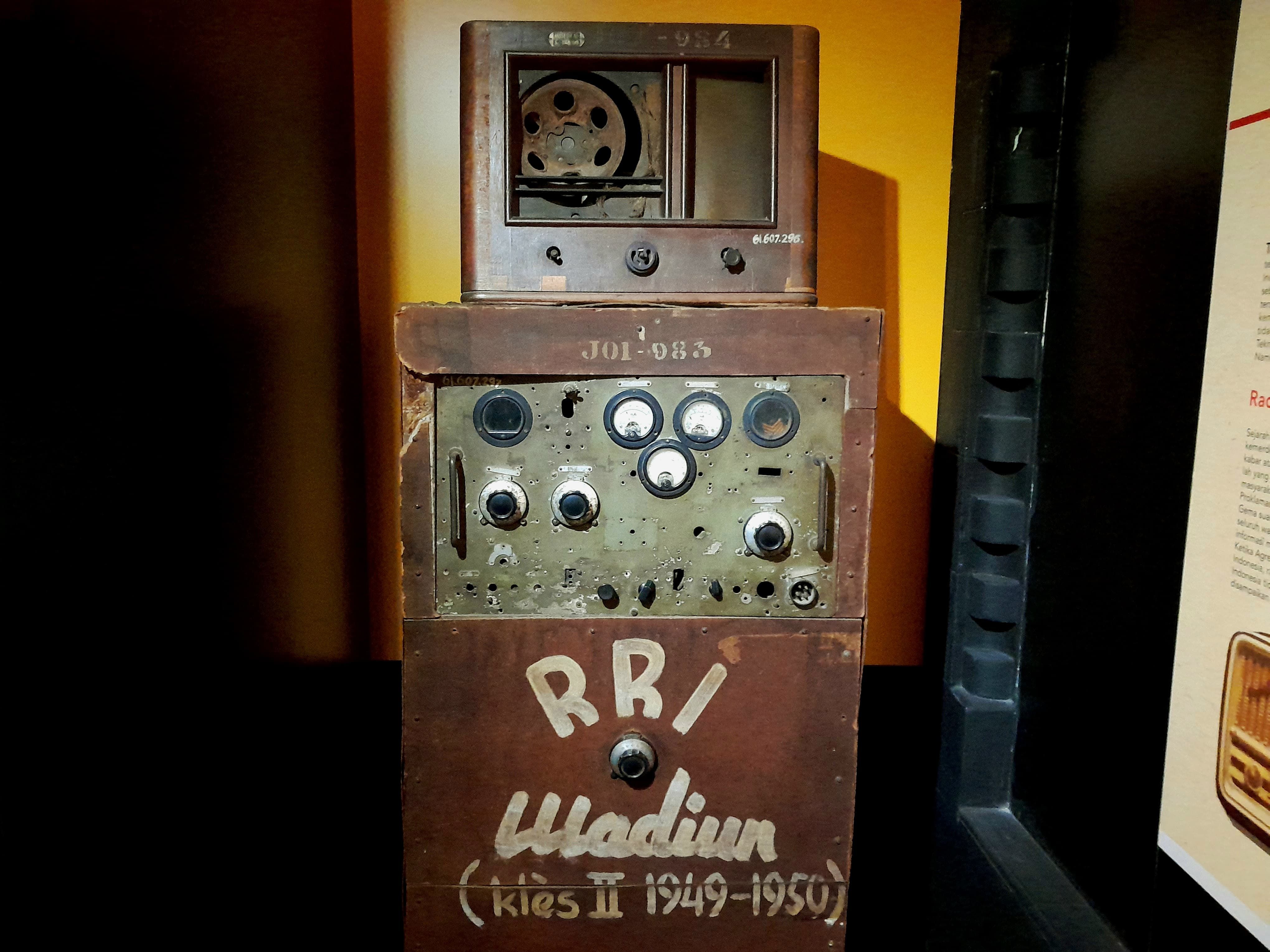
This RRI Madiun transmitter, used during the Dutch Military Aggression II (1949-1950), occupied a place of honor at the TNI AD Dharma Wiratama Museum in Yogyakarta. The aging device stood as a silent witness to the challenges and determination of the independence movement. (Photo: RRI English/Diva Rifdah Rizkia Puspitaningnala)
"The eight 'palagan' include Semarang (Central Java), Surabaya (East Java), Ambarawa (Central Java), Bandung (West Java), Medan (North Sumatra), Palembang, Bali, Makassar (South Sulawesi)," said Eko.
The fierce battles after Indonesia's independence were triggered by the ambitions of the NICA (Netherlands Indies Civil Administration), which piggybacked on allies such as England and Australia, to regain control of the archipelago.
Although their initial mission was to maintain order, disarm prisoners of war, and repatriate them, in reality they provoked offensive warfare.
"Because Indonesia had just gained independence, it still had limited military education and soldiers but was immediately confronted by allies, while the fighters were only armed with spirit and weapons seized from the Japanese," said Eko.
The struggle to defend independence claimed many lives, with heroes from various regions falling in battle. This heroic event left deep sorrow, with thousands of lives lost.
One example is the battle in Surabaya, which claimed around 6,000 lives, and in Makassar, around 40,000 lives. This great sacrifice is clear proof of the Indonesian TNI soldiers' fighting spirit in defending independence.
The Dharma Wiratama TNI AD Central Museum houses a unique and rare installation, the weaponbox. This installation is a collection of authentic weapons used during the struggle, attached and tied to steel plates, then arranged into a stunning work of art.
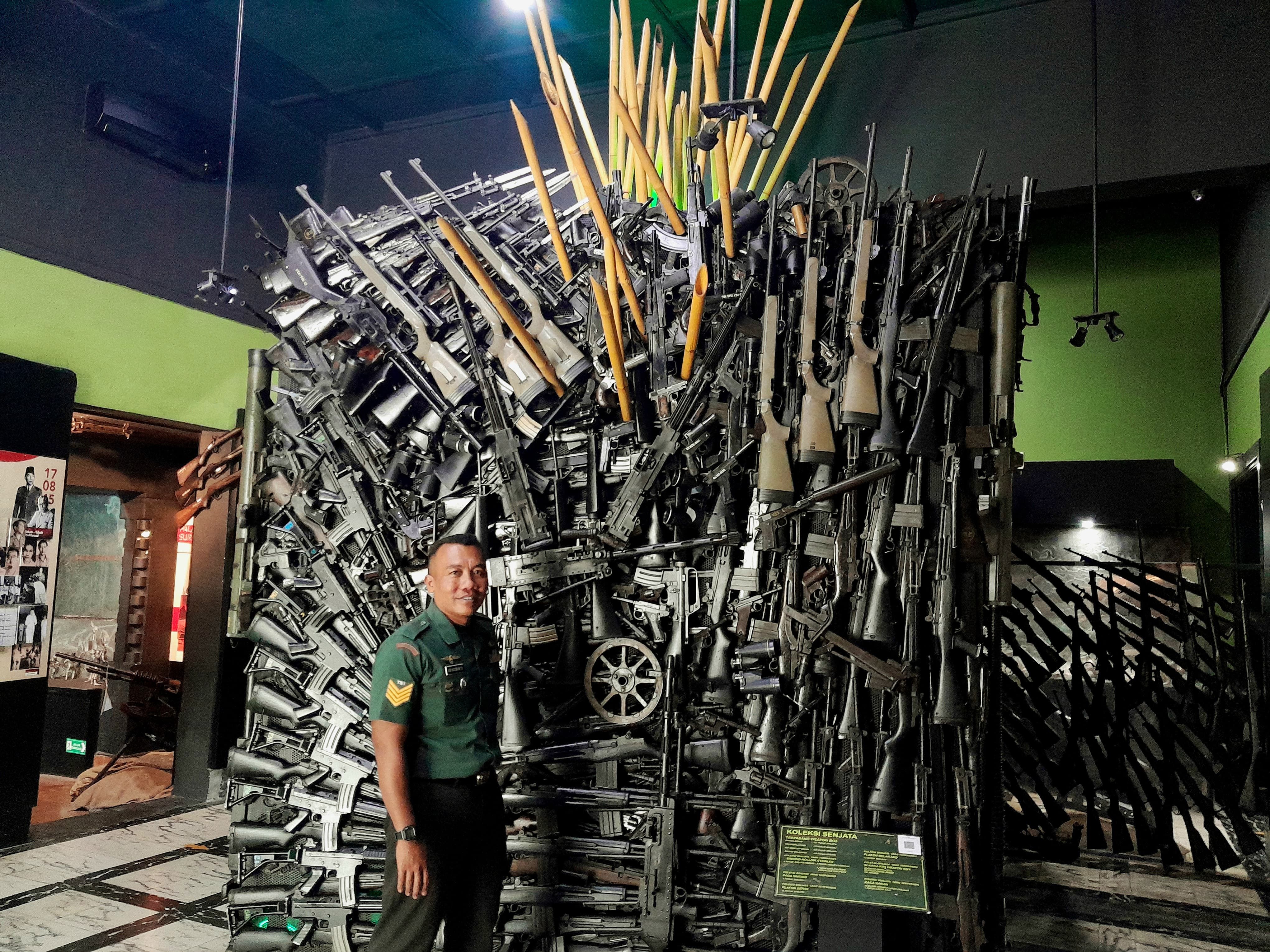
Hundreds of historical weapons, each with its own story, comprised the weaponbox at this Museum. The installation, a striking display of wartime artifacts, featured rifles, bayonets, and other armaments meticulously arranged on a steel backing. (Photo: RRI English/Diva Rifdah Rizkia Puspitaningnala)
The weaponbox in this museum is one of only three similar installations in the world, besides those in Germany and Canada. With approximately 800 weapons on display, this weaponbox is a silent witness to the tenacity of the fighters in defending Indonesia's independence.
"This museum also displays original Indonesian weapons such as the Gombyok RI Grenade, made in Demakijo, Yogyakarta, which was used by TNI soldiers in the Ambarawa palagan battle, and the Kecepek Cannon used by South Sumatran fighters in the battle on Musi River in 1946," said Eko.
The Dharma Wiratama Museum is more than just a repository of military artifacts. It is a living chronicle of Indonesia's struggle for independence and its ongoing contributions to global peace.
The museum holds pivotal historical evidence, including the March 1 General Offensive in Yogyakarta, which led to the Roem-Royen Agreement and the Round Table Conference.
Visitors can explore collections of TNI AD uniforms and insignia, and engage in interactive, motion-sensor game dioramas depicting the role of women in the struggle for independence.
"We also showcase the contemporary roles of the TNI AD, such as participation in food security operations, territorial operations, social services, disaster relief, and evacuations," Eko said.
The museum also documents post-1949 rebellions, highlighting the challenges faced by Indonesia from groups with differing ideologies.
A dedicated section illustrates the TNI AD's active role in international peacekeeping. Since 1956, Indonesia has consistently contributed to global stability by deploying task forces to UN missions.
"The TNI showcases Indonesian arts as a cultural ambassador, promoting our nation as a cultured society," Eko explained.
In the museum's side yard, a well-preserved Japanese bunker sparks curiosity. Built during the Japanese occupation, it was part of the Japanese military residence and the Syucokan headquarters (Japanese Army headquarters for the Yogyakarta region).
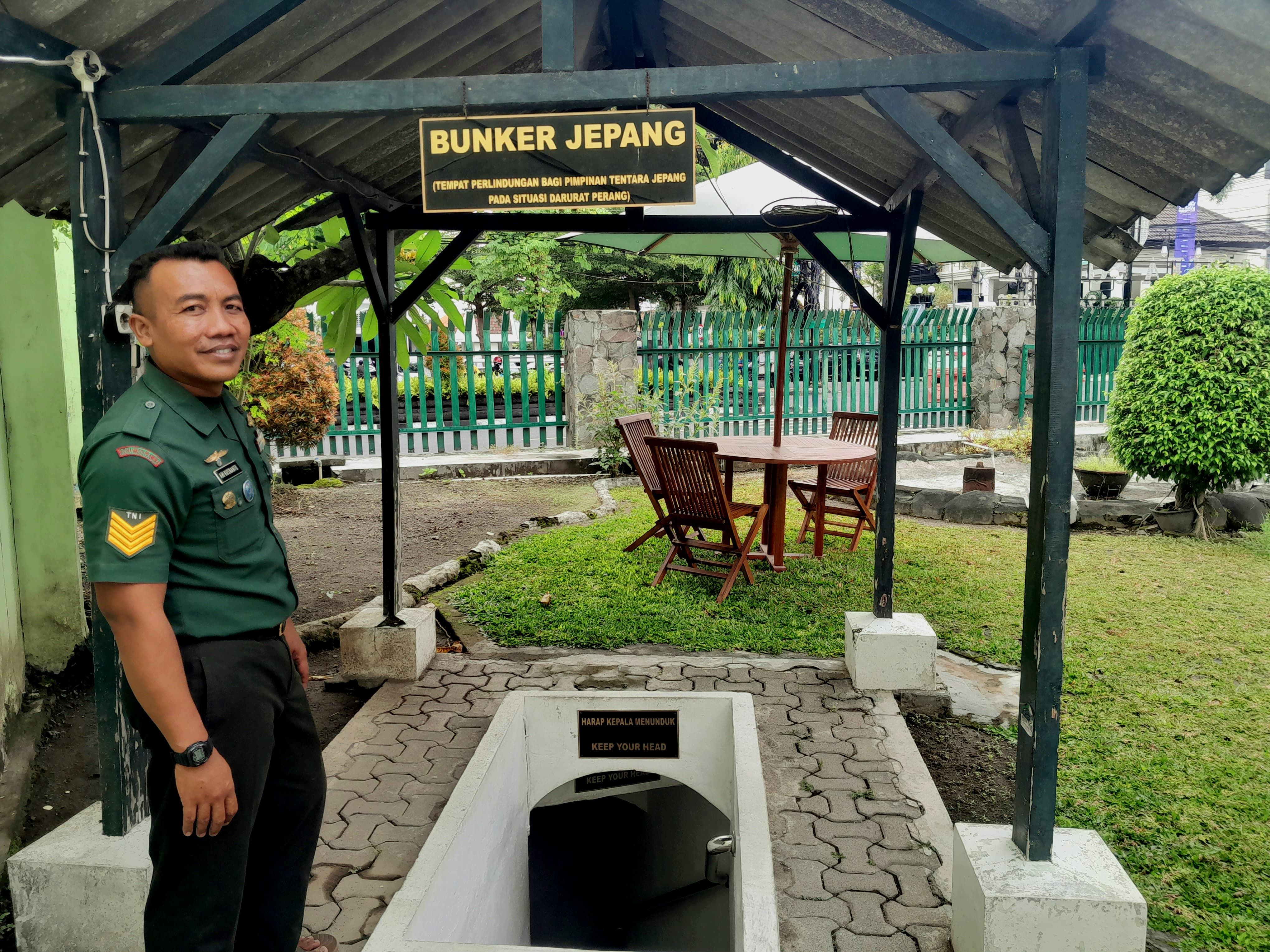
Tucked away in the museum's side yard, the Japanese bunker at the TNI AD Dharma Wiratama Museum was a hidden relic of the past. Discovered and preserved, it offered visitors a glimpse into the defensive structures built during the occupation, adding a layer of historical depth to the museum. (Photo: RRI English/Diva Rifdah Rizkia Puspitaningnala)
This 2x10 meter bunker offers a tangible connection to a dark period in history, adding another layer of intrigue to the museum, which is open Tuesday through Sunday, from 8 a.m to 3 p.m. local time. Visitors can experience the historical atmosphere while exploring this compact relic.
"How can we appreciate the services of our heroes if the historical facts of our nation's struggle and their contributions are unknown to the younger generation? That's why historical tourism like this is essential to instill patriotism in our youth," Eko emphasized.
The Dharma Wiratama Museum is not just a collection of artifacts. It is an immersive experience that bridges the past and present, ensuring that the spirit of Indonesia's heroes lives on. ***
News Recomendation
Loading latest news.....