



Used Cooking Oil Can be Converted Into Sustainable Fuel Via IoT-Based Technology
- 15 Sep 2026 13:36 WIB
- Voice of Indonesia
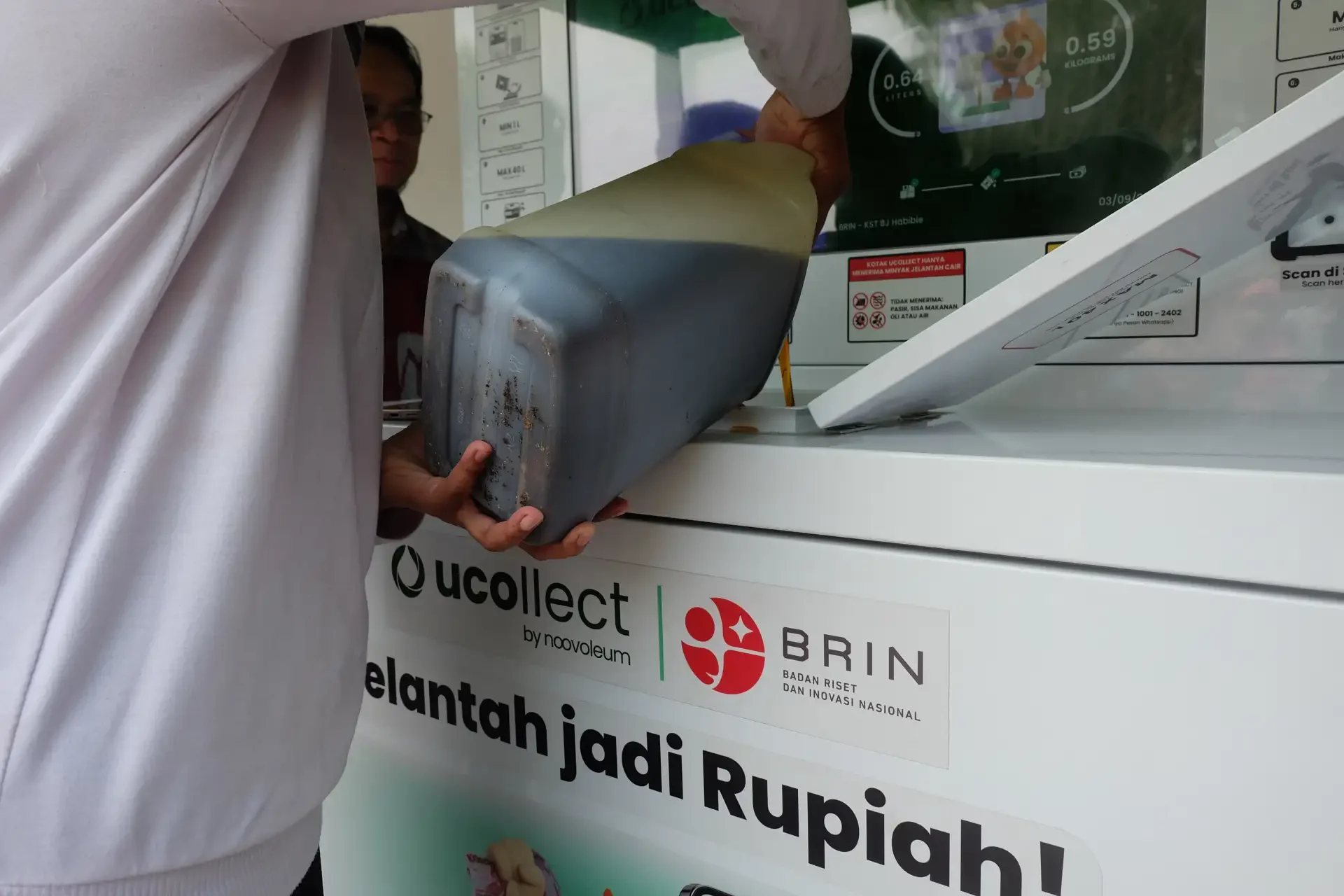
RRI.CO.ID, Jakarta - The National Research and Innovation Agency (BRIN), in partnership with PT Noovoleum Indonesia, has developed an IoT-based used cooking oil collection system known as the "U-Collect Box." This system facilitates the processing of used cooking oil into low-carbon biofuels, including biodiesel and sustainable aviation fuel (SAF).
The collaboration aims to establish an ecosystem for utilizing waste cooking oil that engages the public, industry, technology sectors, and the research community, while simultaneously transforming household waste into an economically valuable resource and mitigating environmental pollution.
The U-Collect Box works by utilizing the internet of things (IoT) equipped with sensors, applications, and dashboards to monitor the volume of used cooking oil collected and ensure its traceability in real time. The technology is designed to enable households and micro, small, and medium-sized enterprises (MSMEs) to easily deposit used cooking oil, which is subsequently processed into second-generation biofuel.
Hundreds of U-Collect Box units have been installed at various locations across Indonesia and Thailand, collecting thousands of liters of used cooking oil and yielding significant quantities of biofuel. The program also partners with local communities, volunteer groups, and schools to broaden educational outreach regarding the circular economy, with a portion of the program's revenue redistributed to the communities involved in the collection process.
Beyond its technological and social aspects, the system's development is supported by comprehensive studies covering environmental, economic, and social dimensions to ensure a sustainable and traceable used cooking oil supply chain. Life cycle assessments are conducted to calculate greenhouse gas emissions at each stage, while life cycle costing analyses are used to evaluate investment, operational costs, and the economic viability of each collection unit.
These studies underscore that utilizing used cooking oil as a feedstock does not automatically render the entire production process low-carbon. Greenhouse gas emissions can still occur at every stage of the supply chain, from the collection and transportation of oil, through the processing of oil into fuel, to its distribution to end-use points such as airports for SAF needs.
From a social perspective, the study also highlights working conditions at collection points and the impact on MSMEs, culinary businesses, and local communities. A public acceptance survey revealed a desire for U-Collect Boxes to be made more widely available in strategic locations, such as minimarkets, gas stations, residential areas, apartments, and modern markets, to facilitate access to used cooking oil collection.
In addition, the findings from these environmental, economic, and social assessments are expected to serve as a foundation for refining the used cooking oil collection system, making it more efficient and sustainable. A lifecycle-based approach is considered important so that every stage of the supply chain—from collection to the final product—can be thoroughly evaluated, so that claims of waste-based fuel sustainability are truly supported by data and not simply the assumption that raw materials from auto waste are environmentally friendly.
News Recomendation
Loading latest news.....