



BRIN Researcher: Wing and Tail Innovation Key to Flight Efficiency and Safety
- 04 Sep 2026 17:49 WIB
- Voice of Indonesia
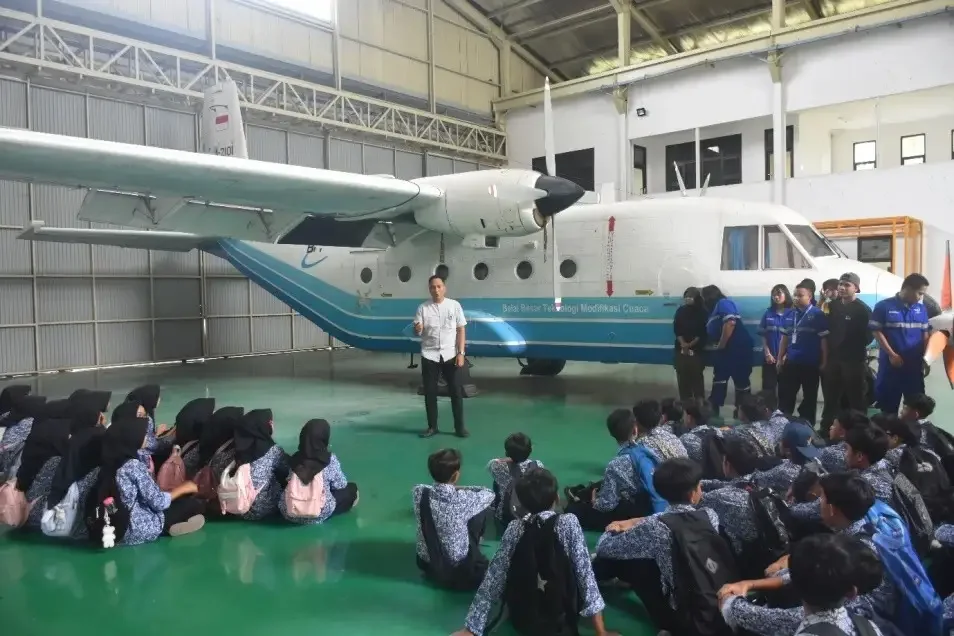
RRI.CO.ID, Jakarta - Current aircraft wing technology research is largely focused on improving aerodynamic efficiency, particularly through the development of winglet designs upward-curved wingtips engineered to reduce air drag and improve fuel efficiency. This was stated by Junior Expert Researcher at the Aviation Technology Research Center of Indonesia's National Research and Innovation Agency (BRIN), Danartomo Kusumoaji, quoted from an official statement on Thursday, September 3, 2026.
He explained that this wing technology development is part of broader efforts to refine aircraft design and components in line with advances in aviation technology. Besides wings, the tail section is also being continuously developed, as both components play a critical role in supporting flight efficiency, stability, and safety.
The presentation was delivered by Danartomo to students of MTs Raudhatussa'adah at the Jacob Salatun Science and Technology Area (KST) in Rumpin, Bogor. During the session, he outlined a number of current directions in aviation technology development for the students.
He further noted that the use of lightweight composite materials, such as carbon fiber, continues to be developed to reduce aircraft weight without compromising structural strength. "With adaptive technology, the wing shape can be adjusted to flight conditions so aircraft performance can be more optimal," he said.
In addition, researchers have also begun developing the concept of adaptive or "morphing" wings, which allow the wing shape to change according to the phase of flight including takeoff, cruising, and landing. "The tail generally consists of a vertical fin, which functions to maintain the aircraft's direction, and a horizontal stabilizer, which helps regulate its ascent and descent," Danartomo said.
He emphasized that the wings and tail are crucial components in maintaining flight safety. He also said wings generate lift based on aerodynamic principles, while the tail plays a role in maintaining the aircraft's direction and stability.
The refinement of both components' designs is supported by digital technology through computer simulations and wind tunnel testing methods that allow researchers to evaluate and optimize designs before entering the production stage. It's making the research process more efficient and reducing the risk of failure.
Danartomo also expressed hope that innovations in aircraft wings and tails can improve both flight efficiency and safety, while also supporting the development of more environmentally friendly aviation technology. "The use of lightweight materials, aerodynamic design, and adaptive technology are key to reducing fuel consumption and emissions. These developments are in line with the demands of the global aerospace industry, which is increasingly moving toward sustainable aviation," he said.
News Recomendation
Loading latest news.....