



BRIN Develops Technology to Measure the Real Impact of Reforestation
- 11 Agt 2026 16:42 WIB
- Voice of Indonesia
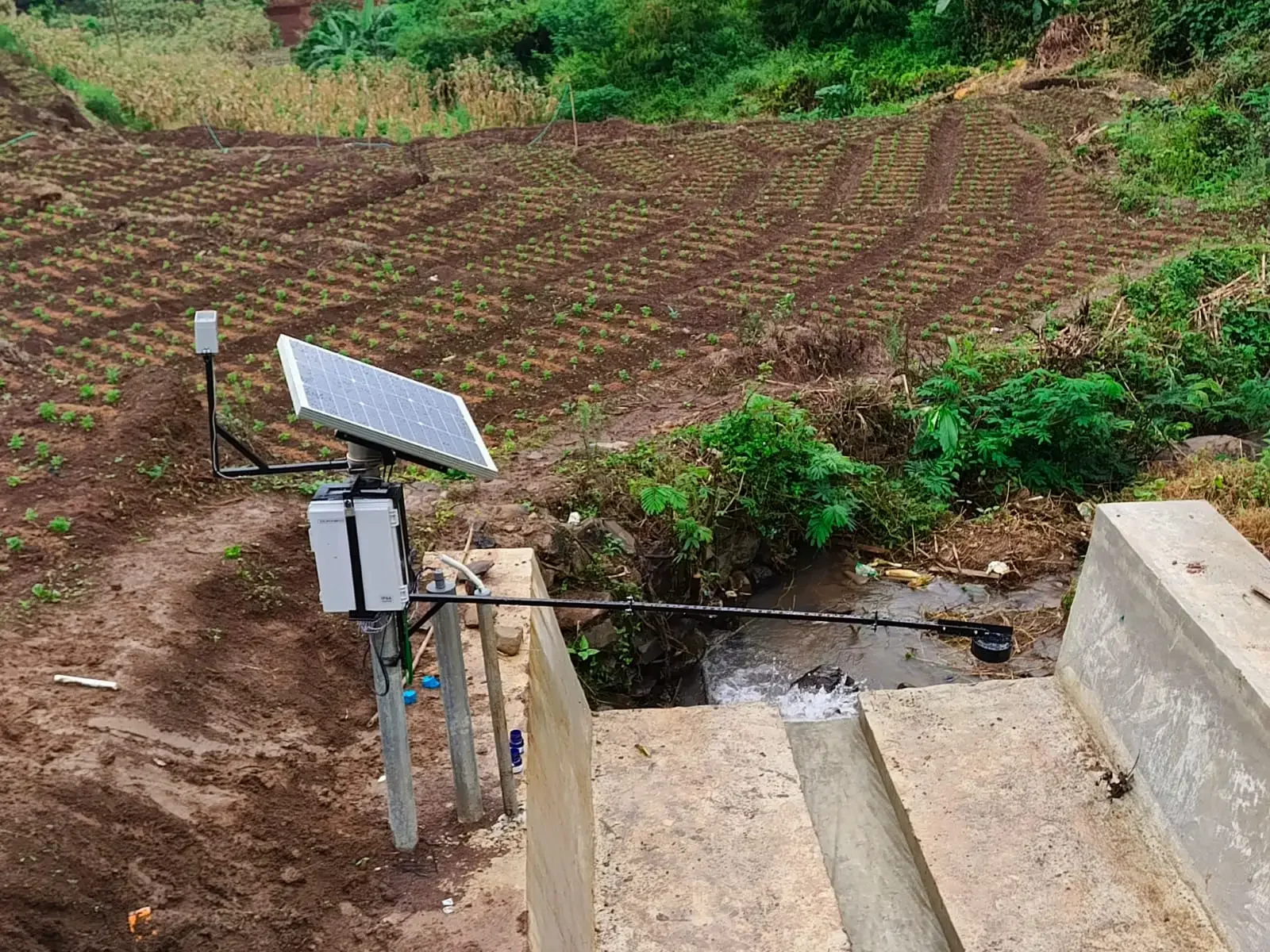
RRI.CO.ID, Purwakarta – Historically, the success of tree-planting programs has often been measured solely by the number of trees planted, while the actual environmental impact frequently remains unverified. To address this issue, the National Research and Innovation Agency (BRIN) and the Bumi Hijau Lestari Foundation (YBHL) are developing an Internet of Things (IoT)-based river monitoring system integrated with the Net Positive Water Impact (NPWI) approach. This initiative is being implemented in the Citarum watershed, one of Indonesia's largest river basins.
This approach enables the scientific, data-driven measurement of the ecological and hydrological benefits of greening activities, moving beyond simple calculations based on land area or the number of seedlings planted. The innovation is being developed as part of the international Trees4Trees (T4T) program, which runs from 2024 to 2027.
In 2026, the research team conducted two sets of field activities in Purwakarta Regency to strengthen the system. These activities involved calculating the water balance, verifying land conditions, and evaluating monitoring devices that had been installed in previous years.
The activity coordinator in Purwakarta, Agung Budi Supangat, explained that tree planting within the NPWI framework is designed to yield truly measurable water benefits, rather than merely meeting quantitative targets. He emphasized that afforestation planning must be based on precise hydrological data so that the impact on the watershed can be scientifically substantiated.
At a second location, the research team installed and evaluated an instrument called WaterQ. Created by BRIN researchers, this device automatically measures water levels, turbidity, acidity (pH), and dissolved oxygen in real-time. Data from the device is transmitted directly to a central database, allowing river conditions to be monitored without the need for manual field surveys.
Researcher and the lead for the IoT-based monitoring initiative, Ogi Setiawan, stated that this system enables the continuous, empirical measurement of river water quality, quantity, and distribution. With this data, the team can objectively assess whether upstream land rehabilitation programs are genuinely contributing to the restoration of river functions, rather than merely serving as claims on paper.
In addition, the combination of the Net Positive Water Impact (NPWI) approach, IoT sensor networks, and hydrological modeling is expected to serve as a benchmark for scientifically determining the most effective locations and patterns for tree planting. This data-driven monitoring model also holds the potential for replication in other river basins, positioning it as a reference for evidence-based environmental restoration programs worldwide.
News Recomendation
Loading latest news.....