



BRIN Partners with UGM to Develop Virus-Free Garlic Seeds to Cut Imports
- 03 Agt 2026 21:06 WIB
- Voice of Indonesia
Key Points
- BRIN and UGM have launched a research project to develop virus-elimination technology for producing high-quality local garlic seeds.
- The initiative is part of the Strategic Research and Innovation Program (PRIS) aimed at reducing Indonesia’s dependence on garlic imports.
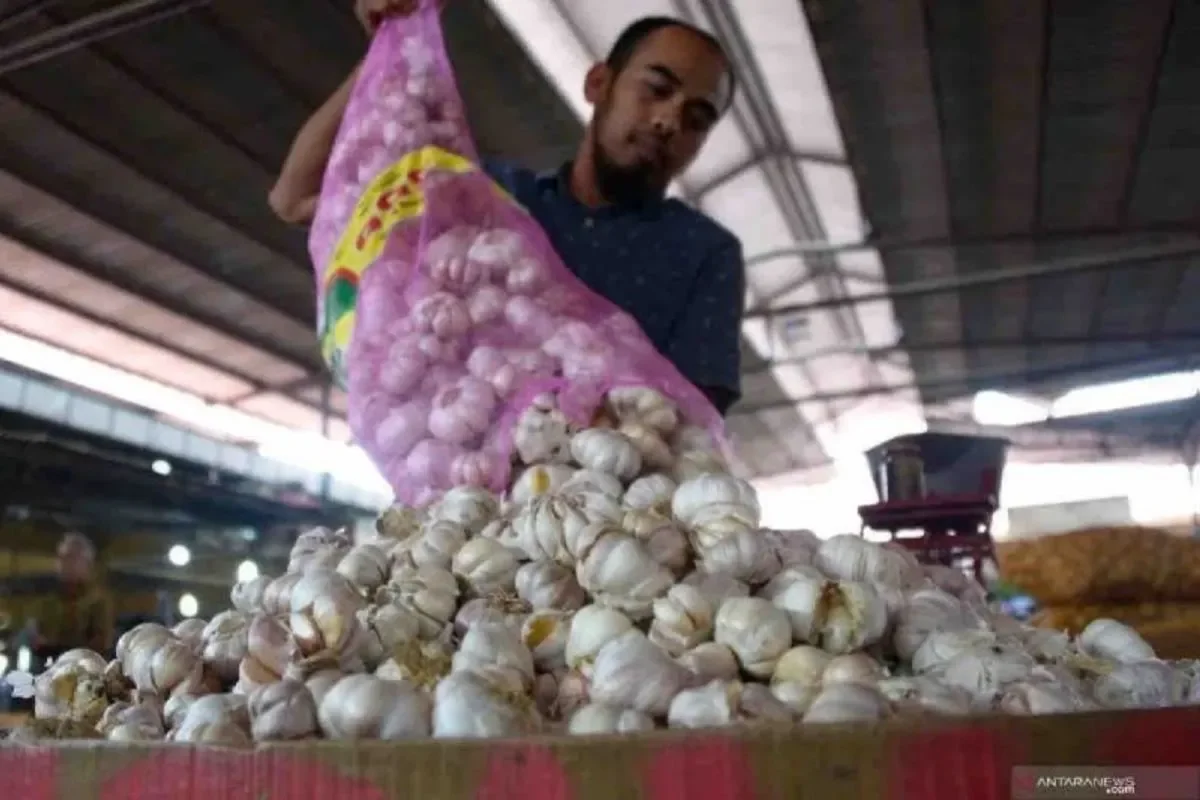
RRI.CO.ID, Jakarta - Indonesia’s dependence on garlic imports is being addressed from the upstream side through the Strategic Research and Innovation Program (PRIS). The National Innovation and Research Agency (BRIN), together with the Faculty of Agriculture at Gadjah Mada University (UGM), has officially begun testing virus-elimination technology to produce high-quality local garlic seed to support national food self-sufficiency.
Head of BRIN’s Center for Horticultural Research and the person in charge of the garlic PRIS program, Dwinita Wikan Utami, said that healthy seed production technology is needed to ensure that the advantages of improved varieties can be maintained over the long term.
“We need virus-elimination technology that is effective, easy to apply, and affordable so that it can be widely used by seed producers and farmers to maintain the quality of planting material,” she said in a statement in Jakarta on Monday, August 3, 2026.
Dwinita said the research focuses on eliminating viruses carried in garlic planting material. For this purpose, BRIN is developing virus-elimination methods, designing a prototype virus-elimination device, and testing the effects of the treatment on plant growth and productivity.
The development of this technology is expected to help increase national garlic production as part of efforts to reduce import dependence. In the study, the research team also identified the presence of viruses in garlic planting material.
Plant virology expert from UGM’s Faculty of Agriculture, Sedyo Hartono, explained that test results detected double infections of Onion yellow dwarf virus (OYDV) and Shallot latent virus (SLV) in around 80 percent of the plant samples. The samples were collected from Enrekang, Magelang, Temanggung, Tawangmangu, and Yogyakarta, including seed bulbs, consumption bulbs, and leaves.
“Symptoms of viral infection are also not always clearly visible on plants. In the field, the impact can be masked by other diseases, especially fungal diseases. Follow-up research will measure the treatment’s ability to reduce virus titer while also assessing its effects on growth, productivity, and the plant’s susceptibility to other diseases,” said Sedyo, as quoted by Antara.
The findings indicate that viral infection in planting material is an issue that needs to be addressed. However, the results are still limited to the samples tested, so a broader survey is needed to map virus distribution across garlic production centers.
The virus-elimination research is planned to run for two years. In the initial stage, the study will focus on validating the method and developing a laboratory-scale prototype virus-elimination device.
The next stage will test the response of eliminated plants in the field while also encouraging joint development of the device with industrial partners so it can be used at seed-producer scale.
In addition to developing virus-elimination technology, the garlic PRIS program also targets the development of large-bulb softneck and hardneck varieties adapted to mid-altitude areas. The research also covers dormancy-breaking technology, a germplasm database, and standard operating procedures for healthy seed production.
All of these outputs will be tested to support the development of garlic-growing areas, including the Food, Water, and Energy Self-Sufficiency Area (KSPAE) in Humbang Hasundutan, North Sumatra. ***
News Recomendation
Loading latest news.....