



ITS Professor Uses Indigenous Bacteria to Clean Industrial Pollution
- 22 Jul 2026 20:18 WIB
- Voice of Indonesia
Key Points
- An ITS professor developed a bioremediation method using indigenous bacteria to break down industrial pollutants in soil, water, and air.
- Field trials at industrial sites showed the bacteria effectively reduced hydrocarbon contamination, supporting sustainable environmental restoration.
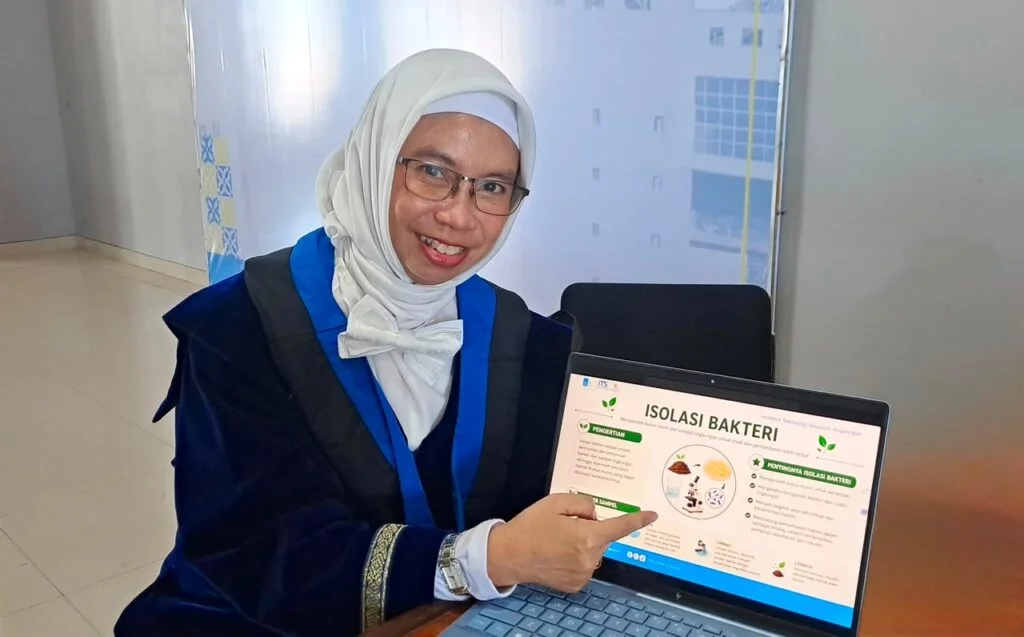
RRI.CO.ID, Surabaya - Nature itself may hold the most effective remedy for severe industrial contamination, as demonstrated by groundbreaking research from Institut Teknologi Sepuluh Nopember (ITS) in Surabaya, East Java, that utilizes naturally adapted bacteria to clean up polluted soil, water, and air.
Delivering her inaugural address as the 249th Professor at ITS, Ipung Fitri Purwanti presented a bioremediation technology that harnesses specialized microorganisms to decompose hazardous contaminants across degraded environments. Having spent over two decades researching environmental remediation, the ITS Environmental Engineering professor has focused on restoring damaged ecosystems using both standalone bacterial strains and plant-microbe symbioses.
Rather than introducing non-native organisms, Ipung’s methodology centers on isolating indigenous bacteria that have already survived in heavily polluted soil. Once isolated and cultivated under laboratory conditions, these adapted microbes are deployed to break down pollutants in other sites facing similar environmental damage.
“This process is significantly more effective because it utilizes microorganisms that have already adapted to contaminated conditions,” explained Ipung, on Monday, July 20, 2026, as quoted on ITS's official website.
Throughout her extensive research, Ipung evaluated several bacterial strains, including Bacillus cereus, Bacillus subtilis, Pseudomonas aeruginosa, and Staphylococcus gallinarum. Among these, Staphylococcus gallinarum emerged as the most notable discovery after being isolated from soil contaminated with kerosene waste from asphalt processing.
“The bacterium demonstrates superior resistance and degradation capabilities compared to several other strains,” she noted.
In addition to evaluating individual bacterial strains, the ITS alumnus explored bacterial consortiums by combining multiple strains to determine their collective remediation performance.
However, her findings revealed that multi-strain combinations do not always outperform single-strain applications. She pointed out that success depends entirely on the ability of specific microorganisms to synergize effectively and adapt to particular pollutants.
To date, the technology has progressed from laboratory testing to field trials in industrial locations, including oil refinery zones across Sumatra. The field trials confirmed that the bacterial treatment successfully reduced hydrocarbon pollutant levels in contaminated soil.
Ipung highlighted that while bioremediation is highly effective against organic pollutants like petroleum, it also holds strong potential for treating inorganic contaminants such as heavy metals.
Through the continuous development of this bioremediation technology, Ipung aims to provide sustainable, eco-friendly solutions to ongoing environmental challenges. The innovation directly supports the United Nations Sustainable Development Goals (SDGs), particularly Goal 6 (Clean Water and Sanitation), Goal 13 (Climate Action), and Goal 15 (Life on Land). ***
News Recomendation
Loading latest news.....