



ITB Researchers Turn Fly Larvae into Sustainable Pepton Alternative
- 17 Jul 2026 20:15 WIB
- Voice of Indonesia
Key Points
- ITB researchers develop peptone from Black Soldier Fly larvae to cut import reliance and manage organic waste.
- Indonesia’s peptone demand hits 13.9 million kg yearly, creating vast potential for local, insect-based production.
- BSF larvae convert waste into protein, enabling circular economy solutions and lowering biotech production costs.
RRI.CO.ID, Bandung - Indonesia’s growing demand for peptone, vital nutrient for microbiology and biotechnology used in laboratories and industrial processes, has long been met through costly imports that strain budgets and limit accessibility.
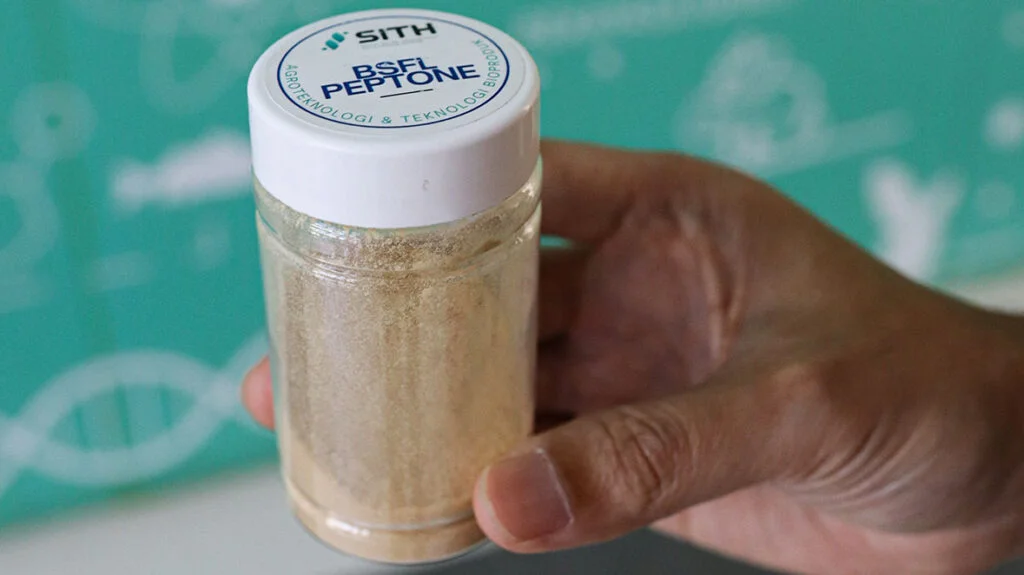
Now, researchers at the School of Life Sciences and Technology, Bandung Institute of Technology (SITH ITB), are offering a breakthrough: locally produced peptone derived from Black Soldier Fly (BSF) larvae, a solution that not only reduces reliance on imports but also tackles the country’s organic waste problem.
The innovation stems from a research project titled “Production of Protein Hydrolysate from Black Soldier Fly as an Alternative to Commercial Peptone”, led by Muhammad Yusuf Abduh, from the Agrotechnology and Bioproduct Technology Research Group at SITH ITB, with contributions from students and alumni.
The team envisions wide-ranging benefits for microbiology laboratories, biotechnology industries, biofertilizer producers, and communities that can repurpose organic waste as feed for BSF larvae.
Peptone serves as a critical growth medium for microbes in laboratories and industrial processes. Yet Indonesia’s supply remains entirely dependent on imports, priced at around IDR 3–5 million (approximately USD 167 - 279) per kilogram.
Yusuf explained that this dependency motivated his team to explore locally available biomass.
“All peptone is currently imported. None is produced domestically. That’s why we innovated by using Black Soldier Fly larvae as a local source,” he recently, as quoted on ITB's official website on Friday, July 17, 2026.
Research estimates suggest Indonesia’s annual demand for peptone reaches 13.9 million kilograms, underscoring the vast potential for domestic production.
BSF larvae add unique value by consuming and breaking down diverse organic waste, making the innovation part of a broader circular economy approach.
Cultivated larvae can be processed into protein-rich material, then converted into peptone, helping reduce waste volumes while creating a product with economic value.
The team also sees potential to lower production costs for microbe-based products such as liquid organic biofertilizers. Affordable local peptone would support microbial growth essential to biofertilizer manufacturing, making sustainable agriculture more accessible.
Looking ahead, Yusuf hopes the research will progress toward commercialization through partnerships with industry and investors. With high demand and no existing insect-based peptone products in the market, he believes Indonesia has an opportunity to pioneer a new segment in biotechnology.
“We want to be the first to produce peptone from insects, especially Black Soldier Fly larvae. This innovation can help address waste management while supporting the growth of Indonesia’s biotechnology industry,” he said.
Ultimately, the project reflects how university research can tackle multiple challenges at once, from reducing import dependency and cutting biotechnology costs to managing organic waste sustainably.
If scaled successfully, BSF-derived peptone could strengthen national self-sufficiency, open new economic opportunities, and advance environmentally responsible practices. ***
News Recomendation
Loading latest news.....