



Indonesia Deploys Drone-Powered Digital Fence to Strengthen Border Security
- 01 Jul 2026 22:47 WIB
- Voice of Indonesia
Key Points
- The Directorate General of Immigration partnered with ITB to pioneer the "Digital Fence" border security system.
- Domestic institutions will deploy a strategic combination of solar-powered HALE and Mantis drones.
- The immigration authority aims to minimize cross-border crimes while achieving long-term national technological independence.
RRI.CO.ID, Jakarta - The Indonesian Directorate General of Immigration (Ditjenim) has partnered with the Bandung Institute of Technology (ITB) to pioneer the Digital Fence, a border security system that utilizes locally developed drone technology. The initiative reflects Indonesia’s push to safeguard its sovereignty with homegrown innovation while addressing vulnerabilities across its vast border areas.
Director General of Immigration Hendarsam Marantoko explained in Jakarta on Wednesday, July 1, 2026, that Indonesia’s borders stretch over 3,111 kilometers, making them prone to illegal crossings. The Digital Fence will be prioritized for land borders in Kalimantan (with Malaysia), Papua (with Papua New Guinea), and East Nusa Tenggara (with Timor-Leste), while maritime surveillance will focus on Riau Islands, Batam, and surrounding sea routes.
Despite the extensive border length, Indonesia currently operates only 18 official crossing posts (PLBN) and 38 smaller posts (PLB) in those regions, with several inactive due to unresolved agreements. Between January and April 2026, official crossings recorded 679,867 travelers, but Hendarsam emphasized that the real challenge lies in monitoring illegal movements through rat trails along the frontier.
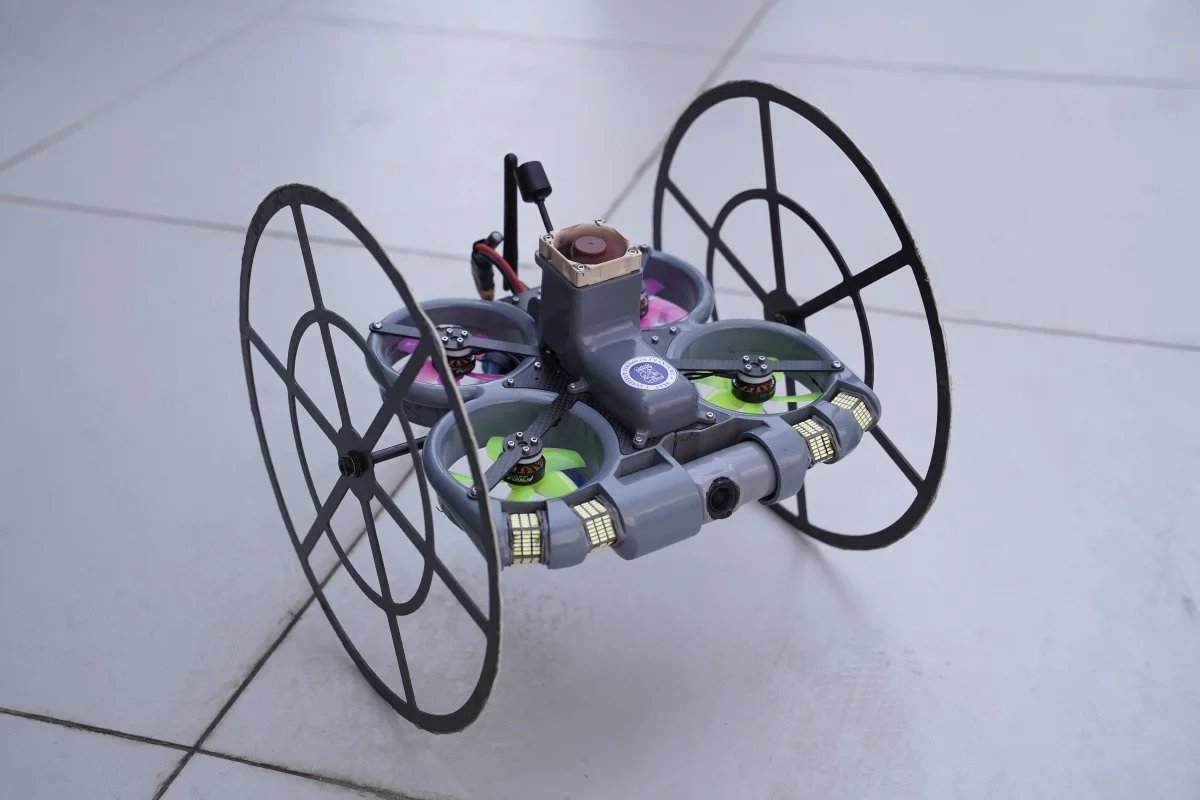
The Digital Fence system will deploy drones developed by ITB and produced with PT Dirgantara Indonesia (PT DI). These drones are designed to operate continuously with solar-powered systems and combine two models: HALE (High-Altitude Long-Endurance) drones, capable of flying at 1,000 meters for 24 hours to monitor wide areas, and Mantis drones, which conduct tactical close-range interception once suspicious activity is detected.
Hendarsam noted that while the system cannot physically block crossings, it provides real-time situational awareness, enabling faster patrol responses. “When drones detect movement in blind spots, coordinates are immediately sent to immigration posts or border guards, drastically cutting conventional patrol response times,” he said, as quoted by Antara.
He stressed that drones extend the reach of officers, offering accurate early data before teams move in. This approach is more cost-efficient than deploying manned aircraft and is expected to become the foundation for national cyber security in immigration. “Collaboration between immigration, ITB, and PT DI ensures that border surveillance does not rely on foreign systems,” Hendarsam added.
The program, initiated with ITB’s Faculty of Mechanical and Aerospace Engineering, also reflects Hendarsam’s concern after attending a defense exhibition in Singapore, where advanced border technologies were showcased but none represented Indonesian innovation. “Our human resources are highly competitive and capable of producing world-class solutions,” he said.
The Digital Fence initiative, discussed in a joint meeting with ITB representatives on Tuesday, June 30, 2026, is expected to minimize vulnerabilities to human trafficking, smuggling, and cross-border crime, while advancing Indonesia’s long-term goal of technological independence in national security. ***
News Recomendation
Loading latest news.....