



Biometric Mobile Registration Supports More Targeted Public Policies
- 29 Jun 2026 13:56 WIB
- Voice of Indonesia
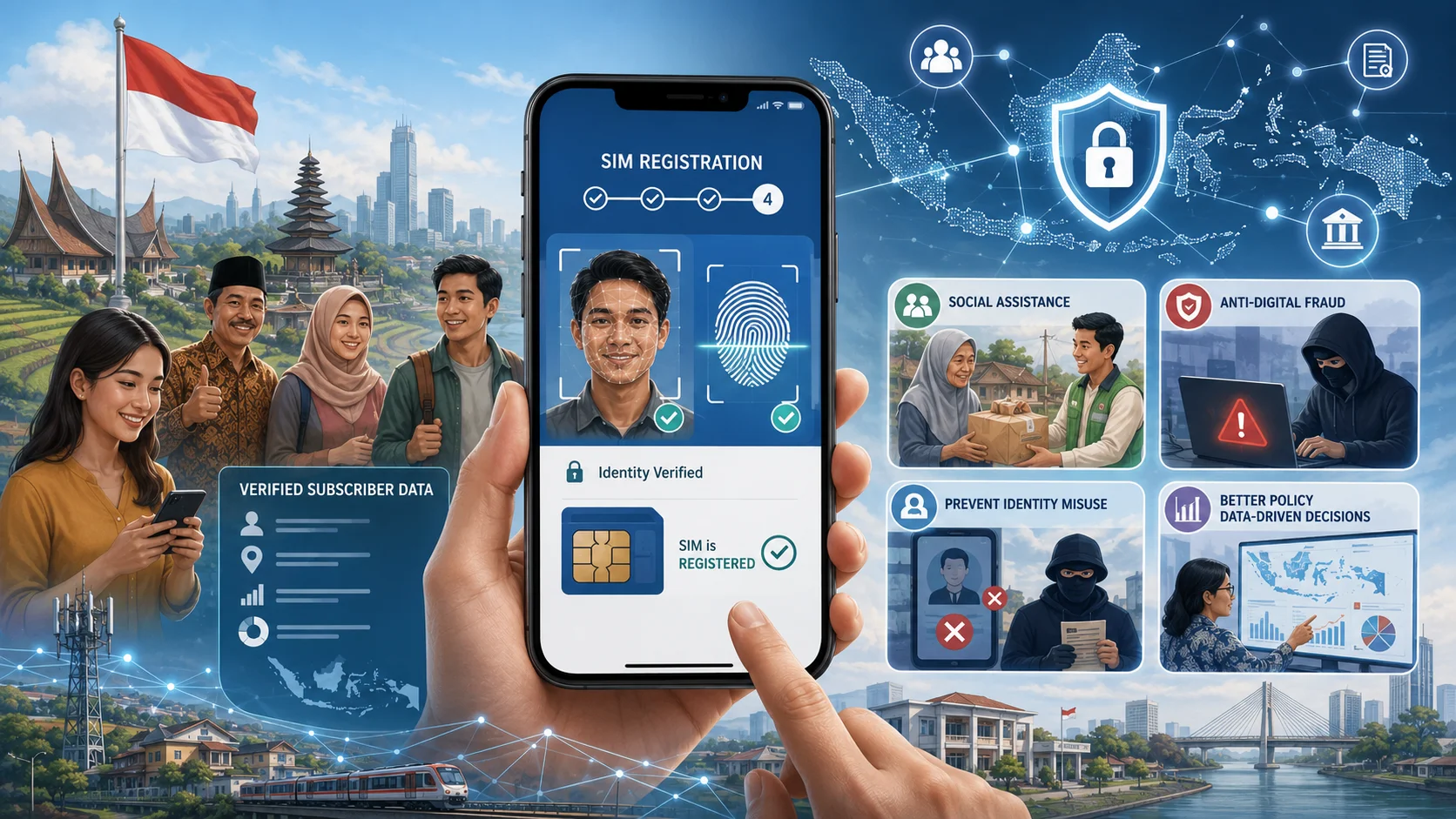
RRI.CO.ID, Jakarta — The implementation of biometric-based SIM card registration, which will take effect on July 1, 2026, is seen as an important step toward improving the quality of mobile subscriber data. The policy is expected to strengthen identity verification, or Know Your Customer (KYC) processes, increase accountability in the use of phone numbers, and support more effective public services.
Rahmat Danu Andika, Principal Expert for GovTech at the National Economic Council (DEN), made the statement in Jakarta on Sunday, June 28, 2026. Rahmat said biometric authentication would increase trust in mobile subscriber data, as every activated number would be verified and linked to its owner’s identity.
“With biometric implementation, the quality of KYC for mobile users will improve. When data quality improves, the data becomes more meaningful and can be used for various public-service needs,” Rahmat said, as quoted by infopublik.id, the public news and information portal of the Ministry of Communication and Digital Affairs.
According to him, the government has so far faced challenges in using mobile consumption data because not all phone numbers have gone through a strong identity-verification process. As a result, the validity of subscriber data cannot yet be fully guaranteed.
He further explained that biometric-based registration would give the government greater confidence in users’ identities. This data could then serve as one of the references in policymaking, including to support more accurate distribution of social assistance.
“If the quality of KYC is already strong, confidence in the data will also increase. This can help ensure that social assistance is delivered to people who are genuinely eligible,” he said.
Rahmat added that biometric authentication would also strengthen accountability in the use of phone numbers, helping reduce the risk of identity misuse, digital fraud, and telecommunications-related crimes.
In addition, data on the consumption of basic services, such as mobile credit and electricity use, could serve as an additional indicator of changes in people’s economic conditions. However, its use must be handled carefully, while continuing to uphold personal data protection in accordance with existing regulations.
“The potential use of mobile data is enormous, but its development must be handled cautiously because it involves people’s personal data. Personal data protection must remain a priority,” he said.
Rahmat said biometric-based SIM card registration marks an initial step toward better digital data governance. Going forward, more accurate data is expected to support a range of public services, from social assistance distribution and the prevention of digital fraud to the handling of illegal online lending and the development of data-driven policies.
He called on the public to support the implementation of the policy, saying its benefits would extend beyond the telecommunications sector and contribute to improving the overall quality of public services.
News Recomendation
Loading latest news.....