



Bali’s Subak Showcased as Global Model for Low‑Emission Farming
- 24 Jun 2026 13:08 WIB
- Voice of Indonesia
Key Points
- International delegates in Bali were encouraged to study the subak system as a model for low-emission and sustainable agriculture.
- The forum brought together participants from Asia and Africa to discuss the future of sustainable food systems.
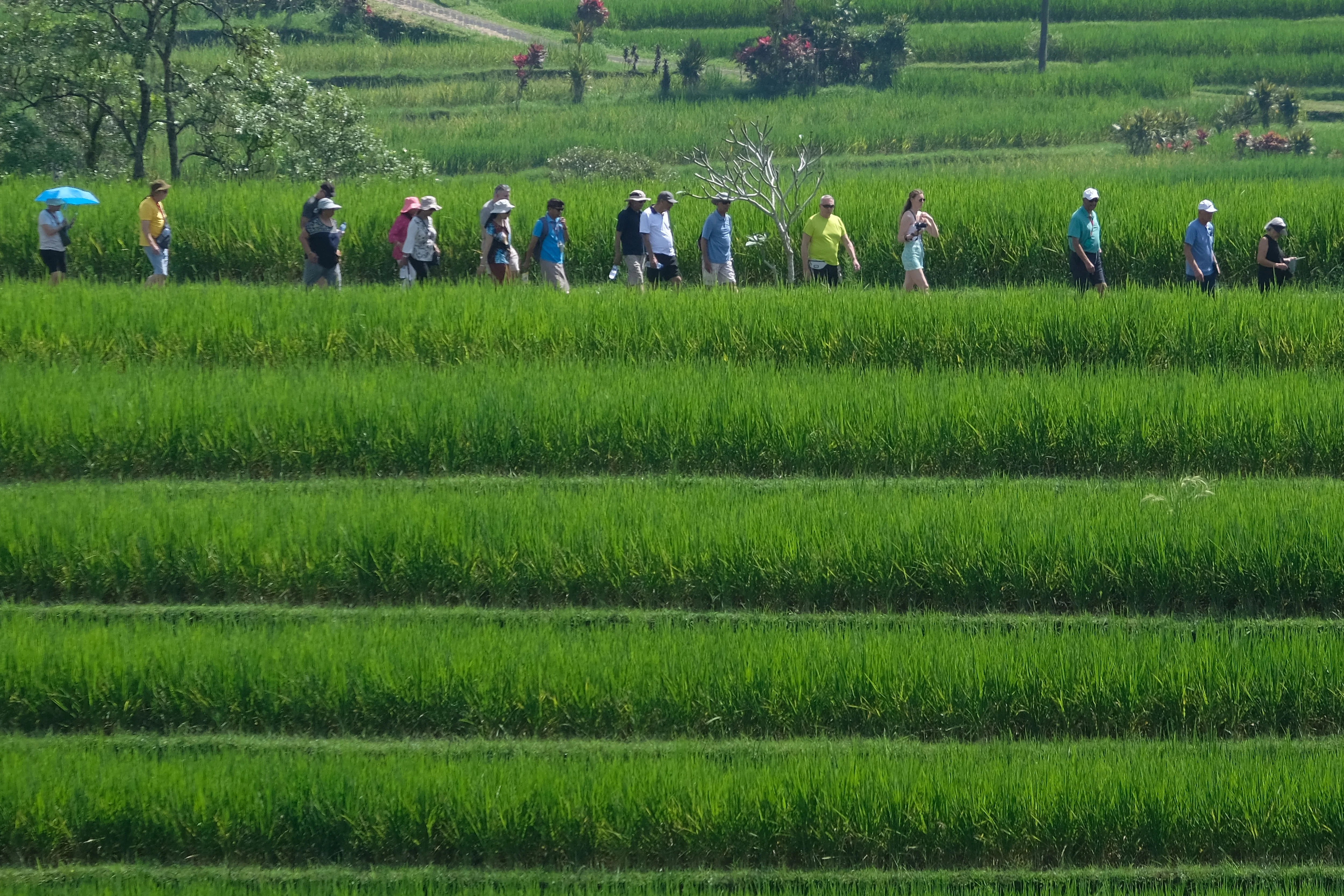
RRI.CO.ID, Denpasar - International delegates at a knowledge-exchange forum in Bali were urged to look to the island’s century-old subak system. The traditional system serves as a practical model for low‑emission, sustainable agriculture that combines productivity, environmental stewardship, and cultural preservation.
“I cannot imagine a better place to build a discussion about the future of food systems than where those values are still alive and practised today,” said Head of Agricultural and Food Research Organization at the National Innovation and Research Agency (BRIN) Puji Lestari, during the event of Knowledge Exchange on Advanced Technology for Low Emission Rice and Livestock System, in Denpasar on Wednesday, 24 June 2026.
She told visiting participants that Bali’s subak, a traditional irrigation and farming institution that has endured for more than a thousand years, offers global lessons in managing resources sustainably.
Puji emphasized that subak is more than an irrigation system but also embodies Bali’s Tri Hita Karana philosophy of harmony among humans, nature and the divine. She argued that an integrated worldview helps maintain a balance between low‑emission agricultural productivity, environmental conservation and the cultural values passed down through generations.
Noting the agricultural sector’s dual role as critical to global food security and a significant source of methane emissions, Puji urged transformations in farming to pair productivity with sustainability.
“We need to leave Bali with a real commitment to act now to realise more resilient and sustainable farming systems,” she said, as quoted by Antara.
At the forum, participants from across Asia and Africa observed subak-based farming practices first-hand as part of a shared learning program on climate‑adaptive agriculture. Puji expressed hope that Bali’s experience would serve as a reference for other countries seeking low‑emission agricultural systems rooted in local wisdom and community needs. ***
News Recomendation
Loading latest news.....