



UGM Brings Solar-Powered Smart Farming to Indonesian Village
- 11 Jun 2026 10:28 WIB
- Voice of Indonesia
Key Points
- Researchers from Gadjah Mada University have installed an agrovoltaic solar power system in Yogyakarta to support smart farming and renewable energy development in a village-run agricultural project.
- The hybrid solar system combines clean energy, IoT-based monitoring, and community participation to improve farm productivity and climate resilience.
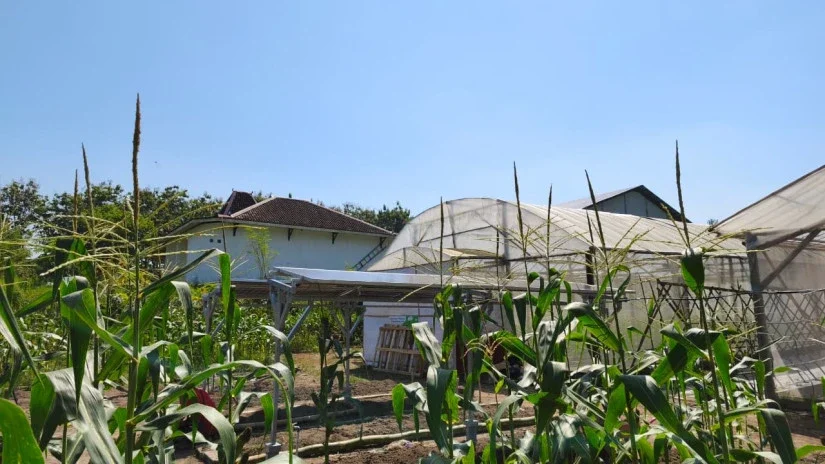
RRI.CO.ID, Jakarta -Researchers from Gadjah Mada University (UGM) have introduced an agrovoltaic solar energy system in Pandowoharjo Village, Sleman, Yogyakarta, combining renewable energy with smart agriculture to strengthen climate resilience and rural economic development.
The project supports smart farming initiatives managed by the village-owned enterprise (BUMDes) Amarta and the Wastajap Bersinar Women’s Farmer Group.
“This program is part of developing a renewable energy-based village through Hybrid Solar Power Plant technology and an agrivoltaic concept integrated with community empowerment,” head of the UGM research team, Ahmad Agus Setiawan, said on Wednesday, June 10, 2026, as quoted on the university's official website.
The initiative addresses energy access challenges while supporting the village’s goal of becoming a “Green Independent Village.”
BUMDes Amarta manages 1,376 square meters of farmland, while the women’s group cultivates 587 square meters, producing melons, papaya, chili peppers, corn, peanuts, sweet potatoes, taro, and eggplant.
To support these operations, UGM installed a Hybrid Agrovoltaic Solar Power System. Originally designed at 3.3 kWp, it was adjusted to 2.6 kWp due to rising global solar component costs linked to Middle East geopolitical tensions.
Bayu Dwi Apri Nugroho, an agrometeorology and climate change specialist from UGM’s Faculty of Agricultural Technology, said the system offers practical solutions for local farmers, many of whom are young entrepreneurs.
The project also involves collaboration with the Solar Research Institute at Universiti Teknologi MARA (UiTM) Malaysia, with studies conducted to identify the most suitable solar model.
The hybrid system was chosen for its battery storage capacity, reducing reliance on grid electricity. An off-grid model was deemed less suitable for local operational and financial conditions.
Recognizing that agrovoltaic technology is still uncommon in Indonesia, researchers engaged local residents, youth organizations, and BUMDes staff in the assembly process.
The project also integrates an Internet of Things (IoT)-based monitoring platform, RiTx, which collects real-time soil and weather data accessible remotely.
“We involved BUMDes Amarta in developing a simple standard operating procedure to ensure long-term sustainability,” Bayu added.
The researchers view the initiative as part of a broader effort to help farmers adapt to climate change while maintaining productivity.
By integrating renewable energy with modern farming practices, the project provides a sustainable model for rural development and climate adaptation in Indonesia. ***
News Recomendation
Loading latest news.....