



BRINlock: A More Efficient and Eco-Friendly Breakthrough in Wave Protection
- 27 Apr 2026 12:03 WIB
- Voice of Indonesia
Key Points
- National Research and Innovation Agency (BRIN) introduces BRINlock, a single-layer breakwater system with strong interlocking and improved hydraulic stability.
- The innovation reduces concrete usage and carbon emissions, offering a more sustainable solution for coastal infrastructure in Indonesia.
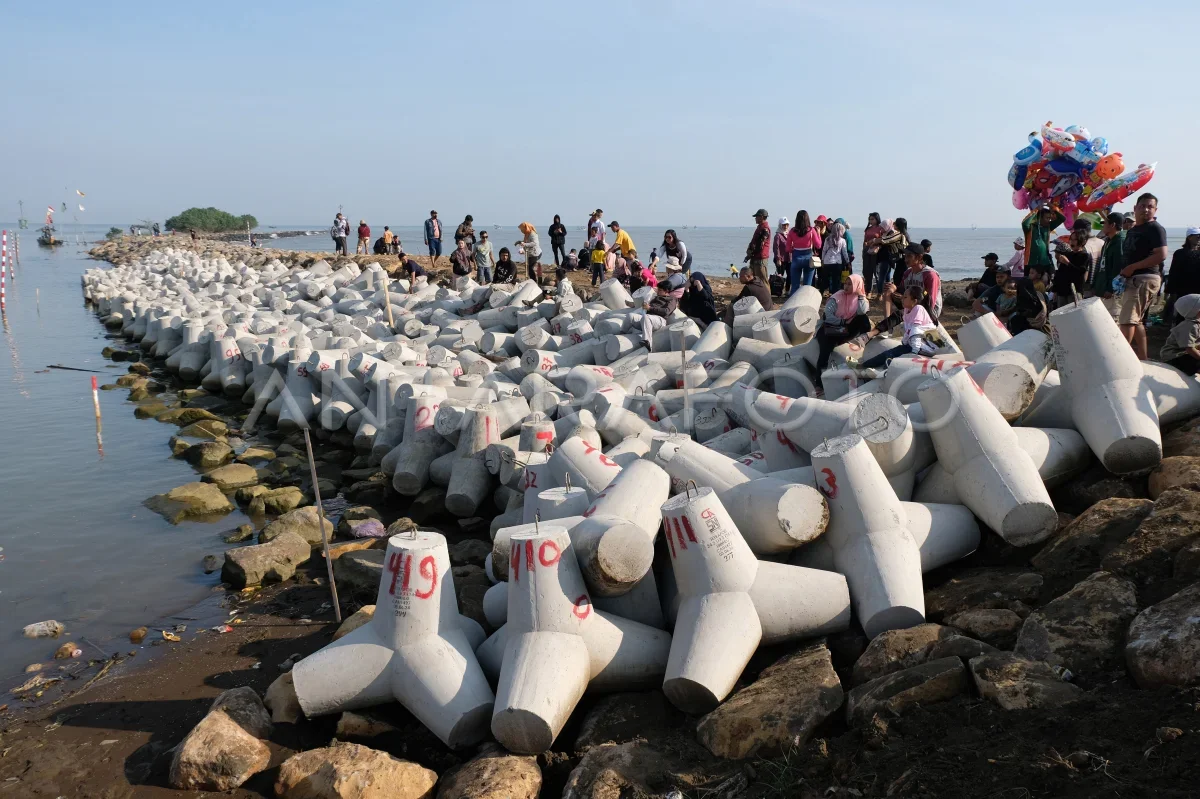
RRI.CO.ID, Yogyakarta - The National Research and Innovation Agency (BRIN) has unveiled its latest innovation in coastal infrastructure: BRINlock, a next-generation armor unit designed to revolutionize breakwater construction. Developed by the Energy and Manufacturing Research Organization (OREM), this technology addresses the growing challenges of climate change and rising sea levels while reducing the environmental footprint of coastal projects.
BRINlock serves as an advanced alternative to large natural stones, which are becoming increasingly scarce. It represents an evolution of previous units, such as BPPT-lock and BRINpod, specifically engineered as a single-layer protection system.
Stronger Interlocking, Lower Carbon FootprintThe defining feature of BRINlock is its uniform placement system and robust interlocking characteristics. According to a researcher at BRIN’s Hydrodynamics Technology Research Center (PRTH), M. Zuhdan Jauzi, the design significantly enhances hydraulic stability while minimizing material usage.
“BRINlock was developed as a single-layer armor unit with uniform placement and a strong interlocking character, so it is able to increase hydraulic stability while reducing the use of concrete,” Zuhdan explained on Friday, April 24, 2026, as quoted on BRIN's official website.
Beyond its structural strength, BRINlock is designed for practical application. Zuhdan noted that the technology eliminates the complicated installation patterns required by its predecessors, making the construction process faster and more cost-effective. By reducing the volume of concrete needed, the innovation also offers a lower carbon footprint, making it a greener choice for coastal protection.
Proven Performance and Patent StatusThe development of BRINlock involved rigorous testing, including computer-based Finite Element Analysis (ANSYS) and physical drop tests to ensure resistance against high-impact collisions. In hydraulic stability tests, the unit recorded an impressive stability coefficient (Kd) of 20.54 under certain conditions, outperforming several previous designs.
For practical safety standards, this value is conservatively rated at 13, ensuring a high level of security in field applications.
Recognizing its commercial and strategic potential, BRIN is currently finalizing the patent process for the technology. The documentation was initially submitted to BRIN’s Directorate of Intellectual Property Management (DMKI) in September 2024 and is now in the final stages of being granted a patent by the Ministry of Law and Human Rights.
As Indonesia continues to fortify its vast coastline against environmental threats, BRINlock is expected to become a staple in national port and beach protection projects, offering a balance of structural resilience and environmental sustainability. ***
News Recomendation
Loading latest news.....