


Indonesia Expands Use of Interactive Learning Technology in Schools
- 20 Apr 2026 13:55 WIB
- Voice of Indonesia
Key Points
- Indonesia is expanding the use of Interactive Flat Panels (IFP) to promote more engaging and collaborative learning in schools.
- The government emphasizes that digital learning must remain balanced with writing practices and character education.
- The use of interactive technology is expected to improve student understanding while encouraging active and independent learning.
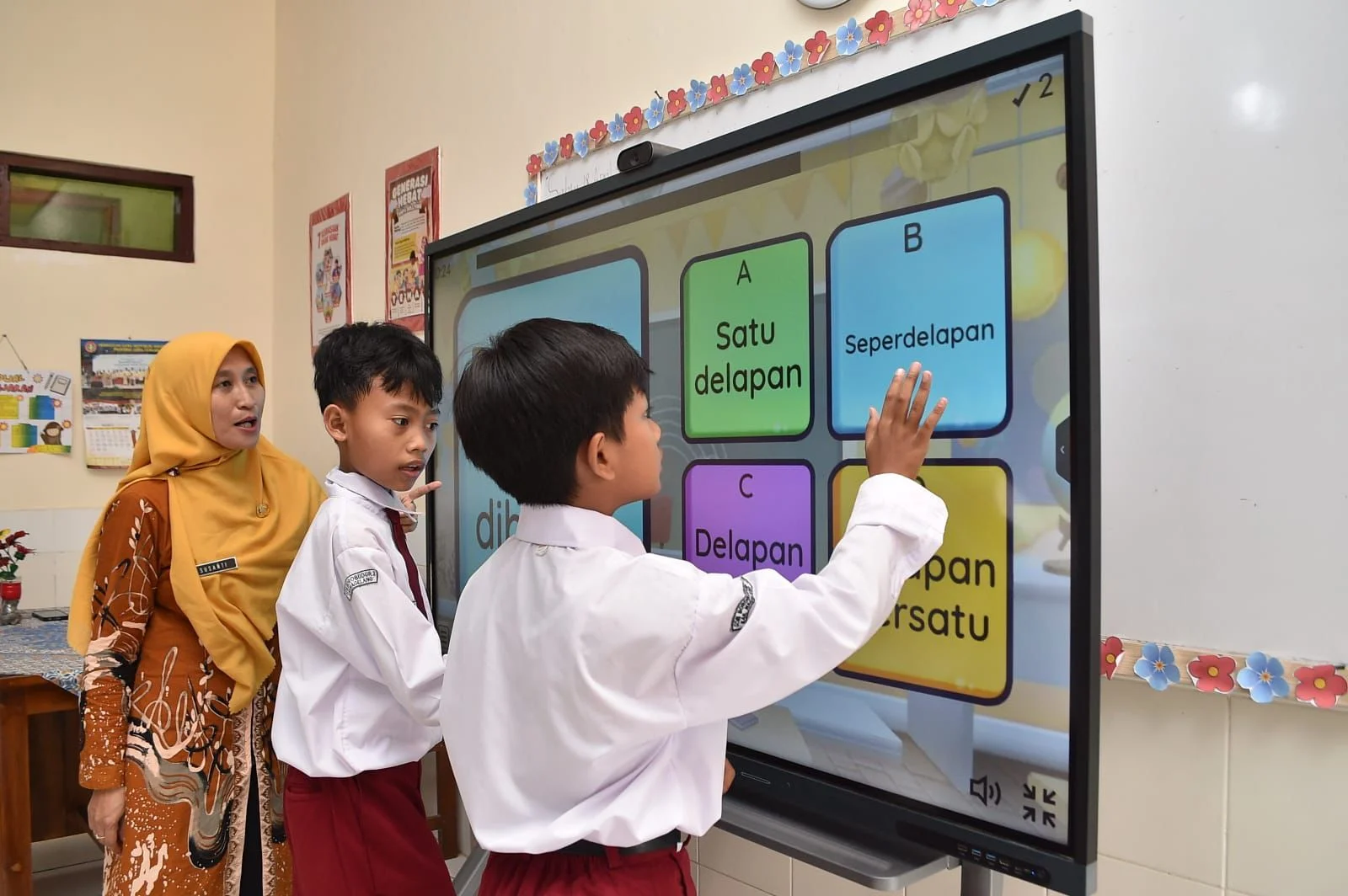
RRI.CO.ID, Jakarta - The Indonesian government is expanding the use of interactive learning media as part of efforts to transform classroom learning. The Minister of Primary and Secondary Education, Abdul Mu’ti, made the statement during a visit to observe the use of Interactive Flat Panels (IFP) at an elementary school, SD Negeri Borobudur 2 in Magelang Regency, Central Java.
According to a statement released by the ministry on April 19, 2026, the use of IFP aims to create a more interactive, collaborative, and engaging learning environment for students. The technology enables not only the delivery of learning materials, but also visual content, videos, and direct on-screen interaction.
“Thank you to the teachers for delivering lessons effectively, which has kept students motivated. However, we emphasize that learning must remain integrated with deep learning approaches and character education strengthening programs,” Abdul Mu’ti said during his visit to Magelang on April 18, 2026.
He also underscored the importance of maintaining writing habits in the learning process, despite the convenience offered by digital devices. “Writing helps reinforce what we learn and trains students to study independently outside the classroom,” he conveyed.
Meanwhile, Susanti, a teacher at SD Negeri Borobudur 2 in Magelang that has implemented IFP, said the technology has made lessons more varied and encouraged active student participation. She noted that students are particularly enthusiastic and often look forward to sessions that involve the use of IFP.
“Students can touch, write, or move objects directly on the screen, allowing for hands-on interaction. In some cases, students are already familiar with certain features or educational game trends on the IFP and suggest them to teachers for use in class,” Susanti stated.
In addition, she added that IFP not only benefits students but also helps teachers access a wide range of learning resources through a single device, including videos, simulations, and integrated presentation materials.
The use of interactive devices is expected to enhance students’ understanding while fostering greater independence and active learning, in line with the government’s push for a more adaptive and student-centered education system.
News Recomendation
Loading latest news.....