



Garlic-Based Innovation Shows Promise in Cutting Livestock Methane Emissions
- 20 Apr 2026 09:54 WIB
- Voice of Indonesia
Key Points
- BRIN research shows garlic can reduce methane emissions from livestock while improving feed efficiency, offering a natural solution to climate challenges in agriculture.
- Different garlic preparations influence effectiveness, with freeze-dried forms providing more stable methane reduction and extracts enhancing fermentation efficiency.
- The innovation supports sustainable livestock systems by combining microbiology, nutrition, and feed technology to reduce emissions without lowering productivity.
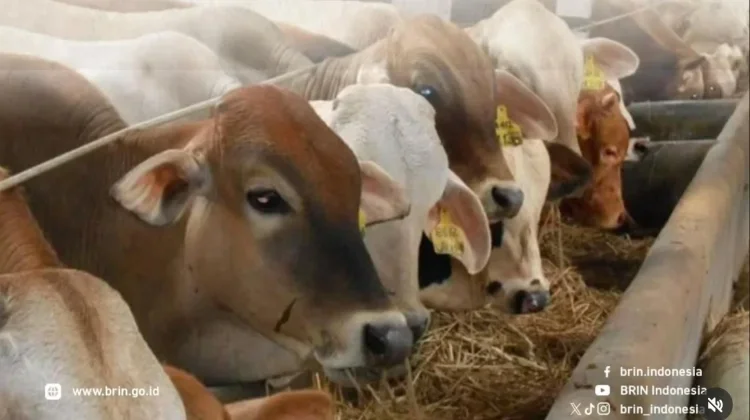
RRI.CO.ID, Jakarta - The National Research and Innovation Agency (BRIN) is strengthening its research contribution to climate change mitigation through innovations in the livestock sector. One of its latest findings shows that garlic has the potential to reduce methane emissions in ruminant animals while improving feed fermentation efficiency.
The findings were presented at the Zoopedia Series #17 scientific forum in Cibinong on Monday, April 14, 2026.
Methane (CH4) is a greenhouse gas with a global warming potential about 28 times greater than carbon dioxide (CO2). Emissions from livestock, particularly ruminants such as cattle and goats, have become a global concern due to their contribution to climate change.
A researcher at BRIN's Applied Zoology Research Center, Nurul Fitri Sari, explained that garlic contains bioactive organosulfur compounds such as allicin and diallyl disulfide, which have antimicrobial properties. These compounds can influence methanogenic microbes in the rumen, the primary producers of methane.
“Garlic has the potential to suppress methane production while increasing propionate production, which represents a more energy-efficient fermentation pathway,” Nurul said in her presentation titled Effect of the Garlic Matrix and Inclusion Level on In Vitro Methane Production and Fermentation, as quoted on BRIN's official website.
In the study, garlic was tested in two forms: freeze-dried (FD) and garlic extract (GE). The results showed that both forms of supplementation improved dry matter degradability compared to the control, meaning they did not disrupt feed digestibility and even enhanced rumen fermentation efficiency.
Further findings revealed that FD preparation provided more stable methane reduction, while GE had a stronger effect on fermentation but showed more variable methane reduction outcomes. This indicates that garlic’s effectiveness depends on its preparation form and inclusion level in animal feed.
“GE preparation shows stronger fermentation effects but does not always consistently reduce methane emissions. In contrast, FD shows more stable methane reduction,” Nurul explained.
Head of BRIN’s Applied Zoology Research Center, Delicia Yunita Rahman, emphasized the importance of scientific forums as platforms for knowledge exchange and collaboration among researchers, industry, and the public to accelerate the adoption of research-based innovations in sustainable livestock systems.
At the same event, international speaker Lukas Brieger from C. Gerhardt GmbH & Co. KG presented nitrogen analysis technology based on the Dumas method, which enables fast, safe, and precise protein measurement. The technology can analyze up to 100 solid or liquid samples in about five minutes per sample.
Through this research, BRIN highlighted that natural ingredients like garlic offer new opportunities to mitigate methane emissions without compromising livestock productivity. The integration of microbiology, nutrition, and feed technology is expected to support more efficient, environmentally friendly, and sustainable livestock systems in the future. ***
News Recomendation
Loading latest news.....