


BRIN Develops Eco-Friendly Laccase Enzymes for Whitening and Waste Treatment
- 17 Apr 2026 10:06 WIB
- Voice of Indonesia
Key Points
- BRIN has developed locally sourced laccase enzymes as a sustainable alternative for teeth whitening and industrial waste degradation.
- The innovation supports green chemistry and reduces Indonesia’s reliance on imported enzymes through domestic production.
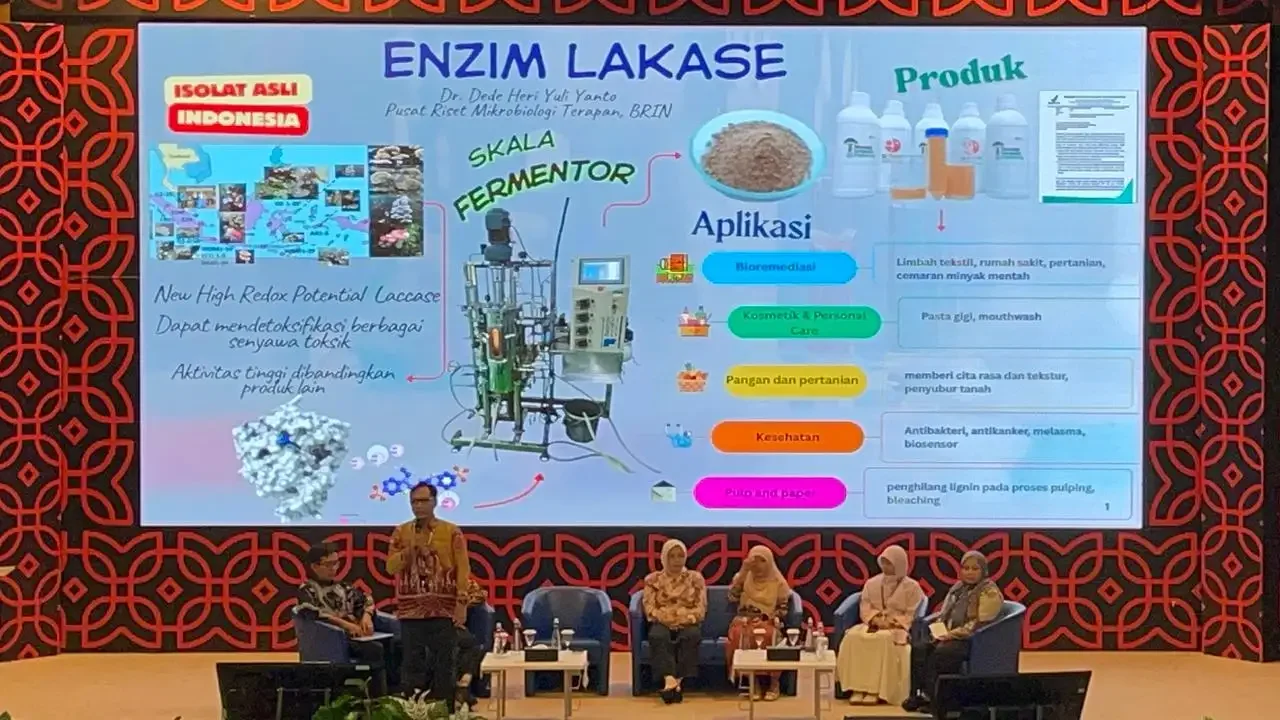
RRI.CO.ID, Jakarta - Indonesia is taking a significant step toward industrial self-sufficiency and environmental sustainability through the development of locally sourced laccase enzymes. During the "BRIN Goes to Industry" forum held at the Thamrin Science and Technology Park on Thursday, April 16, 2026, in Jakarta, the National Research and Innovation Agency (BRIN) unveiled this multifunctional biotechnology as a homegrown solution for both the healthcare and waste management sectors.
Developed by the Center for Applied Microbiology, these enzymes are isolated from microorganisms native to Indonesia. The project aims to disrupt the status quo in an industry currently dominated by synthetic chemicals and a heavy reliance on foreign suppliers.
A Lead Researcher at the center, Dede Heri Yulianto, noted that the high redox potential of these enzymes allows them to perform complex oxidative tasks, such as whitening teeth or breaking down stubborn industrial dyes, under much milder conditions than traditional chemical methods.
The initiative is also a strategic move to secure Indonesia's economic sovereignty in the biotechnology field. “We know that the need for enzymes in Indonesia is very high, with 90 percent still being imported,” Dede explained during the session, as quoted on BRIN's official website.
By leveraging local biodiversity, the research team is providing a pathway to reduce this massive import dependency while offering a more sustainable operational model for domestic companies.
The versatility of the laccase enzyme has already been proven through rigorous testing. In the health sector, it serves as a natural whitening agent and an active component for oral hygiene. Beyond healthcare, its ability to degrade complex organic compounds makes it a powerful tool for environmental remediation.
“Therefore, this enzyme will be very effective for the degradation of textile waste, regional industrial waste, or other industrial wastes,” Dede added, highlighting its role in supporting the growth of "green" industries.
Unlike conventional chemical treatments that can be harsh on both the body and the ecosystem, this biological approach is designed to be inherently eco-friendly. “Compared to conventional use, the laccase enzyme we developed is environmentally friendly, by utilizing Indonesia's biodiversity,” Dede remarked.
This sustainable profile has already cleared major regulatory hurdles, as the innovation has received official recommendations from the Indonesian Food and Drug Authority (BPOM).
As the project moves from pilot-scale production toward full commercialization, BRIN is actively seeking partnerships to accelerate the downstreaming of this technology.
“Alhamdulillah, several years ago we registered it with BPOM. And alhamdulillah, we have received a recommendation,” Dede stated, expressing optimism about the enzyme's future in the cosmetics and environmental sectors.
By turning local biological resources into high-value industrial assets, Indonesia is positioning itself as a leader in bio-based innovation. ***
News Recomendation
Loading latest news.....