



ITS Surabaya Develops Palm-Based Biogasoline to Boost Energy Independence
- 07 Apr 2026 18:40 WIB
- Voice of Indonesia
Key Points
- ITS Surabaya developed palm-based biogasoline using catalytic cracking, achieving up to 83 percent yield.
- The innovation reduces reliance on fossil fuels and supports Indonesia’s energy independence.
- National-scale trials will be coordinated with the Ministry of Energy and Mineral Resources to advance clean energy goals.
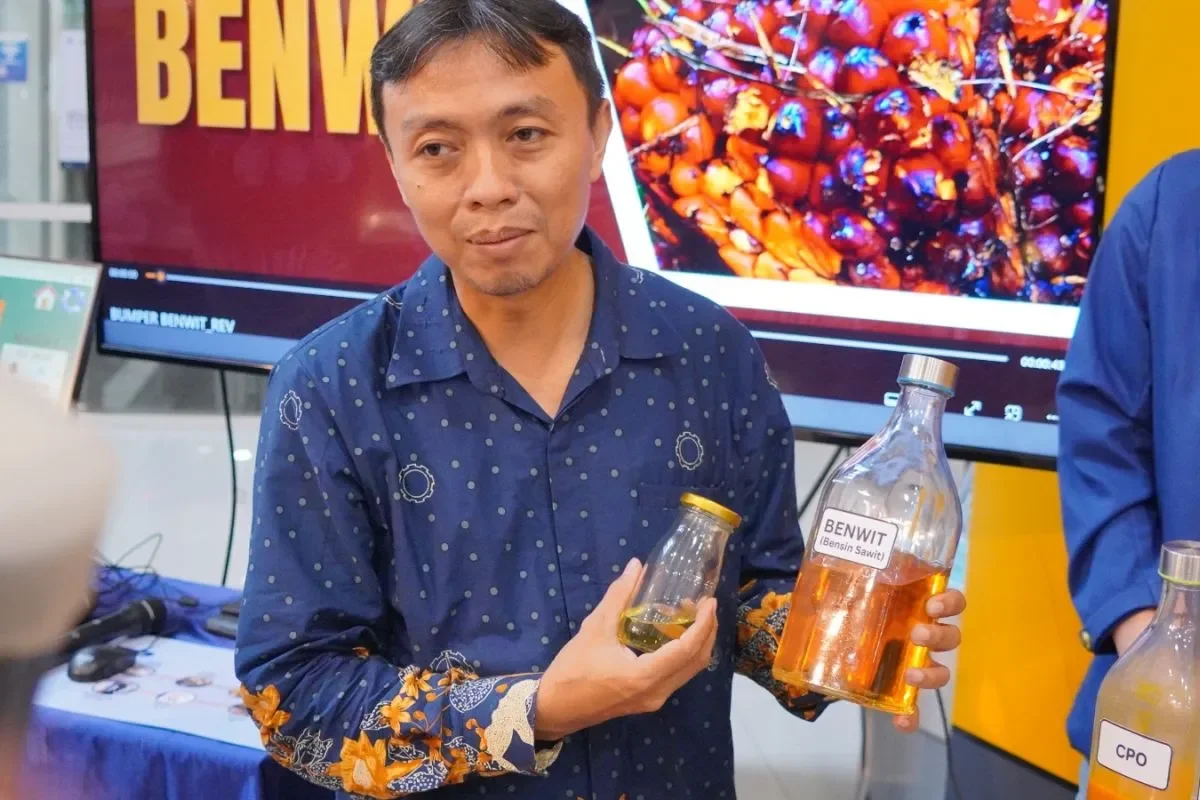
RRI.CO.ID, Surabaya - Amid global energy concerns and rising geopolitical tensions, Sepuluh Nopember Institute of Technology (ITS) Surabaya, East Java, has unveiled a breakthrough in renewable fuel innovation: efficient palm-based biogasoline designed to reduce Indonesia’s reliance on fossil fuels and strengthen national energy independence.
“This is an opportunity for the government to develop alternative energy sources at a time when fuel supplies are under pressure due to conflicts in the Middle East,” ITS Rector Bambang Pramujati said in Surabaya, East Java, on Tuesday, April 7, 2026, as quoted by Antara.
The innovation was spearheaded by Hosta Ardhyananta from ITS’s Department of Materials and Metallurgical Engineering, who, together with his team, developed biogasoline from crude palm oil (CPO) using catalytic cracking, a process that breaks down molecules with the help of catalysts.
“Our focus is on converting crude palm oil, which is dense, into biogasoline that is ready for use,” Hosta explained.
Initial trials using alumina-based catalysts achieved a 60 percent conversion rate but required high operating temperatures of 420°C. The team later advanced the process with bimetallic nickel oxide (NiO) and copper oxide (CuO) catalysts, which improved efficiency, lowered operating temperatures to 380°C, and increased yields to 83 percent.
The resulting product consists mainly of short-chain hydrocarbons (C5–C11), the primary components of commercial gasoline. Byproducts such as gas are reused to fuel the reactor, while liquid residues resembling oil can serve as alternative fuels, supporting a low-waste production model.
“Because of its characteristics, similar to used cooking oil, the liquid residue can be reused as stove fuel,” Hosta noted, adding that the research also incorporates life cycle assessment (LCA), showing a low carbon footprint aligned with clean and sustainable energy principles.
The innovation supports the United Nations Sustainable Development Goals (SDGs), particularly affordable and clean energy and responsible consumption, while contributing to climate action.
ITS’s Director of Research and Community Service, Fadlilatul Taufany, confirmed that the university will coordinate with the Ministry of Energy and Mineral Resources (ESDM) to conduct national-scale trials.
“At the very least, this innovation will help reduce Indonesia’s burden of dependence on fuel imports and exports,” he said. ***
News Recomendation
Loading latest news.....