



BRIN Introduces Lightweight Biomass Composite Roof Tiles for Safer Housing
- 13 Mar 2026 06:52 WIB
- Voice of Indonesia
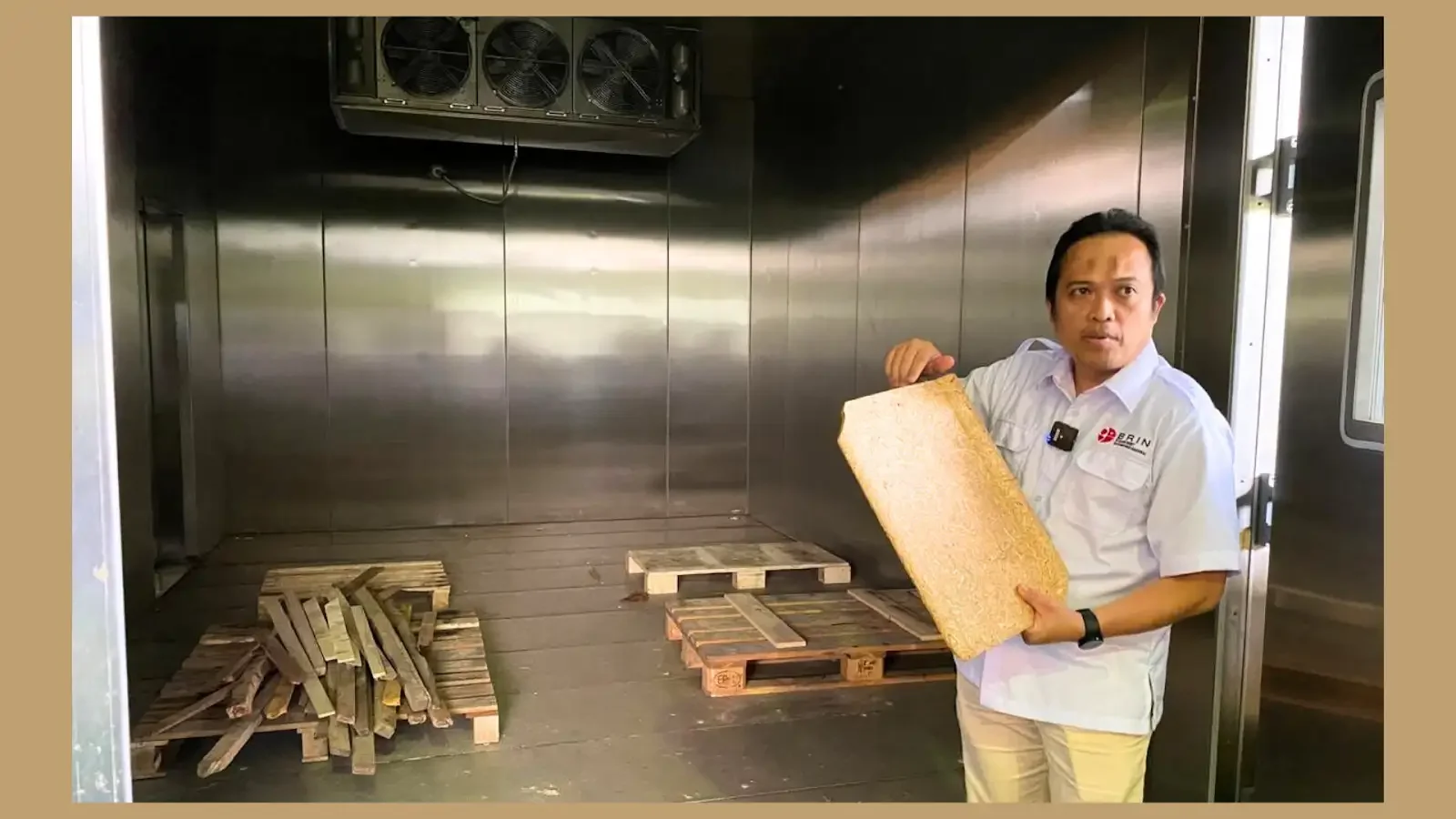
RRI.CO.ID, South Tangerang - The National Research and Innovation Agency (BRIN) has unveiled a breakthrough in sustainable construction material: a biomass-based composite roof tile designed to be lightweight, durable, and environmentally friendly.
Sukma Surya Kusumah, a researcher at BRIN’s Research Center for Biomass and Bioproducts, explained that the innovation was born out of Indonesia’s vulnerability to seismic activity.
"In many earthquake incidents, residents suffer injuries from being struck by heavy conventional tiles," Sukma noted as quoted by BRIN's official website on Thursday 12, 2026.
By leveraging Indonesia's abundant biomass waste, BRIN aims to provide a safer alternative while phasing out hazardous materials like asbestos, which is linked to long-term respiratory issues and cancer.
The composite tiles offer a dramatic reduction in weight compared to traditional materials. While clay tiles typically weigh around 32 kg/m², this biomass alternative weighs only 4 kg/m². Despite being significantly lighter, its mechanical integrity remains robust, capable of supporting up to 50 kg—ensuring safety for workers during roof maintenance.
The key advantages of the biomass composite include its superior resilience, as the material is engineered for both water and fire resistance with a significantly slower burn rate than traditional materials. Furthermore, it achieves an official green product status, directly supporting Indonesia’s Net Zero Emission 2060 goal by utilizing sustainable waste.
The composite also features a much healthier composition by replacing toxic formaldehyde-based resins with natural adhesives derived from tannin, citric acid, sucrose, and molasses.
The primary materials consist of lignocellulosic biomass waste, such as coconut fiber and empty fruit bunches from oil palms. The production involves processing these into small particles, drying them to a moisture content of 5–8 percent, and blending them with natural adhesives. The mixture then undergoes mat forming, cold pressing, and hot press molding to achieve the final shape.
"Field tests since 2021 show the product withstands weather changes exceptionally well," Sukma revealed.
Current durability estimates suggest a lifespan of 10 to 20 years, with ongoing tests aimed at reaching a 5-year continuous observation milestone to ensure long-term reliability.
BRIN is collaborating with several industrial partners to bring this innovation to scale, including PT Coir Indonesia Global (coconut fiber supply), various palm oil companies, and PT Baja Tangguh Lestari for manufacturing.
Akbar Hanif Dawam Abdullah, Head of BRIN’s Research Center for Biomass and Bioproducts, emphasized the relevance of this technology to national housing programs. "The challenge is how these resources can be transformed into innovative products that provide real benefits to the community," he said uring a webinar on Wednesday, March 11, 2026.
Future research will explore binderless technology, which utilizes the natural components of biomass as a self-binding agent to further reduce production costs and environmental impact. ***
News Recomendation
Loading latest news.....