



BRIN Innovates Dual-Action Radiopharmaceutical Kit to Combat Bone Metastasis
- 05 Mar 2026 15:15 WIB
- Voice of Indonesia
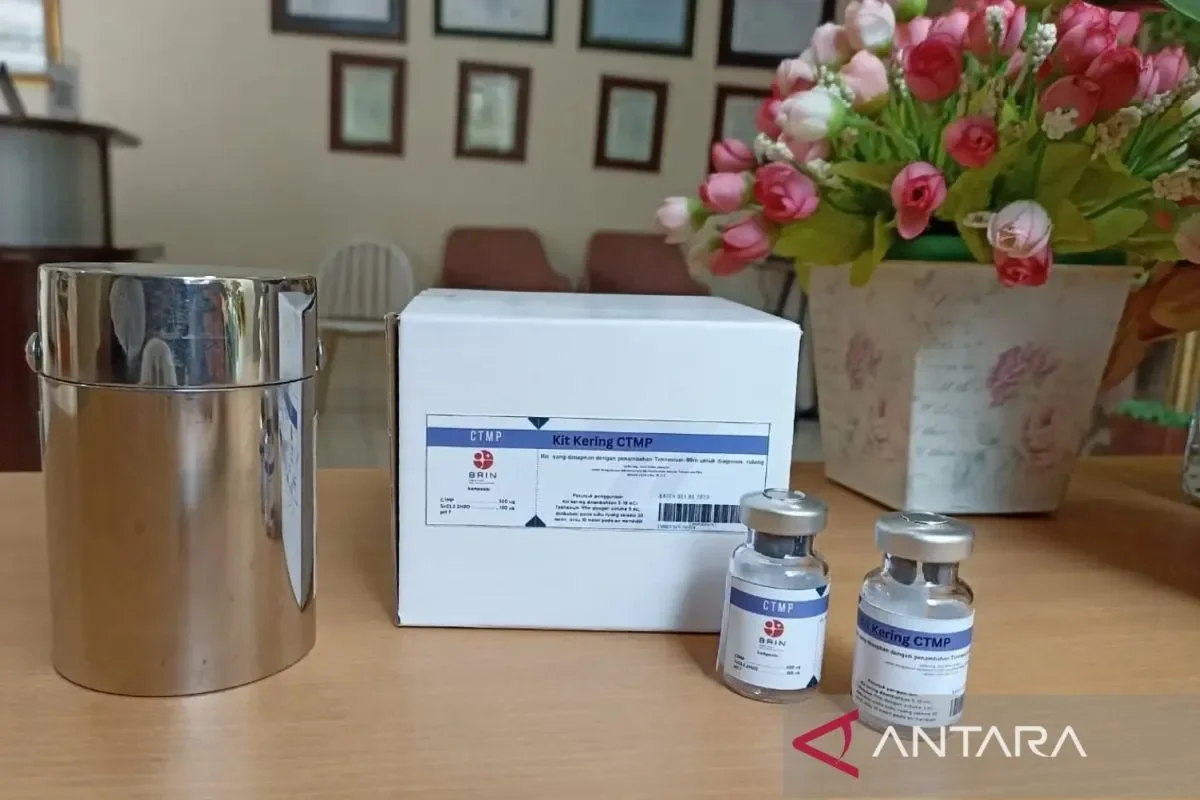
RRI.CO.ID, Jakarta - Indonesia is taking a significant stride toward medical self-sufficiency as the National Research and Innovation Agency (BRIN) develops a specialized radiopharmaceutical kit designed to both diagnose and treat bone disorders caused by cancer.
Developed by the Research Center for Radioisotope, Radiopharmaceutical, and Biodosimetry Technology, the CTMP kit addresses the critical need for advanced tools in managing patients whose primary cancers have migrated to the skeletal system.
The research was driven by the high prevalence of secondary bone complications in patients fighting primary malignancies. According to a researcher at BRIN’s Research Center for Radioisotope, Radiopharmaceutical, and Biodosimetry Technology, Isti Daruwati, the innovation targets the "spread" factor that often complicates recovery.
"Many primary cancers, such as breast or prostate cancer, eventually spread to the bone. This condition requires early detection to determine the extent of the spread, as well as treatment to reduce further impacts on the patient," she said in a briefing in Jakarta on Thursday, March 5, 2026.
Technically known as 1,4,8,11-tetraaza cyclo tetradecyl-1,4,8,11-tetra methylene phosphonate, the CTMP compound is formulated as a dry kit through an aseptic lyophilization (freeze-drying) process. This dry format is a strategic choice intended to extend shelf life and simplify logistics within clinical settings.
Isti explained that the dry kit format does not depend on the relatively short half-life of radioactive isotopes. This allows hospital pharmacists to prepare the radiopharmaceutical immediately before patient examinations.
The diagnostic process involves labeling the CTMP with the radionuclide Technetium-99m to create 99mTc-CTMP. Once administered intravenously, the compound acts as a vehicle, carrying the radionuclide directly to bone tissue for imaging via gamma cameras.
The chemical structure of CTMP is uniquely suited for this task. It features four phosphonate groups with a high affinity for hydroxyapatite in bones and four amine groups that form stable complexes with the Technetium-99m.
This ensures the compound accumulates in areas of bone metastasis, which then appear clearly on scans due to the emitted gamma radiation.
Beyond its diagnostic capabilities, the CTMP kit holds promising therapeutic potential. Preliminary pre-clinical trials on animals have shown that the compound remains remarkably stable within bone tissue.
"Although the uptake is not excessively high, it is strong and stable within the bone for several hours," noted Isti, as quoted by Antara.
While the diagnostic application of the kit shows no significant side effects, the involvement of radioactive materials necessitates strict adherence to radiation protection protocols.
Preparation must occur in specialized rooms using personal protective equipment, including masks, gloves, and Thermoluminescent Dosimeters (TLD) to monitor exposure.
This breakthrough is the result of a collaborative effort with Hasan Sadikin Hospital (RSHS) in Bandung, West Java, ensuring the research remains grounded in clinical reality.
By involving nuclear medicine specialists, the team can align the development of the radiopharmaceutical with actual healthcare practices and hospital needs.
Ultimately, the goal is to foster national independence in medical technology. "This innovation is targeted to support national radiopharmaceutical production independence so as not to depend on imported products. It also aims to improve the quality of nuclear medicine services in Indonesia," concluded Isti Daruwati. ***
News Recomendation
Loading latest news.....