


BRIN Develops Breast Cancer Therapy from Mangosteen Peel Compound
- 21 Jan 2026 23:30 WIB
- Voice of Indonesia
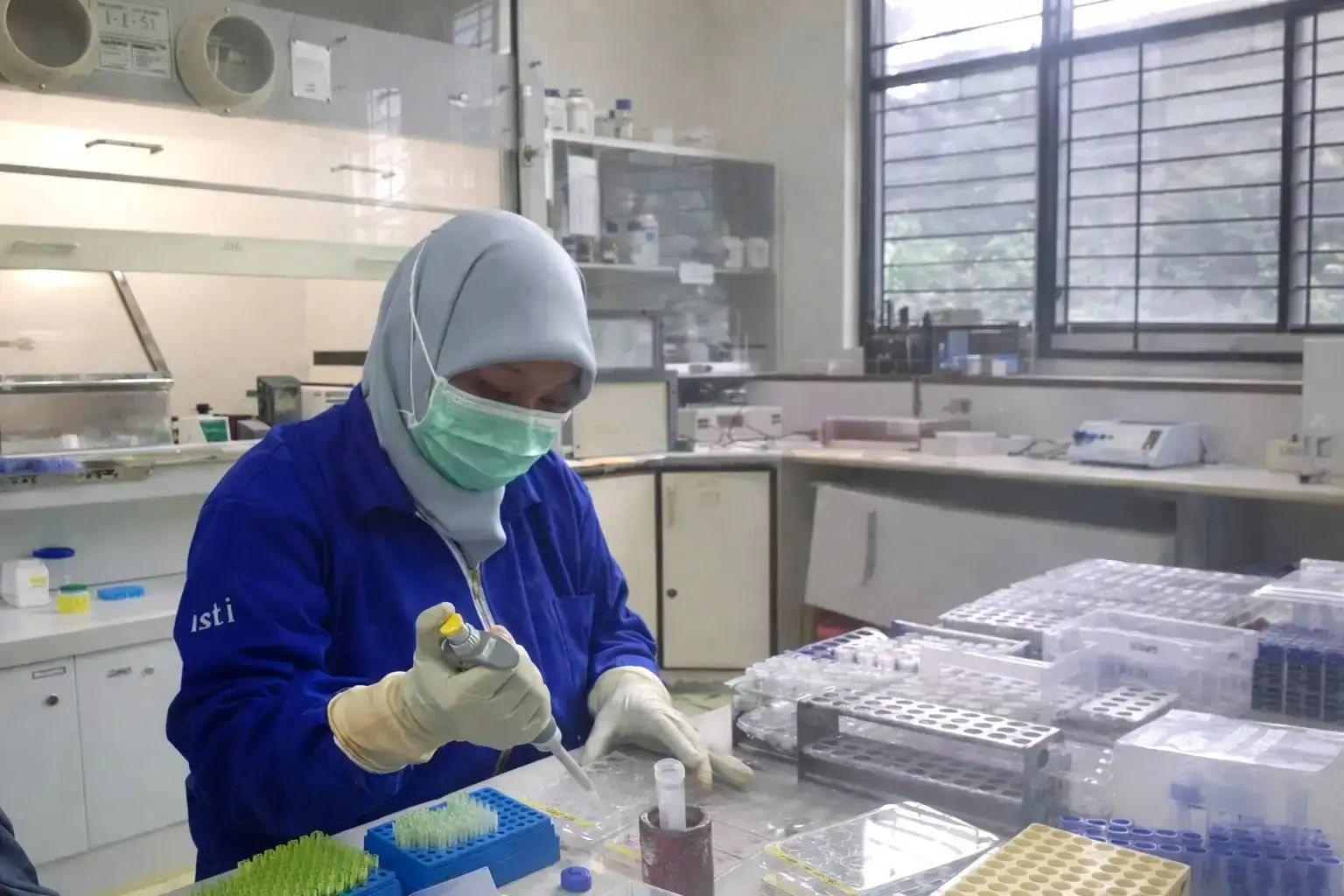
RRI.CO.ID, Jakarta - Senior researcher at the National Research and Innovation Agency (BRIN), Isti Daruwati, has developed a compound derived from mangosteen peel that shows promise for breast cancer therapy. The compound, known as AMB10, is an alpha-mangostin derivative designed to target estrogen receptor-positive breast cancer.
The research was carried out in collaboration with Perjuangan University in Tasikmalaya and the Department of Pharmaceutical Analysis and Medicinal Chemistry at Padjadjaran University’s Faculty of Pharmacy. Funding was provided by the Indonesia Endowment Fund for Education (LPDP).
Daruwati explained that about 75 percent of breast cancer patients suffer from a type of cancer whose growth is influenced by the hormone estrogen. In these cases, cancer cells contain estrogen receptors (ER+), which allow estrogen to bind and stimulate cell growth.
“For this type of cancer, therapies such as tamoxifen, which belongs to the selective estrogen receptor modulators (SERMs) class, are needed. These therapies block estrogen from binding to receptors in breast tissue, thereby slowing cancer cell growth,” she said at BRIN’s Samaun Samadikun Science and Technology Park in Bandung, West Java, on January 15, 2026, as reported by BRIN.
Through in silico and in vitro testing, Daruwati observed structural similarities between AMB10 and tamoxifen. Based on these findings, AMB10 was synthesized at Perjuangan University and selected for further study as a potential radiopharmaceutical candidate for breast cancer theranostics, a treatment approach that combines therapy and diagnostics.
“This compound, which is a derivative of alpha-mangostin, was labeled with iodine-131 (I-131) obtained from the G.A. Siwabessy Multipurpose Reactor. It was iodinated through chloramine-T oxidation, resulting in high radiochemical purity,” Daruwati explained.
Laboratory tests showed that AMB10 specifically recognizes and binds to cancer cells that express estrogen receptors. “We see that I-131-AMB10 has strong potential to be developed as a theranostic radiopharmaceutical, meaning it can be used both to detect and to treat estrogen receptor-dependent breast cancer,” she added.
Daruwati hopes that the research will contribute to breast cancer treatment in Indonesia. “Through this study, we hope that this natural compound based on alpha-mangostin can be developed into a radioactive drug for breast cancer therapy,” she said.
According to data from the Global Cancer Observatory (GCO), accessed on January 15, 2026, breast cancer was the most common cancer in Indonesia in 2022, with 66,271 cases. It was also the third leading cause of cancer-related deaths in the country. ***
News Recomendation
Loading latest news.....