



Indonesia Promotes Sorghum Noodles as Healthier Local Food Alternative
- 21 Jan 2026 23:01 WIB
- Voice of Indonesia
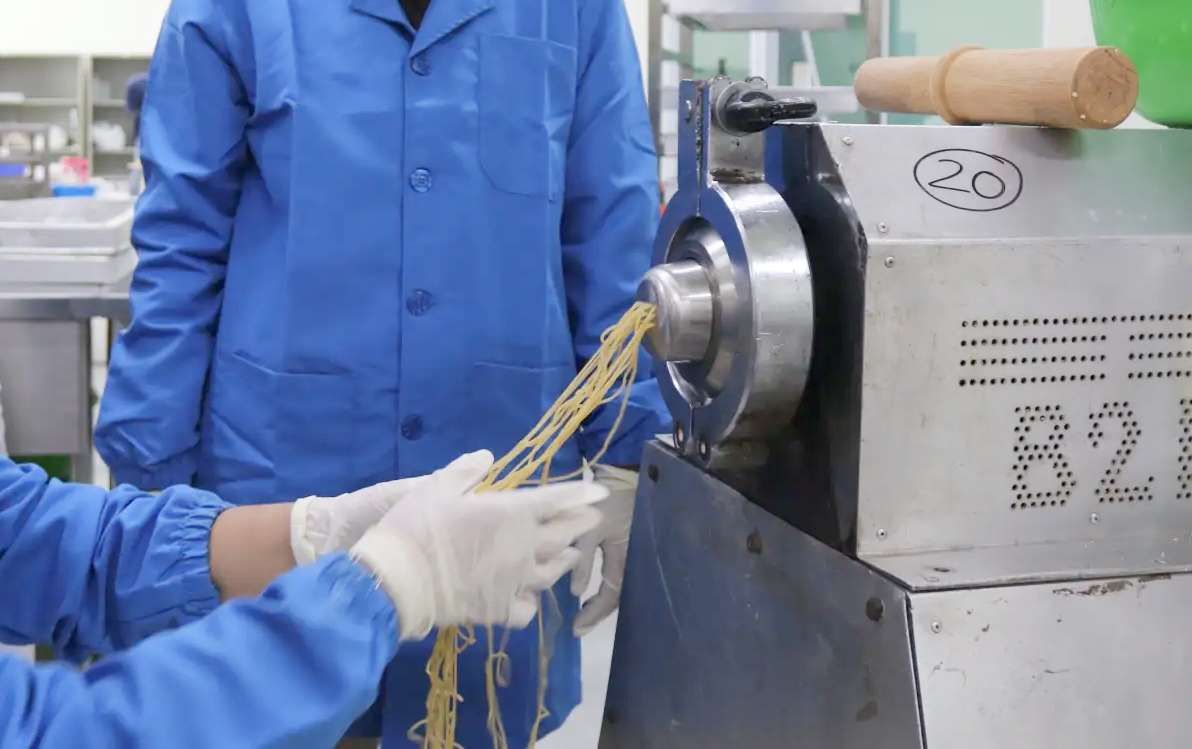
RRI.CO.ID, Jakarta - The National Agency for Research and Innovation (BRIN) is promoting local food downstreaming by encouraging the industry to process sorghum into gluten-free dried noodles.
The initiative aims to reduce Indonesia’s reliance on wheat imports while promoting healthier, more nutritious local food ingredients.
Sorghum has distinct characteristics compared to wheat and other staples such as rice or corn. Sorghum-based noodles are more fragile, less appealing in color, and harder to shape into long strands.
To overcome these challenges, BRIN’s Process Technology Research Center (PRTP) has developed extrusion equipment designed to produce sorghum-based gluten-free noodles with quality comparable to wheat noodles.
PRTP researcher Lia Ratnawati presented the findings at the Sorghum-Based Gluten-Free Noodle Technology Transfer Training on Tuesday, January 20, 2026, which involved industry partners and small and medium enterprises (SMEs).
“Dried noodles are obtained by drying raw noodles so they can be stored longer. They tend to break easily, so careful handling is required, especially during packaging and marketing,” Lia said in a statement released by BRIN in Jakarta on Wednesday, January 21.
She explained that the sorghum-based noodles developed by BRIN have a moisture content of around 8–10 percent. Wheat-based noodles typically undergo mixing, sheeting, slitting, steaming (if necessary), cutting, and shaping.
Lia emphasized that noodle production generally uses two techniques: calendering (sheeting–slitting) and extrusion. The training applied extrusion, using an extruder machine to form noodle strands. In this process, dough flow is influenced by shear stress, which is determined by shear rate and material viscosity.
“There are various types of extruders, and the simplest is the ram or piston type. Extrusion cooks starch and protein while stirring until the dough becomes viscous and plastic,” she said.
According to Lia, sorghum flour is produced from dried sorghum seeds that are ground to 40 mesh fineness. The flour is neutral in taste, light brown in color, dry, and pest-free. To improve elasticity, the team added corn flour, rice flour, and tapioca, enabling the noodles to form longer strands without breaking easily.
“This product is expected to serve as a healthier noodle alternative and support national food diversification,” Lia said. ***
News Recomendation
Loading latest news.....