



BRIN and Jawa Satu Power Develop Plant and Mangrove Conservation in Karawang
- 16 Sep 2026 13:05 WIB
- Voice of Indonesia
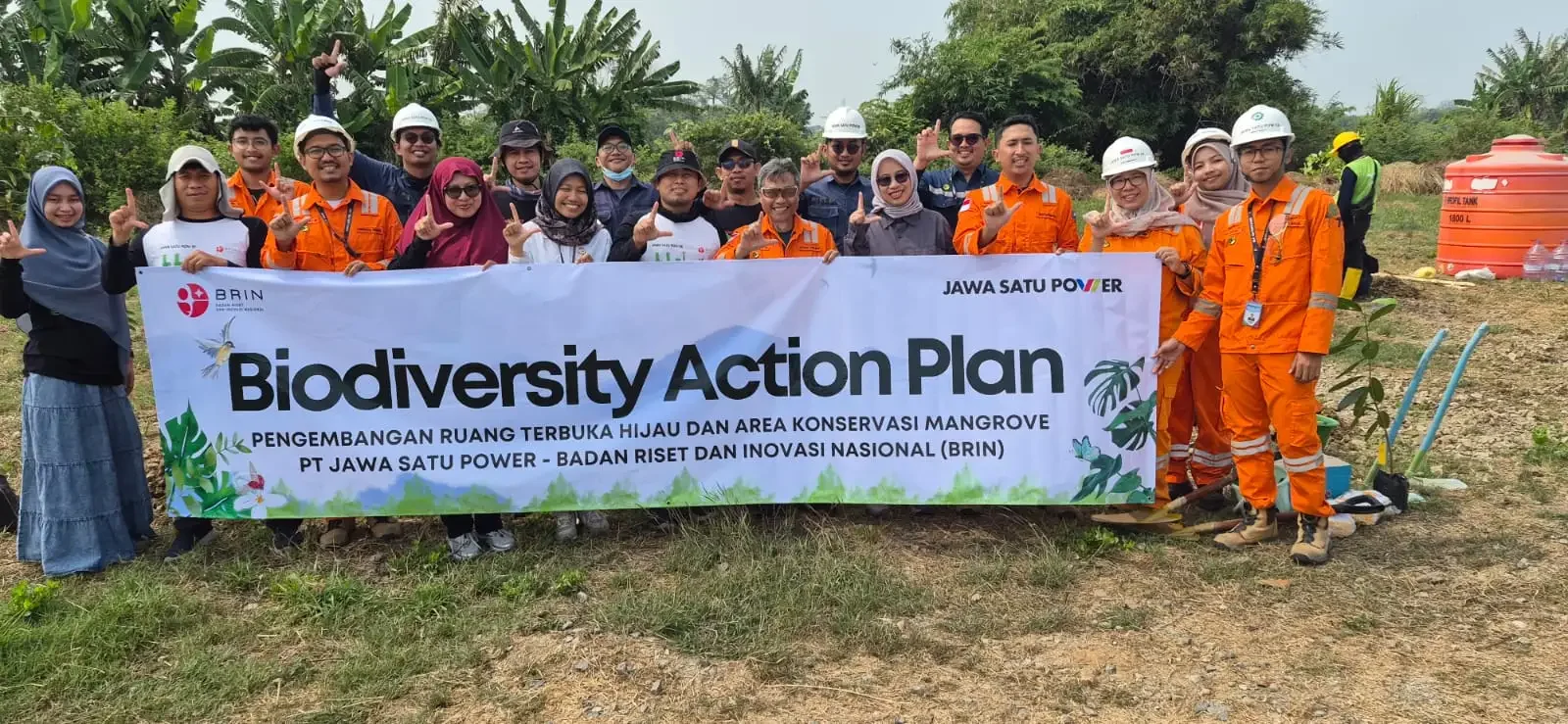
RRI.CO.ID, Karawang – The National Research and Innovation Agency (BRIN) is collaborating with PT Jawa Satu Power (JSP) to develop an ex-situ plant conservation program, develop green open spaces (RTH), and restore mangrove ecosystems in the Karawang industrial estate. This research collaboration was initiated to address various environmental challenges faced by industrial areas, ranging from generator noise pollution, potential air pollution, straw dust, suboptimal pond conditions, to the threat of hunting of wildlife.
In a statement received on Monday, September 13, 2026, Danang Wahyu Purnomo, Head of the BRIN-JSP Research Cooperation Implementation Team, explained that the management of the Green Open Spaces and mangrove conservation areas is designed around three key concepts: the conservation of endangered plants and mangroves; the maintenance of a conducive ecosystem around the plant facilities; and the economic empowerment of local communities. He noted that sedimentation in the mangrove area presents a specific challenge, as it risks blocking the seawater intake pipes.
Danang added that the developed Green Open Spaces would serve as sites for cultivating rare plants, orchids, and local fruit varieties, as well as species capable of absorbing carbon and pollutants. "The collection concept encompasses an orchidarium, a phytoremediation area, and a collection of rare plant," he said.
The area is also being prepared to support phytoremediation processes and to cultivate plants with potential uses in medicine or as ornamentals. "The orchid garden is designed to mimic natural habitats; pollutant-neutralizing plants are cultivated based on physiological and biochemical processes; and endangered plant species are grown to serve as host trees for various orchid varieties," he conveyed.
He stated that the program targets not only ecological aspects but also aims to create a more conducive industrial estate ecosystem while benefiting the surrounding community. Solikin hopes that future collaboration will include a study on managing sedimentation in the mangrove area, given that the inlet pipe used by JSP to draw seawater frequently becomes clogged with sediment at the mangrove estuary.
This collaboration also involves utilizing research infrastructure owned by BRIN. The Director of Management of the Science and Technology Area Research Facility Laboratory represented by the Head of the Gunungkidul Food Laboratory Management Team, Kharistya Rozana, explained that throughout 2024–2025, a study had been conducted on the potential bioactivity of wild orchids, one of which was Dendrobium crumenatum or the dove orchid.
The orchid samples were obtained through exploration in Ujung Kulon National Park and from the Bogor Botanical Gardens' collection; they were subsequently analyzed at the Gunungkidul Food Laboratory, resulting in a publication in an international journal earlier this year.
Head of the Scientific Collection Processing Team at BRIN’s Directorate of Scientific Collection Management, Dina Safarinanugraha, Dina Safarinanugraha, noted that the seedlings planted in the area originated from plant propagation efforts at botanical gardens. She described the activity as a means of disseminating science and technology while making BRIN’s scientific collections accessible to the public.
Through this research-based approach, the development of open green spaces in the Karawang industrial area is expected to evolve beyond simple greenery into a conservation zone serving as a habitat for diverse plant species. The program is envisioned to support environmental quality improvements while simultaneously opening avenues for the public to benefit from BRIN’s research findings and scientific collections.
News Recomendation
Loading latest news.....