



Vice Minister Encourages Science Culture from an Early Age
- 27 Agt 2026 20:25 WIB
- Voice of Indonesia
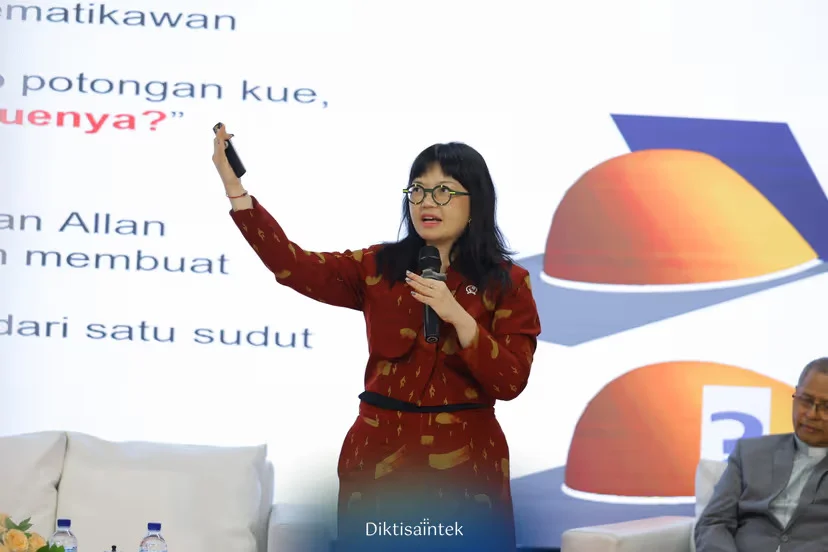
RRI.CO.ID, Jakarta - Vice Minister of Higher Education, Science, and Technology, Stella Christie, encouraged students to develop a culture of science from an early age through curiosity, the courage to ask questions, and the ability to answer questions based on data.
The event, themed Sapientia Viridis, or “green wisdom,” provided a platform for students to develop scientific thinking while examining environmental issues through the Science, Technology, Engineering, Arts, and Mathematics (STEAM) approach.
“Science is for everyone. What I actually want to emphasize is not only science itself, but also logical thinking and research,” Stella said while attending the opening of the 2026 STEAM-Based Science Competition and Education Fair at SMA Kolese Gonzaga in Jakarta on Wednesday, August 26, 2026.
According to her, science is not merely a field of study but also a way of thinking that can be applied in everyday life. Therefore, students need to be encouraged to develop curiosity and have the courage to ask questions.
Stella cited the development of technologies such as X-rays, GPS, and Google as examples showing that scientific questions do not always produce immediate practical benefits. Some scientific discoveries only find practical applications long after the research is conducted.
“The most important thing about science is what we commonly call questions that come from curiosity. Questions from curiosity, not questions that are always about what something is for,” she said.
She said a research culture can be developed at school by examining simple issues in the surrounding environment. For example, students can study the amount of waste produced by their school or the amount of food left over in the cafeteria, and then turn their observations into questions that can be answered systematically and based on data.
Stella further said, a research-based mindset is also important when addressing environmental issues. Environmental problems need to be studied scientifically because different aspects of the environment are interconnected.
“Environmental issues are, of course, a shared concern. And whatever part or phase of the environment we are looking at must always be approached through research,” she said.
Stella also highlighted several research projects in Indonesia that have the potential to be developed to create greater economic value. One example is research on patchouli in Aceh conducted through the Atsiri Research Center at Syiah Kuala University.
The technology developed through the research supports the processing of essential oils, which can be implemented through cooperatives and provide benefits to farmers.
News Recomendation
Loading latest news.....