



House Pushes for Free Meal Reformulation, Prioritizing Women and Needed Children
- 04 Agt 2026 18:29 WIB
- Voice of Indonesia
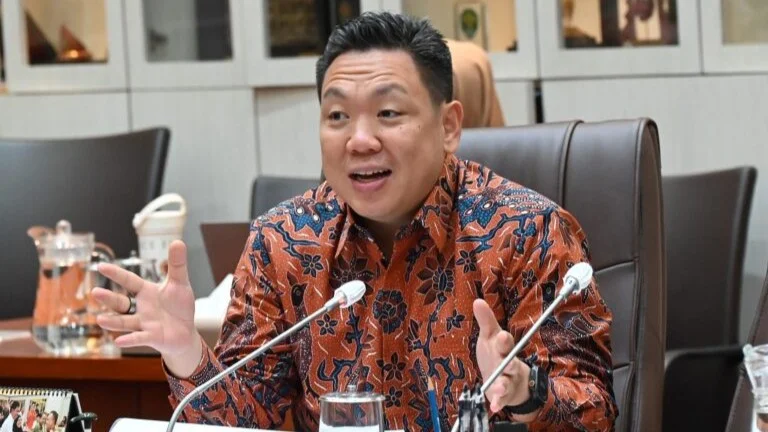
RRI.CO.ID, Jakarta - Member of the Indonesian House of Representatives (DPR), Charles Honoris, believes the Constitutional Court's ruling on the budgeting of the Free Nutritional Meals (MBG) program gives momentum for the government to evaluate and reformulate its implementation. He believes the program will be more effective if focused on groups in the community who truly need it rather than being implemented universally.
The Constitutional Court had ruled on Thursday, July 30, 2026, that the free meal budget should not be included in the education budget, which is mandated at least 20% in Indonesia's 1945 Constitution. This makes the current budget arrangement for the program, which is a part of the education budget, no longer applicable in the future.
He explained that the MBG's primary goal from the outset is to improve the people's nutritional status while reducing stunting rates. Therefore, beneficiaries needed to be prioritized among the most vulnerable groups.
"If we return to the initial goal of this program, the goal is how we can work together to improve the nutritional status of the community, including Indonesian children," Charles said in a statement, as quoted from dpr.go.id on Monday, August 3, 2026.
According to Charles, of the Indonesian Democratic Party of Struggle (PDI-P), if the program's primary focus is improving nutrition and reducing stunting, then MBG should not have to be provided to all Indonesian children. He proposed that the government prioritize vulnerable groups, such as pregnant women, breastfeeding mothers, and children at risk of stunting.
"Just focus on those in need, focus on vulnerable groups, focus on pregnant women, breastfeeding mothers, and children who are vulnerable to stunting," he said.
He estimates that a more targeted approach would reduce the number of beneficiaries from about 82 million to 26 million. This would also significantly reduce state budget requirements without compromising the program's primary objectives.
"The number of beneficiaries requiring the Free Nutritional Meal Program is not 82 million, but only 26 million. Naturally, when we rationalize the number of beneficiaries from 82 million to 26 million, the budget will also decrease," Charles conveyed.
According to him, this efficiency will positively impact the country's fiscal health. The free meal budget is estimated to no longer reach billions of U.S. dollars, allowing the government's fiscal space to be allocated to other development needs without compromising the program's effectiveness.
"Perhaps it won't be Rp200 trillion (about US$11 billion) or Rp300 trillion (about US$16.6 billion) anymore, but could be as little as Rp67 trillion (about US$3.7 billion). So it won't disrupt our fiscal health, and it won't even need to be categorized as an education cluster," he concluded.
News Recomendation
Loading latest news.....