



Govt Accelerates Food MSME Legalization Through SAPA SEMESTA Program
- 28 Jul 2026 12:18 WIB
- Voice of Indonesia
Key Points
- The SAPA SEMESTA program aims to accelerate the process of obtaining BPOM Distribution Permit Numbers for MSME products, boosting competitiveness in national and export markets.
- All processed food and cosmetic products must meet safety, quality, and efficacy requirements before receiving a distribution permit.
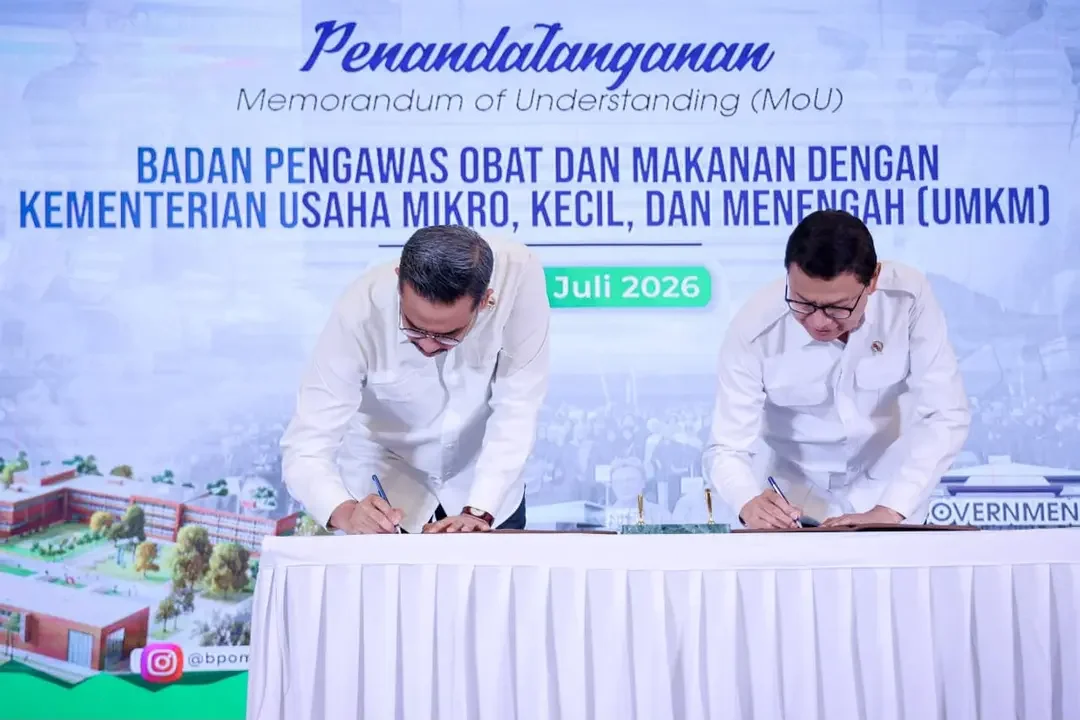
RRI.CO.ID, Jakarta - The government is accelerating the legalization of micro- and small-scale processed food enterprises through the SAPA SEMESTA MSME Processed Food program, a collaboration between the Ministry of MSMEs and the Food and Drug Monitoring Agency (BPOM).
The program aims to expedite assistance and the issuance of BPOM Distribution Permit Numbers (NIEs), helping MSMEs access national and export markets more easily.
“In line with the President’s directive to optimize support and development for MSMEs, we are collaborating to streamline BPOM licensing and certification for processed food MSMEs,” said Minister of MSMEs, Maman Abdurrahman, on Monday, July 27, 2026.
According to ministry data, more than six million MSMEs operated in the food and beverage sector by 2025. However, product legality remains a major challenge to improving competitiveness. BPOM data shows that around 4.2 million MSMEs are engaged in processed food, but only about 1.6 million have BPOM certification.
Through SAPA SEMESTA, the government aims to help more MSMEs obtain BPOM Distribution Permit Numbers, ensuring that marketed products are safe and carry added value.
Minister Maman emphasized that accelerating permit issuance not only enhances competitiveness but also protects consumers by guaranteeing product quality and food safety.
“We are pushing for faster issuance of distribution permits from BPOM to maximize services for MSMEs. The process must be expedited without compromising quality or licensing standards,” he said.
The SAPA SEMESTA program is implemented through collaboration between BPOM, the Ministry of MSMEs, universities, and the Indonesian Food and Beverage Producers Association (GAPMMI). In addition to licensing assistance, businesses receive education on product development and compliance with food safety standards.
BPOM Head Taruna Ikrar stressed that accelerated services will not reduce oversight standards. All processed food and cosmetic products must still meet safety, quality, and efficacy requirements before obtaining a distribution permit.
During the event, the Ministry of MSMEs and BPOM symbolically presented distribution permit numbers to 182 MSMEs assisted by 14 BPOM technical implementation units (UPTs). Of the 441 MSMEs that received assistance, 182 successfully obtained BPOM distribution permits. (Misni Parjiati)
News Recomendation
Loading latest news.....