



Indonesia Pushes Coconut Downstreaming on Rising Export Demand
- 22 Jul 2026 18:05 WIB
- Voice of Indonesia
Key Points
- Agriculture Ministry pushes coconut downstreaming to boost value added and strengthen global market position.
- Indonesia is the world's second-largest coconut producer after the Philippines.
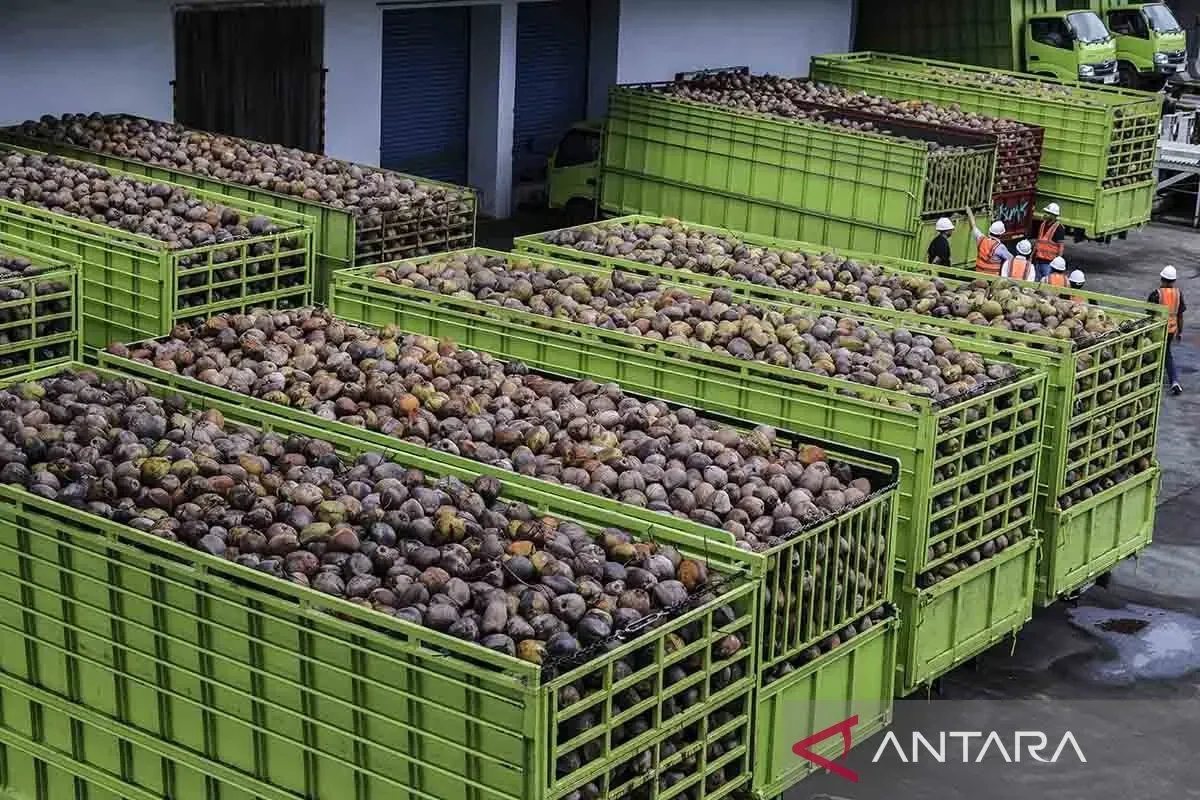
RRI.CO.ID, Jakarta – The Indonesian Agriculture Ministry is encouraging coconut downstreaming to boost value added and strengthen the industry’s position in global markets.
Agricultural Product Quality Supervisor at the Plantation Directorate General, Agus Rosyid, said demand for Indonesian coconuts remains high, noting that Malaysia still sources around 80 percent of its supply from Indonesia.
“Malaysia relies on Indonesia for most of its coconut supply, about 80 percent. When there was a shortage two years ago, they requested an extension of the export ban, fearing their industry would not meet its needs,” Agus said during a discussion on coconut downstreaming development in Jakarta on Wednesday, July 21, 2026, as quoted by Antara.
Agus added that Indonesia can strengthen its coconut industry by developing processed products such as coconut milk, oil, and virgin coconut oil (VCO). Export patterns are shifting from raw materials to value‑added goods, bringing greater domestic economic benefits.
According to data from the International Coconut Community (ICC) and the Agriculture Ministry, Indonesia is the world’s second‑largest coconut producer after the Philippines, with output reaching 2.87 million tons of copra equivalent in 2023. Smallholders manage about 98 percent of plantations.
Despite its potential added value of up to US$6.55 billion, the industry still faces challenges including declining acreage, pest attacks, price fluctuations, and low productivity, which averages only 1.1 tons per hectare.
To address these issues, the government is preparing a downstream development program covering 151,554 hectares by 2026, with an estimated budget of IDR 427 billion (approx. USD 23,8 million).
The program, to be implemented in 28 provinces, will provide superior seeds, boost productivity, develop production areas, and strengthen supply chains to increase value added and reinforce Indonesia’s position in global markets. ***
News Recomendation
Loading latest news.....