



Indonesian House Calls for ASEAN-Wide Cyber Defense Strategy
- 22 Jul 2026 12:02 WIB
- Voice of Indonesia
Key Points
- The Indonesian House of Representatives is encouraging ASEAN countries to strengthen cooperation on cybersecurity.
- Inter‑parliamentary communication through the ASEAN Inter‑Parliamentary Assembly Caucus (AIPA Caucus) is seen as key to maintaining trust and solidarity among ASEAN members amid global political dynamics.
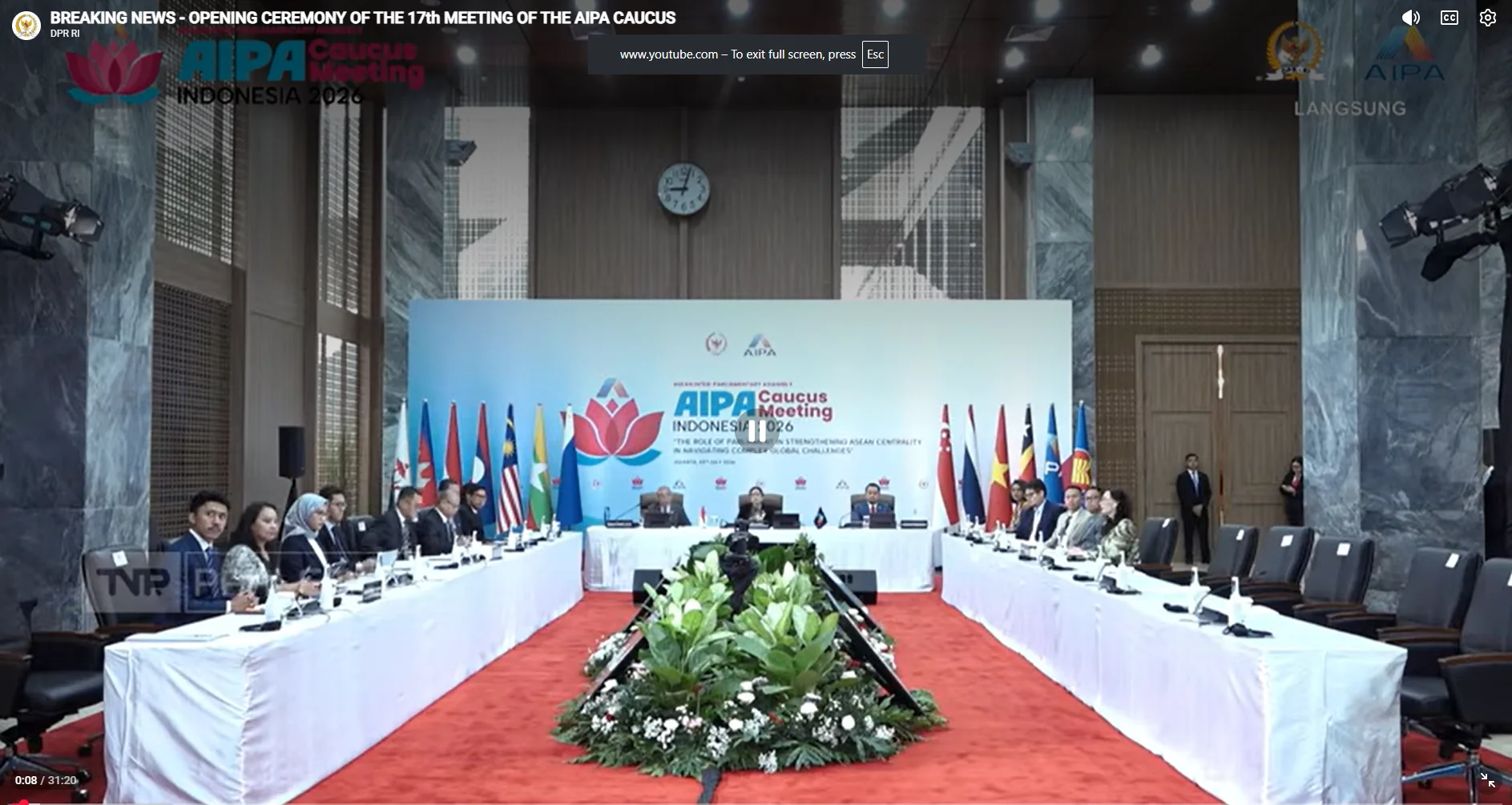
RRI.CO.ID, Jakarta - The Indonesian House of Representatives (DPR), through the Inter-Parliamentary Cooperation Agency (BKSAP), is urging ASEAN countries to strengthen cybersecurity cooperation by harmonizing regulations on artificial intelligence (AI) and cybersecurity.
The move is seen as crucial to closing legal loopholes exploited by transnational digital criminals amid rapid technological developments.
BKSAP Deputy Chair Muhammad Husein Fadlulloh said the rise of AI and digital technology has created new challenges, including cybercrime that transcends national borders. He stressed that ASEAN countries need a unified regulatory framework to provide stronger legal protection.
“We must work together to harmonize cybersecurity and AI laws. We need a common vision so that no legal loopholes can be exploited across countries,” Husein told Parlementaria at the Nusantara II Building, Parliament Complex, on Tuesday, July 22, 2026.
The 17th ASEAN Inter-Parliamentary Assembly (AIPA) Caucus meeting, held on Wednesday at the Parliament Complex in Jakarta, focused on this agenda.
Currently, each ASEAN country is drafting AI and cybersecurity regulations according to national priorities. However, without common standards, regulatory differences risk being exploited by digital criminals operating across jurisdictions.
Husein noted that AI development increases the risk of digital fraud, including fake identities and hard-to-detect content such as deepfakes.
“Digitalization is closely linked to AI development, which remains a major concern. Many scammers exploit AI to deceive people easily. This is an issue we must address together,” he said.
BKSAP also highlighted the need to protect vulnerable groups, particularly women and young people, who are often targeted by cybercrime and technology-based human trafficking.
“Women and young people should not be victims but participants. They must be involved in decision-making processes and receive adequate protection from digital crime,” Husein emphasized.
He hopes that discussions on harmonizing AI and cybersecurity regulations at the 17th AIPA Caucus would lead to concrete steps to strengthen ASEAN collaboration against evolving digital threats.
“We must protect each other in this region. With regulatory harmonization, ASEAN countries will be better prepared to face technological challenges and transnational digital crime,” he said.
BKSAP Chair Syahrul Aidi Maazat underscored that parliamentary diplomacy plays a strategic role in reinforcing ASEAN commitments, including cooperation on cybersecurity, peace, and climate change.
Opening the 17th AIPA Caucus, Syahrul said inter-parliamentary communication and cooperation are vital instruments for maintaining trust and strengthening solidarity among ASEAN countries amid global geopolitical shifts.
“Parliamentary diplomacy is not merely a complement to government diplomacy, but a crucial instrument for strengthening ASEAN commitments at the national level while reinforcing ASEAN centrality,” he said.
The meeting, themed “The Role of Parliament in Strengthening ASEAN Centrality in Navigating Complex Global Challenges,” was attended by parliamentary delegations from AIPA member countries, AIPA Secretary-General Dr. Chem Widhya, observers, and representatives from the Timor-Leste Parliament.
In addition to reviewing the implementation of AIPA resolutions, the forum also discussed inclusive peace governance and climate change. Syahrul said he hoped all discussions, including cybersecurity cooperation, would be followed up with policies and legislative measures that deliver tangible benefits for the ASEAN community.
“Indonesia is committed to contributing through the exchange of legislative experiences, institutional capacity building, and the development of parliamentary practices that support a peaceful, inclusive, resilient, and people-oriented region,” he said. ***
News Recomendation
Loading latest news.....